
2017 was a tumultuous year in politics - especially for women. While this year saw the widening of the global gender gap, progress was made in many areas. Here, we take a look at the top trends - and victories - in policymaking for women's empowerment.
A nudge for equality
2017 saw a growing interest in the potential for behavioural insights to solve intractable issues in the gender equality sphere. Behavioural insights provides empirical evidence to anticipate how people will react to policy options, rather than just making the assumption of rational behaviour. This is particularly useful in the gender equality sphere, where automatic associations based on stereotypes and prejudices often undermine our declared beliefs in gender equality.
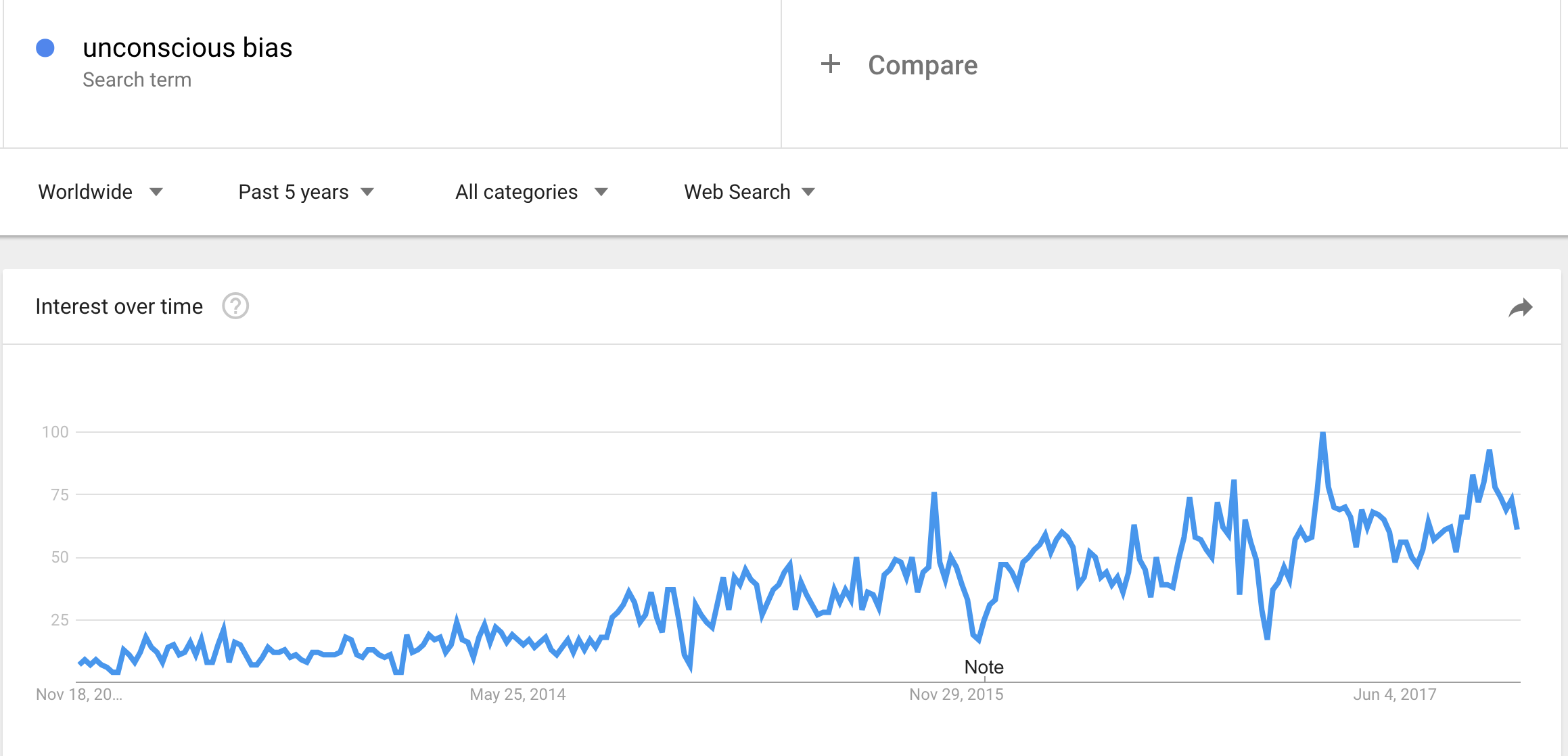 Google searches for the term "unconscious bias" are on the rise
In the UK, the Behavioural Insights Team (BIT) and the Government Equalities Office are embarking on a new two-year research collaboration focused on applying behavioural science to improving gender equality in the labour market. This will be the UK’s first ever large-scale behavioural insights program on gender equality. The BIT has also launched its first spin-out product, a platform called Applied that that uses behavioural insights to remove bias from the job hiring process.
The European Commission is running a competition which awards grants to projects applying behavioural insights to reduce gender stereotypes and violence against women.
And Victoria, Australia is employing two of the world’s top experts - Iris Bohnet and Jeni Klugman - as thinkers-in-residence to apply behavioural science thinking to gender equity problems.
Finally, policy progress on the gender pay gap
While gender pay gaps persist in almost every country in the world, there has been a rush of recent legislation around the world that may finally speed up progress.
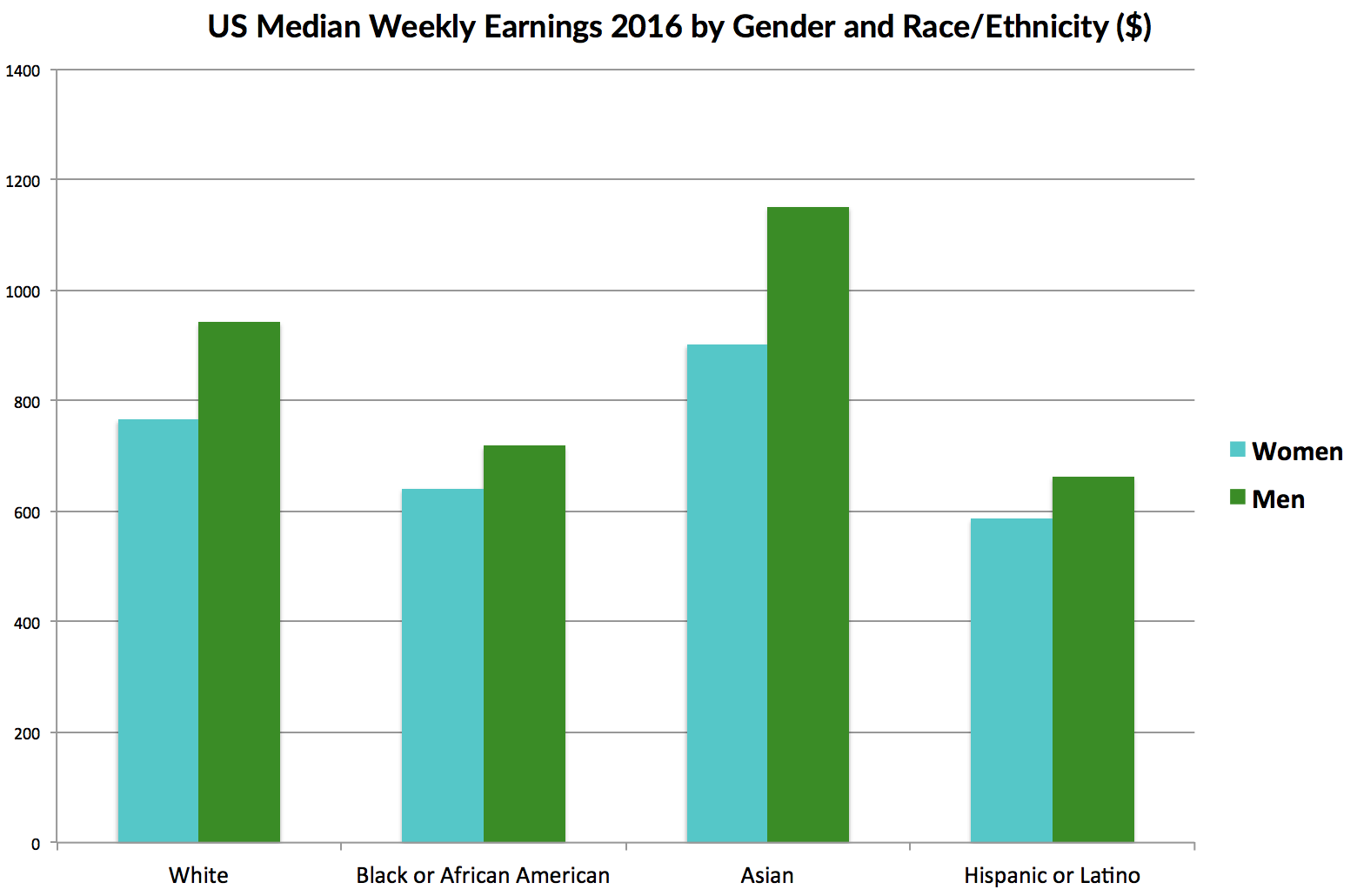 Source: U.S. Bureau of Labour Statistics
In 2017, Iceland became the world’s first country to force companies to analyse their pay and redress it so that men and women are paid equally - or face fines. By 2021, all companies and government agencies with 25 employees or more will have to undergo audits and receive certification to show that they do not discriminate by gender when it comes to setting salaries.
In the US, five states and Puerto Rico passed equal pay laws. And since 2016, seven states and cities have also passed legislation banning salary history disclosures.
This year, the UK also introduced a ground-breaking law that mandates all companies with 250 employees or more to publicly disclose their gender pay gaps by April 2018.
More than 9,000 companies, which together employ some 15 million people, will have to measure and report how they pay their male and female employees. Reporting and transparency around ethnic and disability pay gaps could be next on the agenda.
Solving the sexist data gap
There is growing recognition that without data disaggregated by gender, policy that aims to work for women, as well as men, is built on hope, rather than reality. The lack of comprehensive, current information about women and girls hinders our efforts to advance gender equality. Only 13% of countries worldwide dedicate a regular budget to collecting and analysing gender statistics. Currently, we do not have agreed upon methodology to measure more than 75% of the gender-related SDGs.
But now, things are now starting to change.
Australia is now testing an Individual Deprivation Measure (IDM), a gender-sensitive data tool that measures poverty on the individual, rather than household, level It also goes beyond money as a metric of poverty to include things like freedom from violence, health, and voice. The IDM will be ready for global use by 2020 and could revolutionise the fight against poverty.
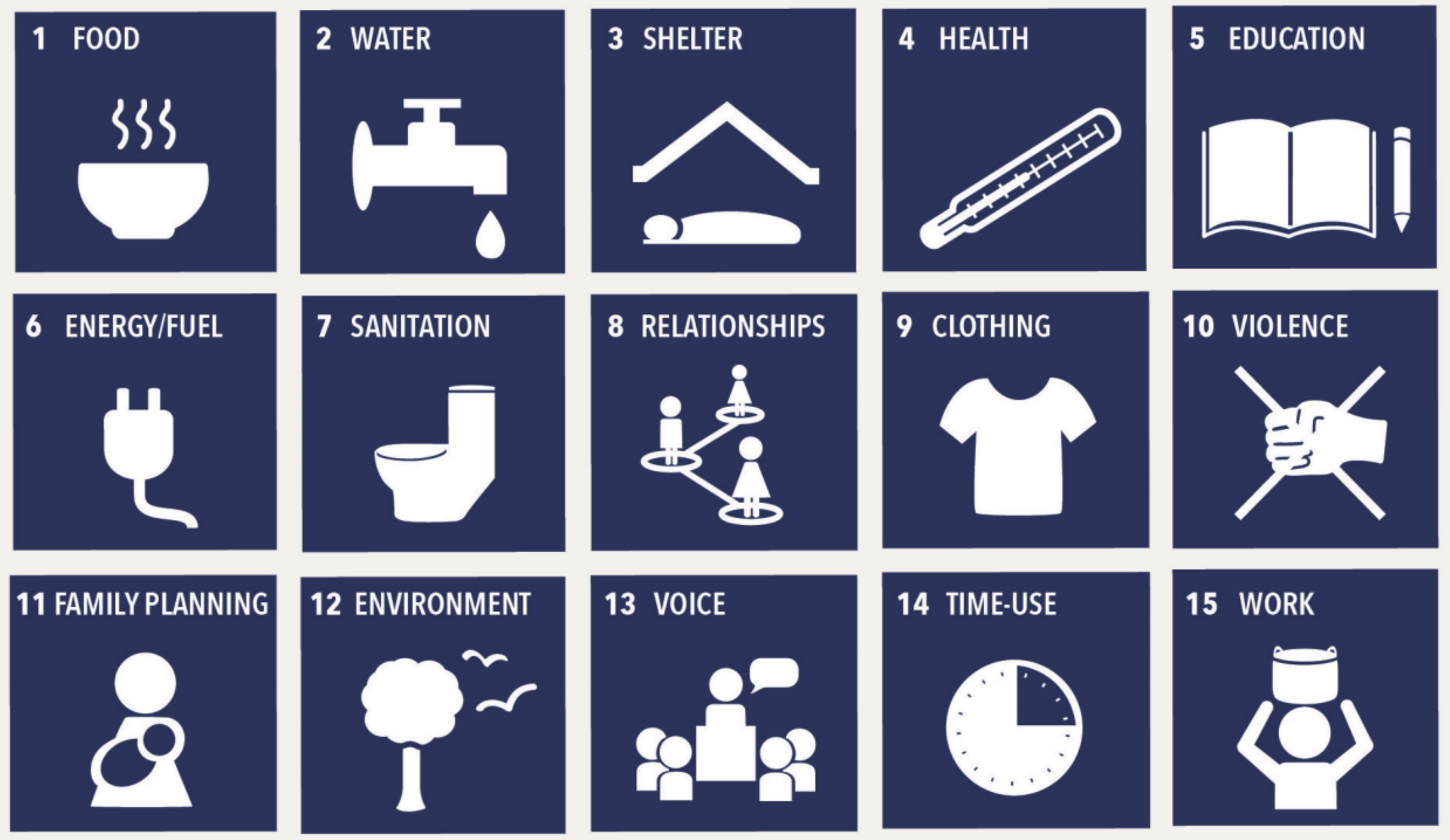 Gender-sensitive data points collected by the Individual Deprivation Measure
The UN Foundation also ran the Big Data for Gender Challenge, awarding 10 projects that apply big data innovations to fill gender data gaps and improve understanding of key aspects of girls’ and women’s lives. One winning project in Santiago, Chile, will test the feasibility of collecting female-specific transport data to figure out how women and girls use the city, and in which ways they differ from men.
This year also saw the launch of several important new data indices. The Wilson Centre’s Women in Public Service Project launched an index that collates and explores data on women’s political leadership around the world. Georgetown launched its Women, Peace, and Security Index, which uses data to rank 153 countries on a measure of women's well-being as related to peace, security, and women’s inclusion and justice.
The beginning of the end of acceptance of sexual violence?
Thanks to #MeToo, 2017 will always be remembered as the year the world finally woke up to the pervasive sexual violence that women everywhere suffer. While the real, lasting impact on policy is yet to be seen, change has been made, particularly in the political arena as politician after politician has been forced to resign in the face of harassment allegations.
In the UK parliament, leaders have agreed to implement a new staff complaints system in early 2018, which will ensure those subjected to sexual harassment have greater HR support and be able to formally file complaints through an independent process. For now, an existing helpline will begin to offer face-to-face support for staff with immediate concerns.
Sexual harassment training for politicians and their staff has also come back on the agenda in the US. Kansas House Democrats will this December receive prevention training. Maryland has voted to update the guidelines for reporting and tracking complaints against state lawmakers. And the House Speaker in Chicago has introduced a measure that will require training for government officials – and publish names of people who fail to comply.
2017 has seen some other significant progress on issues of sexual violence. The EU and the UN launched the Spotlight Initiative to eliminate all forms of violence against women and girls with an initial investment of $500 million. And in the Middle East, real change came as ‘Marry Your Rapist’ laws were repealed in Tunisia, Jordan, and Lebanon.
(Picture credit: Flickr/UN Women)
Odette Chalaby
odette.chalaby@apolitical.co
Make sure to share your own thoughts with the author by leaving a comment below

Log in or sign up to continue the conversation