
For years, countries the world over have been testing policy after policy to end some of the most intractable problems of gender equality: workplace inequality, domestic violence, stereotypes around men and women’s roles in society.
But, in recent years, a new way of thinking has been increasingly taking centre stage: behavioural insights.
“If you look at Google trends over the last few years, there has been a huge uptick in searches for “unconscious bias” in Australia and the UK," said Kate Glazebrook, a former member of the UK government’s Behavioural Insights Team (BIT) and now CEO of its first spin-off product, a platform that uses behavioural insights to remove bias from the job hiring process.
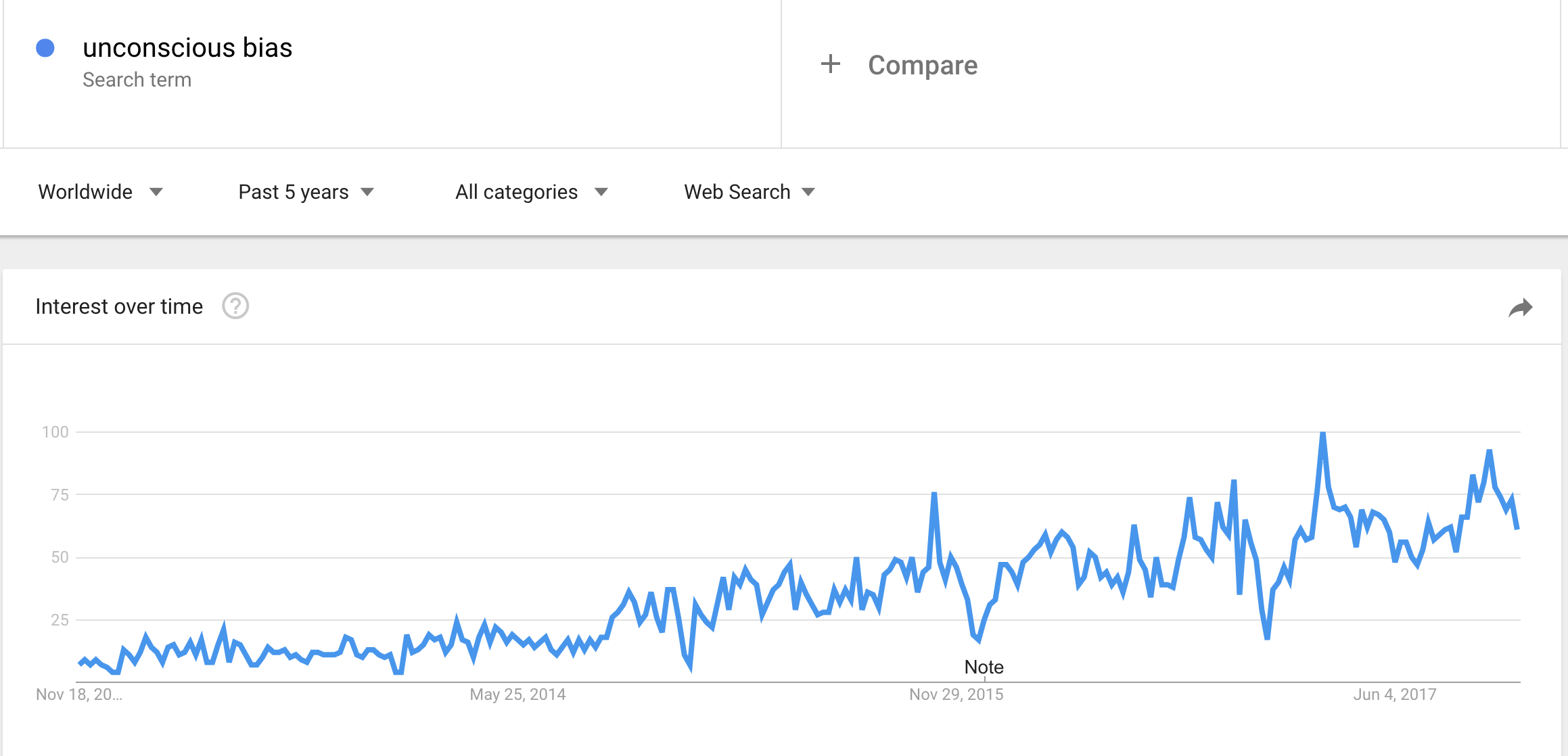 Source: Google
Behavioural insights as an approach focuses on providing empirical evidence to anticipate how people will react to policy options, rather than just making assumptions that people will react in a rational way. This is particularly useful in the gender equality sphere, where many of the most intractable problems result, in part, from irrational - and often unconscious - human biases and behaviours. Automatic associations based on stereotypes and prejudices undermine our declared beliefs in gender equality.
For example, unconscious bias prevents employers hiring the best candidates, and therefore reduces productivity and resource allocation. It’s irrational, but it’s everywhere. Incorporating that kind of behavioural insight into policy is a route to increased effectiveness - grounded in reality.
“Gender equality is not always on the health agenda, but here we see it as fundamental to what we do”
Beyond Glazebrook's spin-out platform, the BIT is now also launching the UK’s first ever large-scale behavioural insights program on gender equality, in collaboration with the Government Equalities Office. The European Commission is also running a competition which awards grants to projects applying behavioural insights to reduce gender stereotypes and violence against women.
But beyond the UK, it's really Australia that is taking the lead. The state of New South Wales now has its own dedicated Behavioural Insights Unit to work on public policy. Several departments in the government of Victoria are taking part in a "blind" job applications trial to try to remove bias from hiring. VicHealth is currently hosting two of the world’s leading experts in behavioural insights and gender equality, Harvard Kennedy School Professors Iris Bohnet and Jeni Klugman, over a multi-year external expert residency.
In 2014, VicHealth hired its first ever ‘Leading Thinker’, an outside expert employed to help tackle some of society’s most intractable health problems over several years of trials. That thinker was David Halpern, the world-famous psychologist and civil servant who is the CEO of the UK’s Behavioural Insights Team.
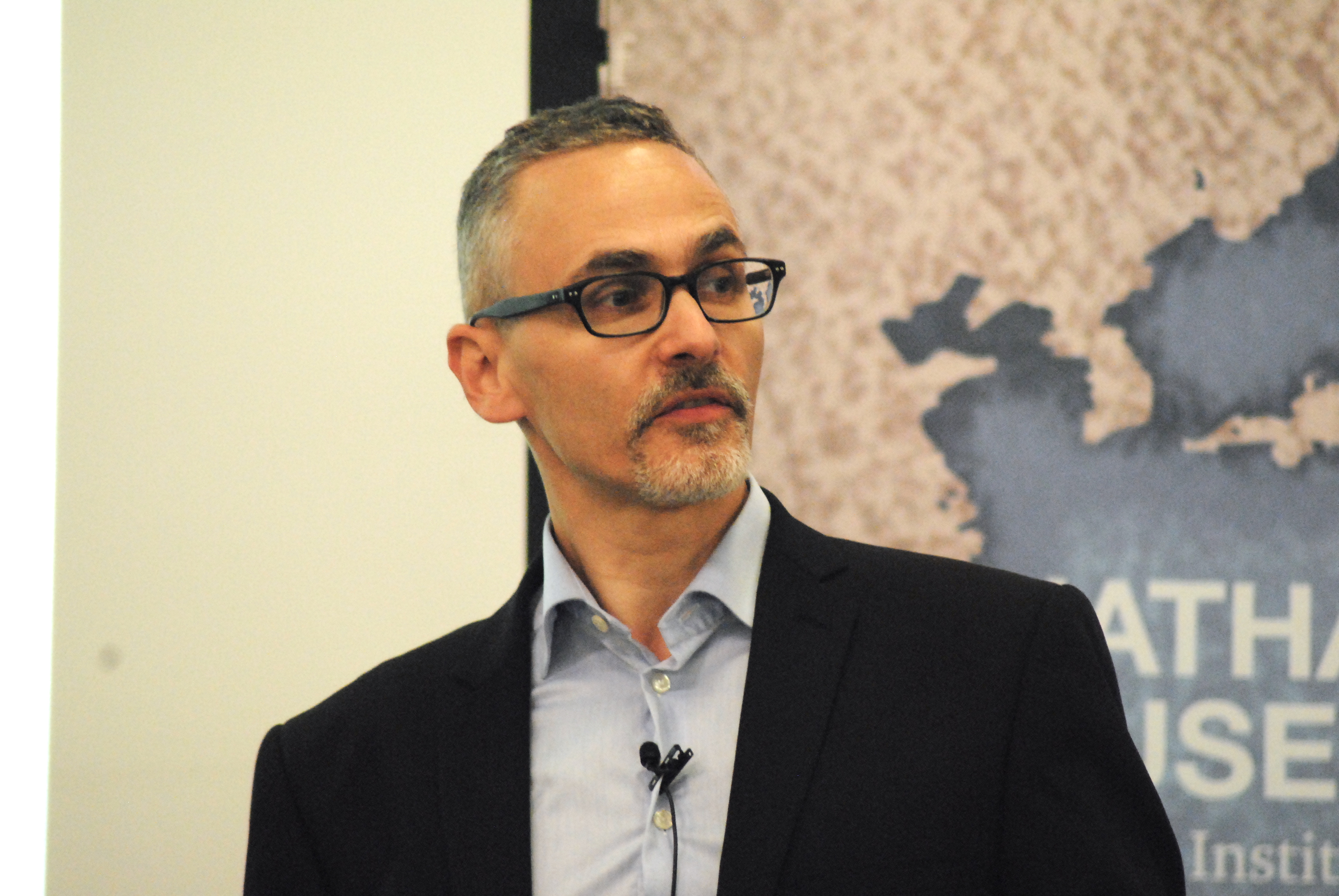 David Halpern, CEO of the UK's Behavioural Insights Team
“Behavioural insights was an emerging field then that built on a lot of good research that had been done in Australia and Victoria in the past. The idea was to really look at how we could use that to accelerate and look for innovation within the health promotion work in Victoria, and to encourage others to use a behavioural insights approach,” said Dr Lyn Roberts AO, Acting Executive Lead and Principal Adviser at VicHealth.
His task: to design and run a number of trials targeting health behaviour change related to Victoria's "most wicked problems."
“We’re incredibly lucky to really have the world experts here”
Now in its second iteration, the Leading Thinkers initiative continues with behavioural insights but has a new focus: gender equality.
“We wanted to continue the behavioural insights approach, and we already do a lot of work with women in sport, as well as on gender-based violence, which is what led us to discussions with Jeni [Klugman] and Iris [Bohnet],” said Roberts.
“Going back 10 years ago, VicHealth was a leader in Australia because it really started to look at the issue of violence against women and domestic violence both in terms of collecting data and looking at it in terms of prevention, like other health issues, and not just just service provision,” she said. “Gender equality is not always on the health agenda, but here we see it as fundamental to what we do.”
Professor Bohnet and Dr Klugman's residencies will use large-scale behavioural insights trials to focus on two main issues. The first is on women and sport and on the surrounding media (mis)perceptions and stereotypes. Women's sports make up just 9% of all sports coverage in Australian television news media, and female athletes are often infantilised in newspaper coverage by being referred to as ‘girls’ or ‘young ladies’.
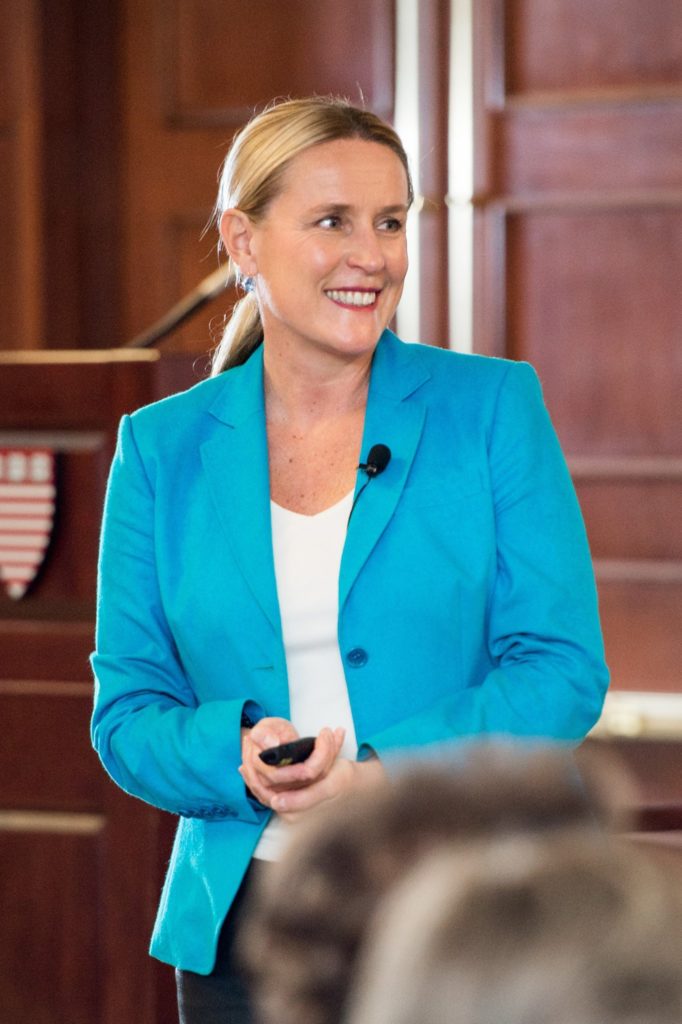 Iris Bohnet, Professor of Public Policy and behavioural economist at Harvard's Kennedy School
“The focus has been channeled onto the presentation of women in the media around sport, particularly looking at newspaper coverage. We’re in the process of a big data study over a number of years; the data’s still being collected and crunched so we don’t have the results at the moment,” said Roberts.
Another area of focus for the Leading Thinkers will be workplace equality and the gendered segregation of the labour market. While women make up 51% of all Australian workers in non-management roles, they only make up 16% of CEOs and 29% of "key management personnel".
“We’ve been looking at the role gendered language plays in recruitment and seeing if there’s any trials we could run with our industry partners to help build the evidence about the difference that can be made by removing that gendered language,” said Roberts.
The Leading Thinkers are employed for a several year residency, only going to Victoria for a week or two at a time. “None of them have spent long periods of time here - that’s not realistic in terms of their own workload, or in terms of the behavioural insights approach where you need to run long trials,” said Roberts.
“They’ve tended to come in, spend concentrated periods of time - say a couple of weeks - and meet key partners, have key forums, and then our team here works on delivering. We really communicate mostly by email and phone,” said Roberts.
"We’re in the process of a big data study over a number of years"
The long-term, remote structure does pose some limitations. “The model is a challenge: we get many requests from people that really want to engage with Leading Thinkers, but we have to tell them the next trip is not until whenever it’s going to be,” said Roberts.
Yet, it has allowed VicHealth to really attract the world's best to cement its status as a global leader in applying behavioural insights to policy. “For a three-month, full-time program we wouldn’t have been able to attract the calibre of Jeni [Klugman], Iris [Bohnet] and David [Halpern],” Roberts said. “We’re incredibly lucky to really have the world experts here.”
(Picture credit: Flickr/Dell Women's Entrepreneur Network)
Make sure to share your own thoughts with the author by leaving a comment below

Log in or sign up to continue the conversation