
The United Arab Emirates is drastically improving government services by encouraging employees to work “in crisis mode” and setting 100-day deadlines for solving policy problems.
The Government Accelerators program brings together public servants across departments and private sector stakeholders to solve thorny problems, such as how to reduce traffic deaths, resolve labour complaints, deliver electricity on time and cut greenhouse gas emissions. The program is part of a national agenda to achieve Prime Minister Mohammed bin Rashid Al Maktoum’s lofty goal for the country: use government innovation to make the UAE's public services the best in the world.
"When you have a crisis, people tear away from their bureaucracies"
“Sometimes it’s about getting all the right players together, sort of in a crisis mode. When you have a crisis, people tear away from their bureaucracies, move away from their hierarchies, and all work together towards one goal and a defined timeline – I think that’s when the true innovation happens,” said H.E. Huda Al Hashimi, Assistant to the Director-General for Strategy and Innovation at the Prime Minister’s Office.
Thus far, the results of the Government Accelerators program, which has been running for a year and a half, are impressive. Al Hashimi said this is partly attributed to ambitious goal-setting.
One group, for example, aimed to reduce traffic deaths along five of the country’s deadliest highways by 21% within 100 days.
“A lot of the senior members were pushing back, saying this target is unachievable, and we only want to commit to 10%. We said, ‘If it’s 10%, it’s a marginal change’,” said Al Hashimi. “The challenges we incubate in the government centre have to be real, difficult things to achieve. If they’re easy, they don’t belong in the accelerator.”
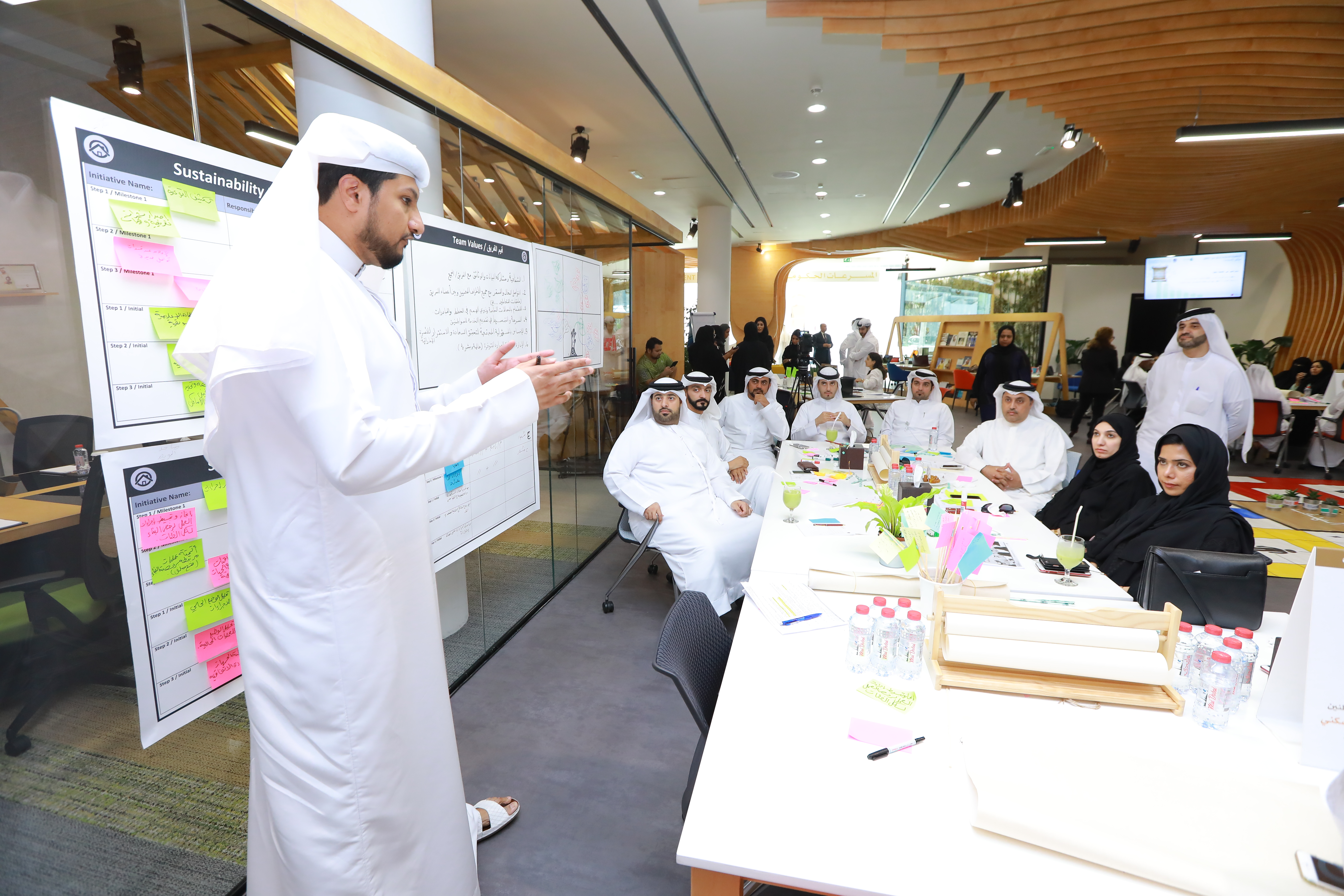 One team helped reduce traffic deaths on some of the country's deadliest highways by 63%
The team tasked with reducing traffic deaths was led by the Minister of Interior, and brought together representatives from the police, local government, transportation, infrastructure, civil defence, public works, ambulances, schools and the media. They all worked together to design a goal, define key performance indicators and test solutions.
After 100 days of experiments on five of the deadliest highways in the UAE, the team came up with a multipronged approach to reducing traffic deaths. Their solution combined social media awareness campaigns, road redesigns, highway radars, faster first response strategies and designated spaces for helipad landing spaces.
The team ultimately cut traffic deaths by 63%, which translated into 26 lives saved.
“That really touched everyone. We’ve been trying to solve this problem – by creating committees, enacting policies and laws – but the only thing that worked is getting all the different actors together and committed to a specific goal in a short period of time, then allowing them the space to experiment,” said Al Hashimi.
“Doing things the conventional way was not helping us reach these goals. Maybe it’s time to reinvent the whole methodology"
“The people on the ground are the ones making the big change, not the decision-makers. Giving them the full authority to make these changes we saw – that’s when the miracles happen," she said.
Another team aimed to improve air quality – a goal the Ministry of Climate Change was struggling with, as it was proving difficult to get different sectors and government agencies to commit to reductions.
The goal was to reduce emissions by the equivalent of 280,000 vehicles in one of the most polluted areas of the city – and the team ultimately cut nearly double that amount. It achieved this by bringing in representatives from the local aluminium factory and General Electric (GE) – which contributed $272,260 to the effort – to work with government.
“We told them, ‘We have this goal; we want you to be part of the Government Accelerator – so you’re not just someone who reacts to policy that comes your way, but someone who is part of the solution to reducing pollution,” said Al Hashimi.
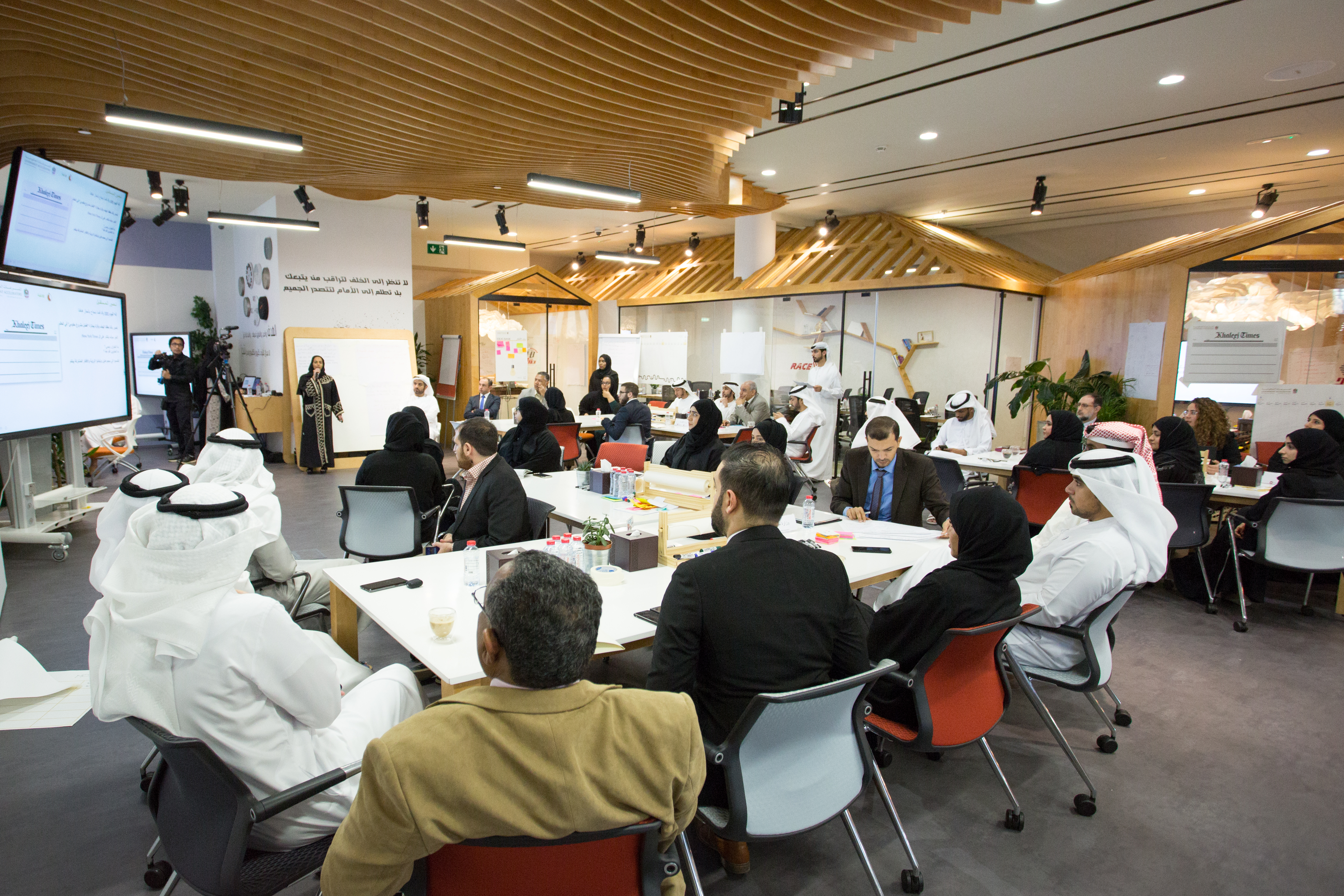 The teams work together to design objectives and brainstorm service delivery ideas
Although the results of the Government Accelerators program are impressive, it’s difficult to get an independent assessment of the program, as officials did not share specifics on challenges or failures encountered by the teams thus far. Government Accelerators is still in the early stages of development and the teams' solutions have yet to be implemented on a larger scale - although the plan is to do just that.
“Doing things the conventional way was not helping us reach these goals. Maybe it’s time to reinvent the whole methodology, and speed of delivery on high-priority policy programs that need to take place today, rather than tomorrow,” said Al Hashimi.
The teams work out of a mall that is open to the public, rather than a government office, to drive home the idea that everyone has access to the program. The Prime Minister regularly visits the space to speak with and motivate the teams.
Each team is chosen based on who the relevant stakeholders are, and have a leader and a sponsor – who together steer project design and defining objectives – as well as a coach, who helps the teams deal with challenges. The coaches work in different areas of the Prime Minister’s Office (strategy, services, performance management, and IT, among others) and go through extensive training to help teams deal with any problems that may arise.
The Government Accelerators use the Rapid Results methodology, which is available via a guidebook and an online course.
“Most of the time, though, it’s not about the process. It’s about collaboration: getting everyone together in one room and agreeing to work together toward that goal,” said Al Hashimi.
“When you see the actual results, the different people working on the accelerator are hungry for more – they come back straight away and want to work on another program. When they saw the improvements on air pollution, GE came back and said, ‘What other Government Accelerators program can we be a part of’?”
(Picture credit: UAE Government Accelerators)
Jennifer Guay
jennifer.guay@apolitical.co
Make sure to share your own thoughts with the author by leaving a comment below

Log in or sign up to continue the conversation