
The city of Louisville, Kentucky, puts considerable effort into getting the average public servant to innovate, from hosting tech-free hackathons to putting on skills training workshops.
One of their most successful initiatives, though, seems straight out of a kindergarten classroom: the city rewards employees for small acts of innovation with digital “badges”.
The Louisville Metro Badge Program rewards employees for tasks like creating an open dataset, crowdsourcing information from citizens or collaborating with other departments on projects.
There’s a tiered reward system for civil servants who participate, with prizes ranging from LinkedIn recommendations to recognition at a city-wide awards ceremony.
The idea is to ingrain innovation in all government departments, rather than concentrating efforts in the typical fields for government innovation, data and digital.
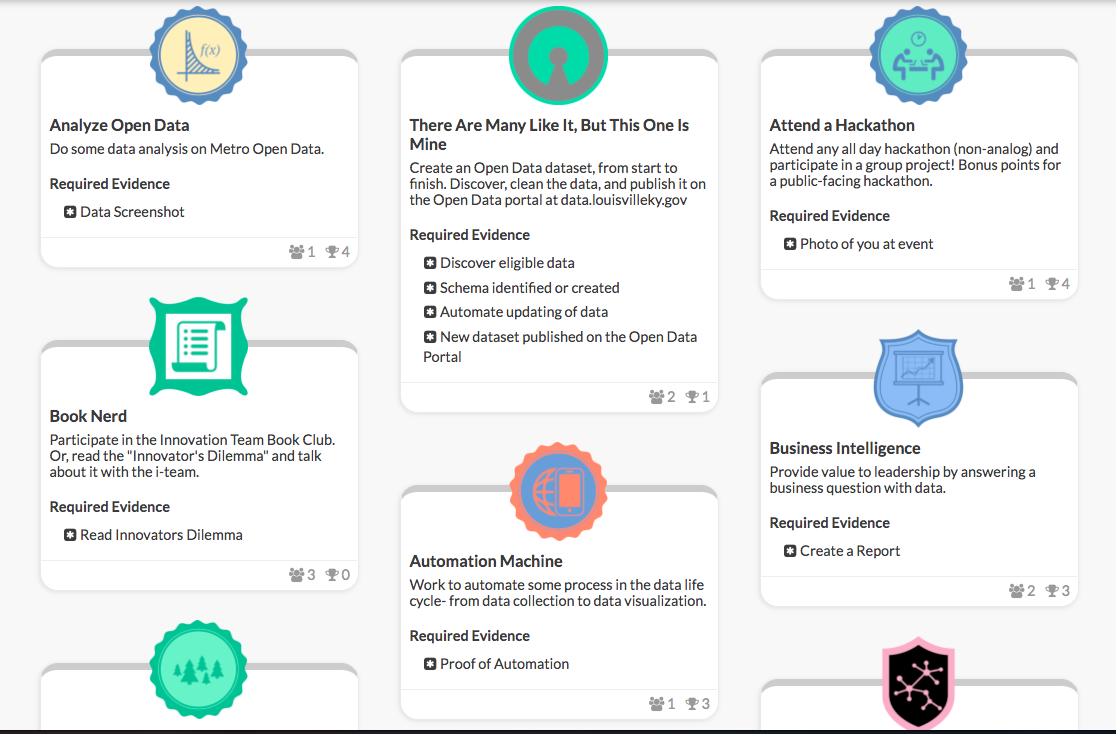 Public servants can track the badges they earn by joining the Louisville Metro Badges group
“Reception has been really great,” said Michael Schnuerle, Louisville’s Chief Data Officer. “The idea came about during one of the Data Governance team’s weekly meetings, and the mayor really liked it.”
Employees can join the Louisville Metro Badge group to browse available badges and track their progress. Once they finish a task, they submit evidence – a dataset, testimonial, screenshot or photo of them at an event – then can add the badge to their digital profile.
The program, which was launched at the end of November, is run by the Office of Performance Improvement & Innovation Team, which has created two separate “tracks” for participants: Data Scouts and Innovation Pioneers.
To complete a track, employees must collect 10 out of the 15 possible badges. They range from simple tasks – like reading an innovation-themed book – to more complex endeavours, like integrating voice activation into a project. Two people have already completed a track.
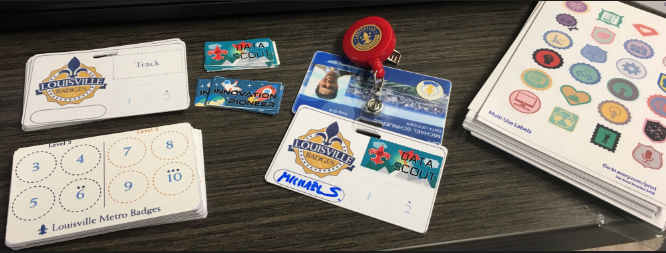 Participants get physical cards that attach to their employee IDs
The biggest challenge thus far is lack of funding, said Schnuerle: “We’d like to get more physical and larger rewards. To do that, we’d need a budget for it – if we had a small fund, even a couple hundred dollars a year, we could provide much more.”
Current prizes include a physical card or certificate, the access code to a multimedia room, an email signature add-on, stickers, and lunch with leaders on the data and innovation teams. Some of these may be trivial rewards, but Schnuerle's team has found that small incentives are enough to get people involved. The ultimate prize is recognition at the year-end mayor’s celebration.
The next step will be using the program to achieve city goals. “We want to align badges with strategic goals in each department – so we might modify the badges or create new ones relevant to the goals of each department, because they might in the future have their own badge program.”
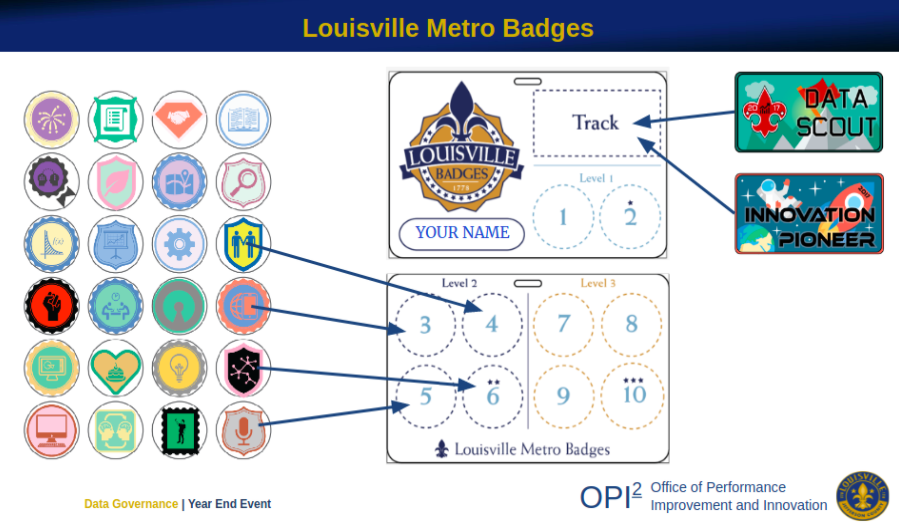 Employees can choose one of two tracks: Data Scout and Innovation Pioneer
Already, a number of departments are interested: Community Services, Information Technology, Safe & Health Neighbourhoods and Health & Wellness. “They all want to create badges that focus on areas within their own departments,” said Schnuerle.
The Metro Badge Program is part of a larger effort to advocate for more innovation across all levels of government. Another component of this push is the Office of Civic Innovation’s “analogue” hackathons, which bring together employees from different departments to solve city problems without introducing technology, which is typically a key component of hackathons.
While not all ideas to come out of the hackathons have been adopted, the point is to get public servants to start thinking differently - which is what the city also hopes to accomplish with the Metro Badges program. The idea of awarding badges to grown-ups may sound a bit silly - but it's already changing public servants' habits by getting them to work creatively on a regular basis.
(Picture credit: MichaelSchnuerle, the City of Louisville)
Make sure to share your own thoughts with the author by leaving a comment below

Log in or sign up to continue the conversation