
This article is written by Roi Benitez, ex-Director of Capacity Building and Innovation at the Cabinet Office of the Government of Argentina. Currently, she is a professor of innovation and digital transformation at the University of San Andrés, an expert consultant in learning agility and an international speaker on systemic learning.
Innovation in the public sector can’t be left in the hands of a small group of senior civil servants.
To improve the quality with which public policies are made, implemented and evaluated in government, it is necessary to develop new skills and share tools that empower all public servants. This is probably not the fastest way to reach our goal, but it is the most sustainable way.
Want to write for us? Take a look at Apolitical's guide for contributors
Public administrations are realising that traditional ways of management have to change, that public policies have to be designed with a people-centred approach and that the use of data and evidence is imperative to improve decision-making. The current global crisis could show that traditional ways of managing governments are collapsing and that we must create systemic governments. The model of governance that we inherited from the last century is in transformation.
For governments to be able to improve their relationship with citizens, add value and design agile and high-impact public policies, they must make changes internally, developing new capacities and innovating the manner in which public servants learn.
How do we get traction?
The Covid-19 pandemic accelerated many of the changes that digital transformation had set in motion. Digitalisation and technology are bursting into our lives, disrupting the way we communicate, relate, learn and work. They profoundly transform our habits, our language and our customs, promoting a new culture, "the digital culture". This is changing the way we work and the way we conceive work. Virtual reality, big data, the internet of things, mobile applications, robots, cars that drive themselves are some of the clearest manifestations of the impact that technology will have on our lives.
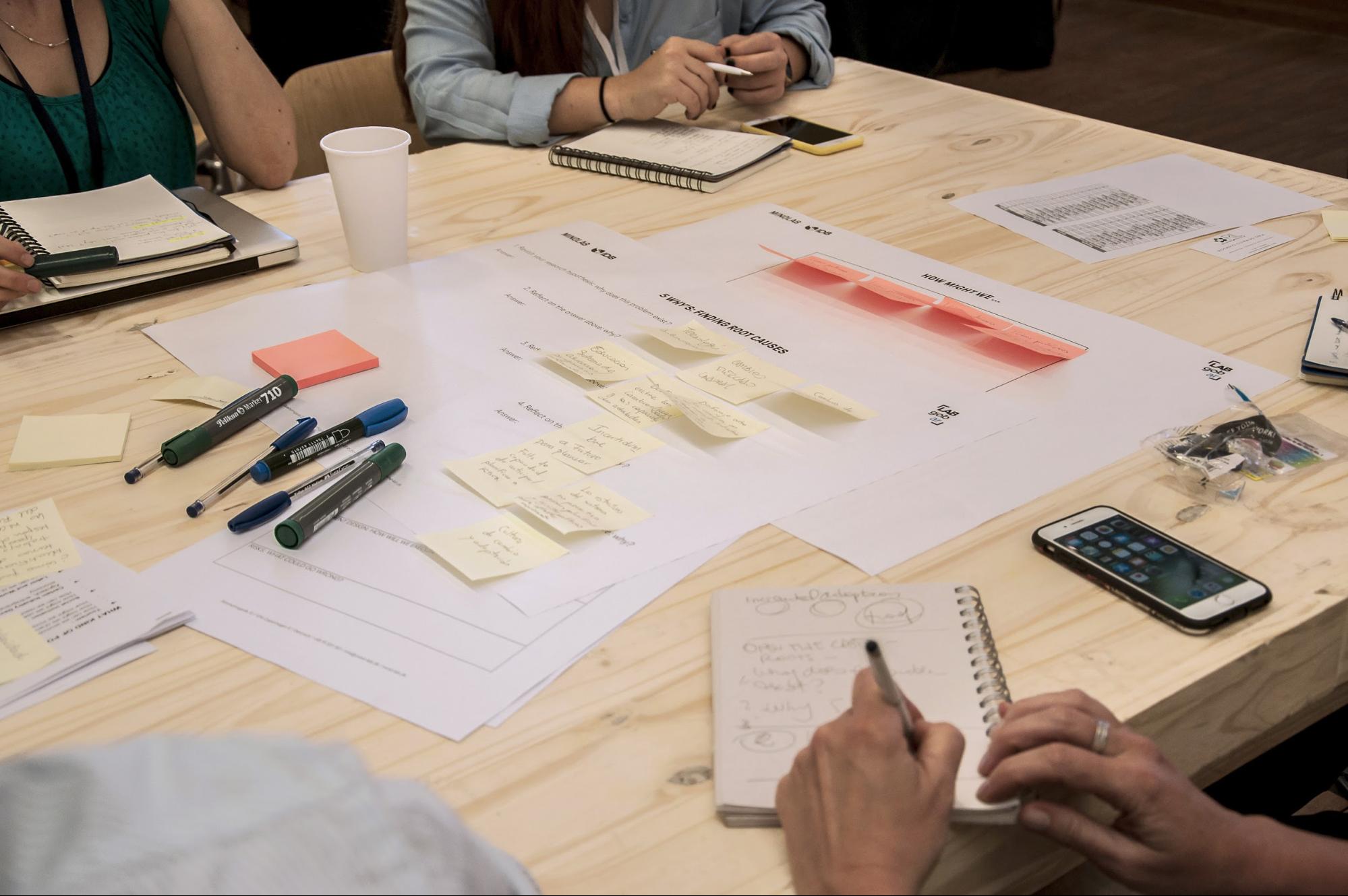 (Picture credit: Secretary of Innovation, Argentina)
While it is true that some occupations, roles and trades are at risk of being replaced by the digitalisation of the economy, changes in employment and employability present itself as an opportunity. To make people more employable we need to develop their skills. Governments are not oblivious to this dilemma and have a great opportunity ahead of them.
To talk about innovation in government and capacities of innovation in government seems illogical, because there is always something else that is more urgent, despite the fact that developing our capacity to innovate is a great opportunity to change how government fundamentally works in a systemic way
This leads us to think seriously about learning agility because what we need to be able to develop in this changing environment is the ability to learn new things quickly. It was necessary before but now it seems indispensable. Post-pandemic skills adaptation is crucial to build emotional resilience and agility in public servants and governments.
The question is: How can we effectively build capacity in governments? What are the challenges and opportunities?
Capacity building in government is an opportunity to stimulate and encourage innovation in government so that teams exposed to rapid change can exchange knowledge, share learning and capitalise on the collective construction of knowledge. Because in this complex context, developing the skills and abilities to make innovation happen plays a substantive role.
How to accelerate learning in public administrations?
When I was Director of Capacity Building for Innovation in Argentina’s government my team and I designed, together with the National Institute of Public Administration (INAP), the first government academy in South America: The Academy of Public Policy Design. We impacted 60,000 public servants in three intense years of work. We learned a lot. Taking inspiration from my personal experience, I outline here what I consider to be the key elements of an excellent government learning strategy. Because capacity building is not just about teaching courses, it is part of something much bigger and the approach must be systemic:
- Develop capacities: The first question is how and what to teach. If the goal is to accelerate and democratise government innovation, we should develop training devices to train new skills and abilities directed to national and sub-national public servants. The important thing here is to be creative when selecting formats, for example, agile capsules, podcasts, workshops and inspirational talks because we need to permeate knowledge into tight schedules; and there's hardly time for learning. If we manage to be disruptive in the formats, we will get people to participate actively.
- Build knowledge: This is about how to systematise learning and how we create resources for public servants to learn. Here the important thing is to carry out lines of research, systematisation and dissemination of methodological and academic content that can be a contribution to the public sector. Capacity development areas are sensitive to changes in structure within government and are often underestimated. For this reason, we need content that is adapted to the logic of the public sector. Do not copy company recipes. We must create public sector knowledge for the public sector. That is to say, build real evidence that demonstrates results on the positive impact of capacity building.
- Creating communities: Lastly, how can public servants learn from each other to strengthen collaborative networks? This requires identifying, strengthening and interacting with communities of practice to generate conversations that enhance horizontal knowledge transfer by remixing traditional ways of learning.
I have always believed in the potential of public servants when spaces are made available to do things differently, there are a lot of talents hidden away in government waiting to be discovered. I found innovation in places that were unthinkable, I found agents of public change who transformed their workspaces, I found a community of public servants who became promoters and disseminators of tools that they learned at the Academy of Public Policy Design. For example, twice a year we did an "Innovation Marathon" a full day with more than 60 activities in 8 auditoriums simultaneously. We allocated space for public servants to be speakers and, to our surprise, the quality and the convocation was incredible. We also managed to get many of our learners to volunteer at the event. It was wonderful to see how administrators, technicians, directors, all together from different government agencies joined in the collaboration. That was a real learning community.
Innovating in the public sector undoubtedly requires the joint work of specialists who are willing to challenge the limits of their knowledge in search of new paradigms and practices that can improve the quality and the way in which decisions are made, implemented, developed and evaluated
The big problem is that what’s urgent is always what’s important. To talk about innovation in government and capacities of innovation in government seems illogical, because there is always something else that is more urgent, despite the fact that developing our capacity to innovate is a great opportunity to change how government fundamentally works in a systemic way.
Innovating in the public sector undoubtedly requires the joint work of specialists who are willing to challenge the limits of their knowledge in search of new paradigms and practices that can improve the quality and the way in which decisions are made, implemented, developed and evaluated. However, this dedication is not enough if the acquired skills are not transmitted to employees and government teams so that they can participate in the framework that guides their daily functions in each of the areas to which they owe their commitment.
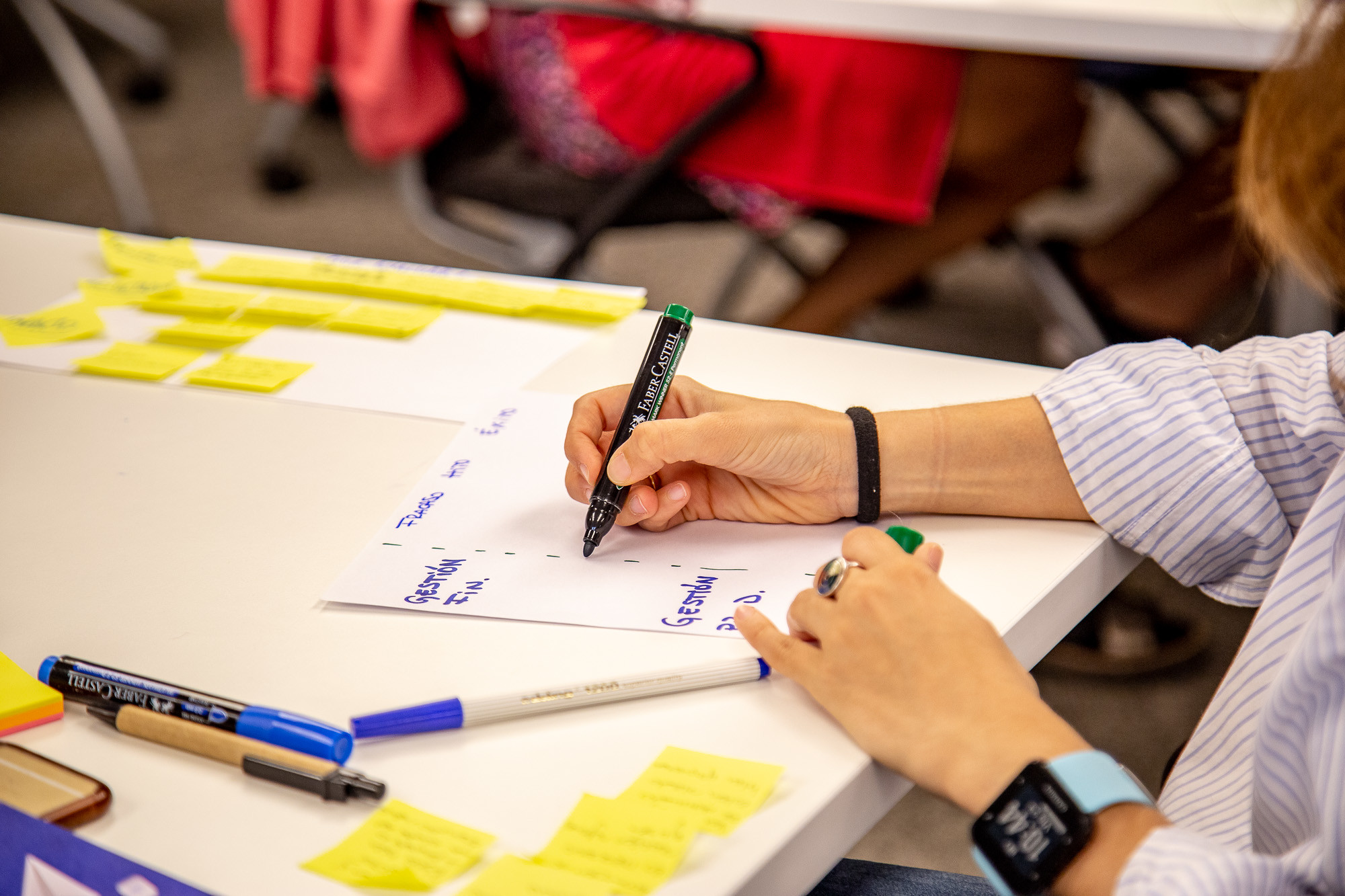 (Picture credit: Secretary of Innovation, Argentina)
Without wanting to prescribe a recipe, this essay is part of the consolidation of in-depth conversations with colleagues who are building capacity in local and national governments, experts in the field; and my personal experience of having designed South America's first government academy.
Making innovation happen requires collaboration. If you are a public servant and this resonates with you, I invite you to come and share experiences. You are the motor of public innovation and I will be happy to share learning. — Roi Benitez, Twitter
(Picture credit: Secretary of Innovation, Argentina)
Make sure to share your own thoughts with the author by leaving a comment below

Log in or sign up to continue the conversation