
This article is written by Mandar Apte, executive director of the Cities4Peace initiative, which works with individuals, organisations, and communities to increase social connection and resilience in communities around the world
The murder of George Floyd in Minneapolis last year sparked nationwide protest in the US, and has since thrown relations between law enforcement and communities of colour into critical discord.
In the past, several professional working groups have made attempts to brainstorm strategies to strengthen trust between the two sides. Clearly, more needs to be done, and perhaps now is the time for civic leaders to try new strategies to raise hope, promote non-violence, and bring healing to the extremely sensitive topic of racial discrimination in America.
- Want to write for us? Take a look at Apolitical’s guide for contributors
A few years ago I realised that unless an act of violence were to happen to me (I am both an immigrant and a person of colour) then I may never do anything about this problem. I began studying the ways in which Dr. Martin Luther King and his colleagues reimagined the Gandhian principles of non-violence during the Civil Rights Movement. These principles are encapsulated in the ancient Indian philosophy of Ahimsa.
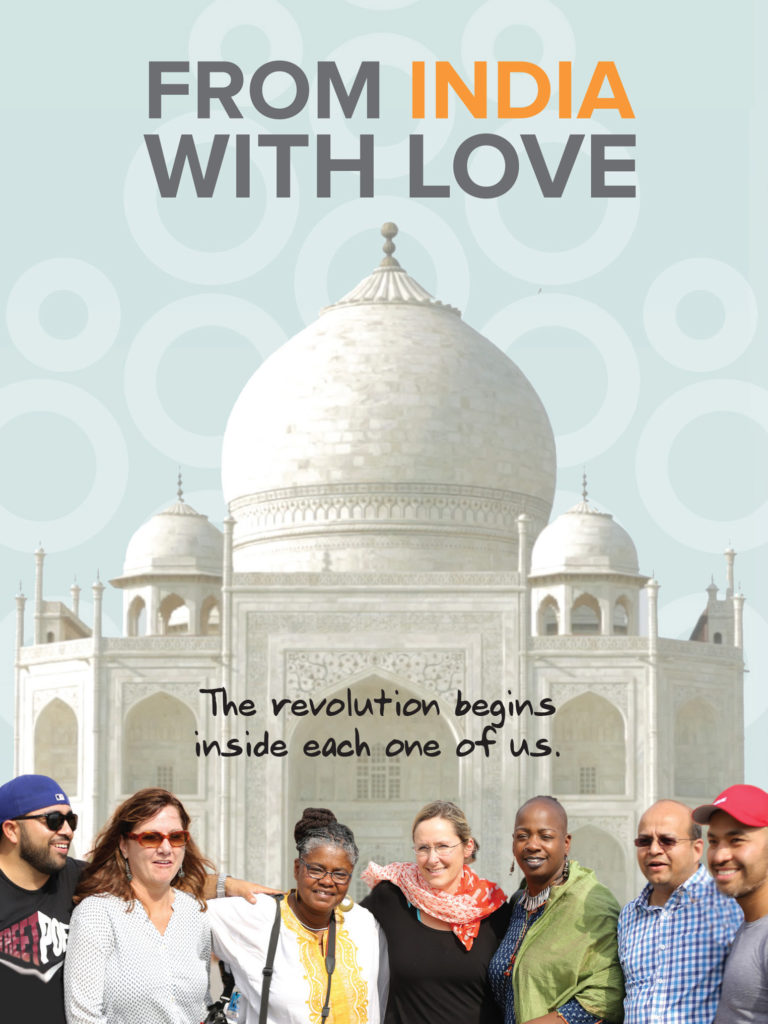
It is important to note that Ahimsa does not encourage accepting social injustice. Rather, it advocates fighting any type of injustice with conviction and commitment, but always in a peaceful manner. This can be challenging for many to grasp, and so to promote these principles of non-violence, I produced a documentary film in 2018 called ‘From India With Love’, which was later premiered by the Los Angeles Police Department (LAPD). My film crew and I were subsequently invited by the LAPD to design and implement a social experiment that would bring together various stakeholders from South LA (including the police officers) to promote peace and non-violence in the community.
A community divided
Now for some context. In 2018, there were more than 25,000 violent crimes (including murder, rape, robbery, and aggravated assault) reported across LA. More than 70% of these incidents were reported in South LA, which has put huge stress on local residents and the local police department.
We conducted several interviews with community stakeholders from South LA. Our interviewees included former gang members, community leaders, young people who were at risk of violence or victims of it, parents, educators, and LAPD police officers. Almost everyone we spoke to said they had experienced trauma from what was happening in their community. Based on these interviews, we designed an online module that pushed participants to attend an eight-week training programme called ‘Ambassadors of Peace’. The programme focussed on addressing the emotional and psychological damage done to the community and what could be done to help rehabilitate it.
It is our birthright to live in violence-free communities and neighbourhoods
Over those eight weeks, participants practised yoga and Sudarshan Kriya, a healing, breathing-based meditation technique. After a few weeks of practice, participants reported feeling less stressed and more energised, as well as an overall improvement in their mental wellbeing. After that, we facilitated a series of open group discussions with the participants to improve their social connectedness and cohesion.
Participants were subsequently taught about the wisdom of Ahimsa and how to integrate it into their daily lives. They were eventually certified and inspired to share their newly learned wisdom, as well as to teach the same breathing techniques they’d learned to others in their communities and organisations. The first cohort arranged three workshops for other community members to experience the transformation.
A healing journey
Through this work, we have showcased how despite their differences, community members from diverse backgrounds can come together in the spirit of healing from their trauma to promote peace and non-violence. A short video on our work is available on YouTube. Public servants can also source the reference letter from the LAPD as well as media coverage of the work we’ve done on our website.
Dennis Kato, former deputy chief of the LAPD, later reflected that while he recognises police officers in the city continue to have a stressful job, he believes the Sudarshan Kriya breathing exercises they’ve learned “will help them build stronger community relations”.
Researchers from George Mason University conducted an independent evaluation of our programme. The research showed that after three months, participants in the programme developed a heightened capacity to stay focused, enjoyed enhanced clarity of thought, were able to stay calm under stress and resolve conflict with others through peaceful means.
Public servants must not lose hope and recognise their role in supporting programmes that actively promote peace and non-violence in their cities and communities
Our programme has shown that we can, by working with communities, reduce violence, improve community-police relations, and transform the formerly incarcerated into exemplars of peaceful leadership.
In 2021, many city councils across the US are re-examining policies around the use of deadly force, while also reviewing city budgets for their police departments. It is still a little-known fact that violence comes at enormous cost to the taxpayer. The cost of one homicide in LA comes to around $1 million. On average, LA records around 600 murders each year, making the total cost of violence a huge expenditure for the city.
Sadly, to a greater or lesser degree, we have all been desensitised to violence, whether it comes in the form of suicide, homicide, gang activity, drug-related conflict, or school bullying.
Public servants must not lose hope and recognise their role in supporting programmes that actively promote peace and non-violence in their cities and communities. Lives can be saved and transformed. It is our birthright to live in violence-free communities and neighbourhoods. Our work shows we can be the change we seek. – Mandar Apte
We want to hear what you think about this article. Pitch an article to us or send your comments to hello@apolitical.co
(Picture credit: Unsplash)
Make sure to share your own thoughts with the author by leaving a comment below

Log in or sign up to continue the conversation