
This article is written by Claudia Rivas, Consultant at the Education Unit of the World Bank.
In almost every profession, there is always an opportunity in which you will be asked to present your work in front of an audience, whether it is big or small. If you — like I do — start feeling nervous just thinking about it, then continue reading because this post is for you.
- Want to write for us? Take a look at Apolitical's guide for contributors
At school, I used to get sick intentionally the day before just to avoid showing up on the presentation day. At university, I often — but not always — selected assignments where grades were based on written examinations. Through these experiences, I reinforced the idea that I was not good at public speaking and that public speaking was not for me. Period.
However, it never occurred to me that public speaking, like any other future skill, can be developed over time. Yes, there are people who enjoy presenting and seem to be naturally fitted for this, but if you get goosebumps just hearing the word “audience”, you can still do it (and be good at it!) with these tips I learned at Apolitical’s webinar on public speaking for public servants.
How to design your message
Before starting with the tips, I would like to say that knowing your topic is not the same as knowing how to deliver your message to your audience. The latter requires much more preparation, and your audience will definitely see the difference.
The first tip is to get to know your audience in advance: are there any cultural references you should know, are they beginners in the topic you are about to present, or do they have some knowledge? With this in mind, you will know how to what extent develop your presentation.
The second tip is to prepare an empathy map while designing your message. An empathy map is a visual tool that captures information about users’ behaviors and attitudes. In this case, your audience becomes your user. To develop this map, there are 7 questions you need to answer:
Who are we empathising with?
What do they need to do?
What do they see?
What do they say?
What do they do?
What do they hear?
What do they think and feel?
If you are preparing a small presentation with people you already know, you may not want to ask yourself all these questions, but in any case, this could be a very helpful tool to tailor your message, your presentation and your speech.
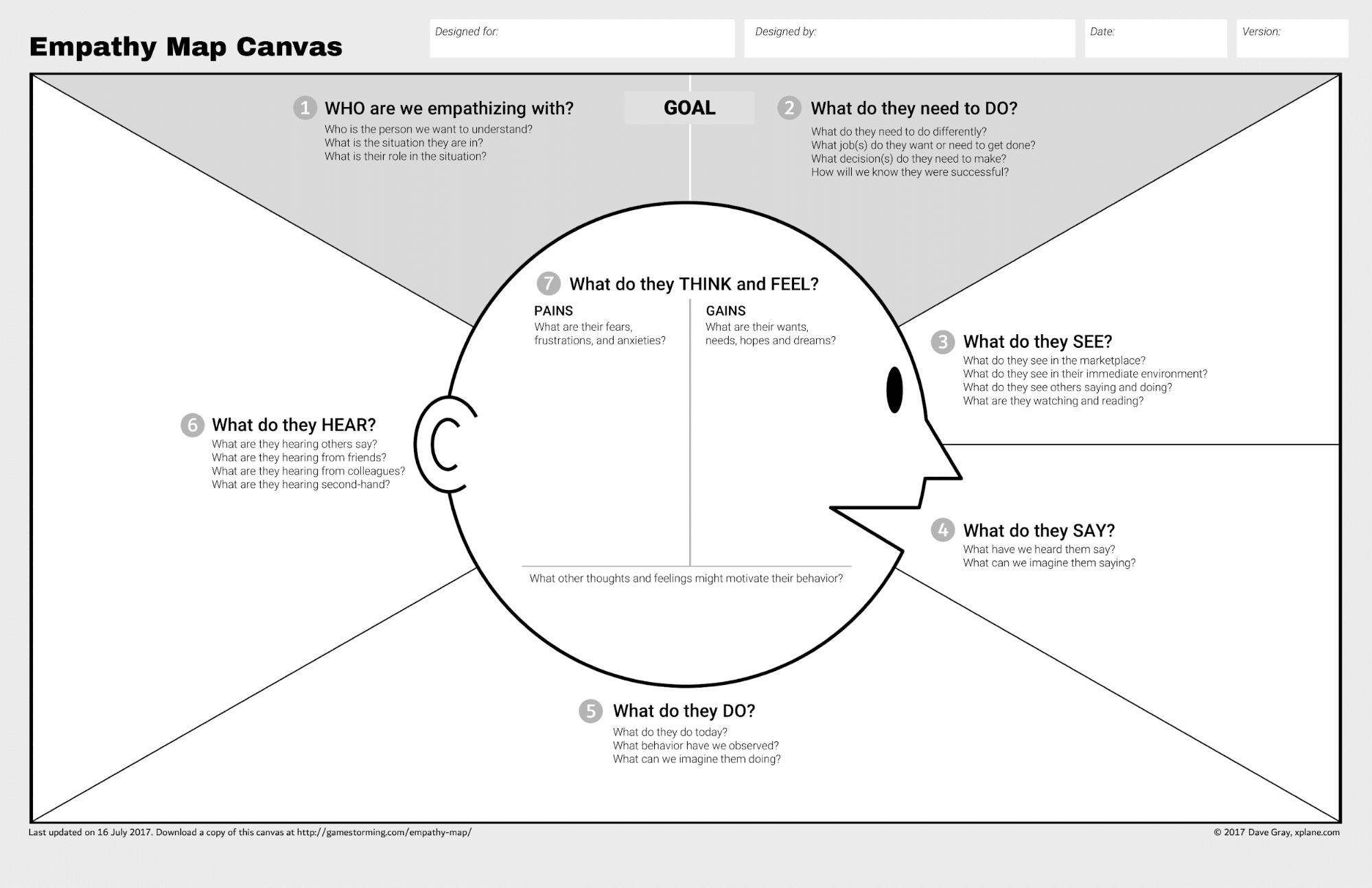
Source: Dave Grey, on Medium
Finally, we need to be aware that now more than ever, people’s span of attention is very short. During a presentation, try to get people’s attention by sharing short stories every time you introduce a new topic and end with a summary sentence. Adding stories to your presentation will help you to remember your speech, plus it will help to keep your audience engaged.
You have heard about storytelling, right? Remember Maya Angelou’s quote: “At the end of the day people won't remember what you said or did, they will remember how you made them feel.”
If you would like to read more on how to structure your presentation, I recommend this article by fellow Apolitical member, Paravasthu Jagannathan, Manager at the Department of Planning and Development in the United Arab Emirates.
How to overcome the fear of public speaking
If speaking in public terrifies you, let me tell you a hard truth: this feeling won't magically disappear. This may not sound encouraging, but like any skill, it requires both practice and patience.
My first advice is to try to figure out why you feel nervous about a particular presentation. Is it because you are afraid of missing one part of the presentation, because you think you don’t handle a specific topic very well or because you think your audience will be tough? By identifying and unbundling these factors, you can prepare yourself in advance and boost your confidence.
At the webinar, I learned about the “4-4-4” breathing meditation technique, which can be used right before presenting. To do this, inhale through your nose slowly for 4 seconds until you fill your lungs, hold your breath for 4 seconds, and finally exhale in 4 seconds. By repeating this exercise four times (or even just once!) you will focus your mind and bring your heartbeat to a normal level if you are feeling to anxious. Give it a try right now and feel the changes in your body. Do you notice any difference? Are you feeling more relaxed?
My last advice is simple: being on stage is not like going to a firing squad (although it may feel that way). You are allowed to not know it all and make mistakes. If you are still nervous about it, try to rehearse some of these common replies that will get you out of trouble:
“I did not cover that topic in this presentation, but I can get back to you if you send me an email”.
“That level of detail is not explained in the slides, but I am happy to discuss the topic in depth after the presentation”.
Or just a simple:
“Thank you for your contribution. I will take it into account for my future work”
People will like a presenter who owns missteps and oversights, instead of someone that does not take in any advice.
To keep practising, next time there is an opportunity to speak in front of an audience, jump on it! The current situation has brought in a new wave of online meetings and webinars. These can be a really good place to start and gain experience, for when we go back to our new normal.
For more tips on how to overcome your fear of public speaking, you may like to read this article. And to those who are interested in watching the full webinar, I invite you to do so here. — Claudia Rivas
We want to hear what you think about this article. Pitch an article to us or send your comments to hello@apolitical.co
(Picture credit: Unsplash)
Make sure to share your own thoughts with the author by leaving a comment below

Log in or sign up to continue the conversation