
“There’s this deal coming up - but, actually, you’re probably just going to get pregnant again, aren’t you?”
“Oh, it’s so good that you’ve got your figure back so quickly.”
"I never had a problem with childcare because I had a wife.”
This was the welcome Kate* received from colleagues when she returned to her central London law firm after a year of maternity leave. In spite of significant strides made in parental leave policies around the world – both in the public and private sectors – huge economic and cultural barriers remain.
“There’s this deal coming up - but, actually, you’re probably just going to get pregnant again, aren’t you?”
The negative impact this has on gender equality in the workplace is fairly well-documented, but there's another reason why progress is so important: parental leave has been found to significantly affect children's early development
“I think it’s very stressful for parents who have to return very early to the labour market after giving birth to a child," said Hanna Sigríður Gunnsteinsdóttir, Director General of Iceland's Department of Social and Labour Market Affairs. "That stress is bad for the child, even if they have good caretakers while their parents are working”.
"The law firm where I work is basically 10 years behind"
After having a new baby in Iceland, you're entitled to nine months of leave, with three set aside for each parent. In Sweden, it's up to 480 days of leave at 80% of normal pay. The United States, however, does not guarantee paid parental leave. It's the only industrialised country not to do so.
With such a wide disparity in benefits, it begs the question: what and how much impact does parental leave have on children's futures?
Why it matters for child health
"The law firm where I work is basically 10 years behind," said Kate, who shared the parental leave with her husband James* – a rare move amongst her colleagues. "There’s absolutely no talk of shared parental leave whatsoever, no one knows about it at all and it’s not publicised or encouraged."
The couple were well-aware of how important a child's early days are for health and development. Healthy interactions with both parents are linked to a huge number of benefits, from improved emotional development to strong physical health.
"In psychology, they say it’s very important to have strong relationships with your child within the first year, and even the first six months, so your child will have a healthy emotional life later on,” said Gunnsteinsdóttir. "If children have a strong emotional connection with their fathers as well as their mothers, that’s very good for their psychological health."
Parental leave's physical impacts can also be profound. Women in California taking paid leave breastfeed for twice as long as women who do not, which significantly reduces a child's chance of issues such as asthma, obesity and cot death.
"Increased time with the child led to a 5% increase in wages by the age of 30"
Meanwhile, when fathers participate more in childcare, children enjoy improved physical health, as well as higher cognitive and emotional outcomes.
And in many cases, parental leave can mean the difference between life and death. Global data from 141 countries found that an increase of 10 weeks of paid maternal leave led to a 10% decrease in neonatal and infant mortality, and 9% decrease for children under five.
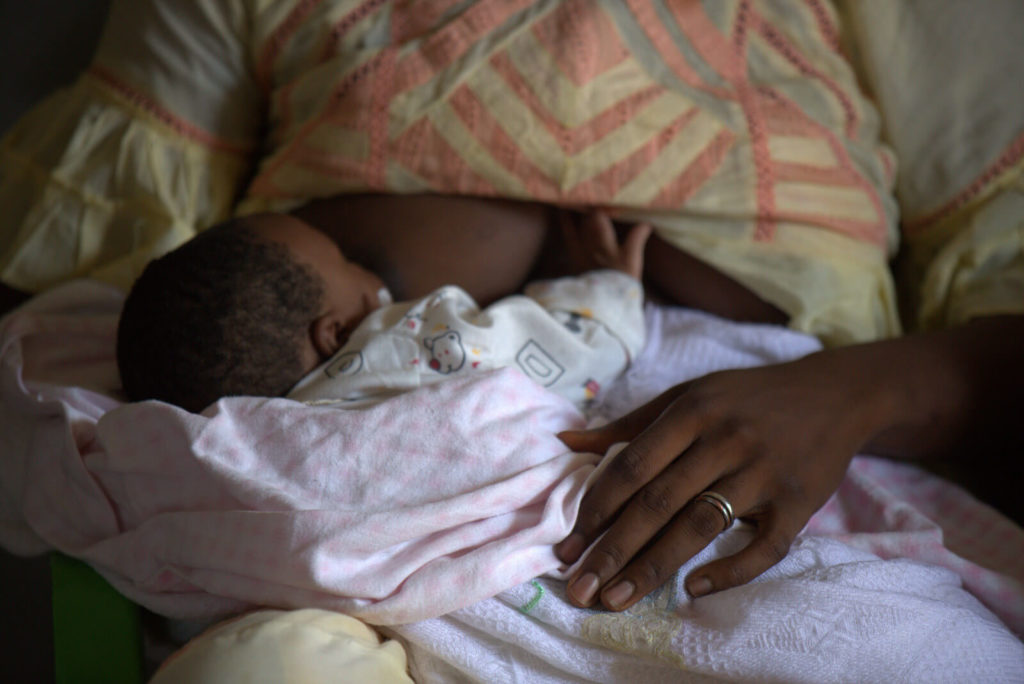 Breastfeeding significantly reduces the chance of several health issues
This impact is particularly pronounced for low- and middle-income countries, for whom each month of paid maternity leave leads to an expected 13% decline in infant mortality.
The long-term picture
These factors have significant ramifications for children’s chances in life, as well as potential benefits for women’s careers, and even the performance of companies.
A landmark study in Norway analysed the long-term impacts of a change in their parental leave policies in 1977. Before July that year, mothers were eligible for only 12 weeks of unpaid leave, while those giving birth afterwards enjoyed four months of paid and 12 months of unpaid leave.
"Companies cited improved employee morale, lower turnover of staff, and even operational improvements"
Following the results of children born before and after the change, the increased time with the child led to a 2% decline in high school dropout rates and a 5% increase in wages by the age of 30.
 When fathers participate more in childcare, children enjoy higher cognitive and emotional outcomes
Far from disrupting women’s careers, parental leave may actually help, rather than hinder, their work. Paid family leave increases the likelihood that women work by giving them an extra incentive to work prior to childbirth and facilitating their return to work afterwards.
"Fathers are more involved with their children, and I think that’s a very, very important influence," said Gunnsteinsdóttir about Iceland's policy. "Now in the labour market, when you hire young people, it doesn’t matter if they’re men or women because they both will take parental leave when they have children”.
"It's very important for the bank's PR after the global banking crisis"
Meanwhile, in the long term, businesses could also benefit from generous parental leave policies.
Some workplaces are leading the way, such as the bank where Kate's husband James works. "They’re trying to be seen as very culturally innovative and progressive," she said. "It's very important for the bank's PR after the global banking crisis."
A study of employers and employees in the US in 2017 found that over 90% of those offering paid leave benefits felt that the effect was positive or at least neutral. They cited improved employee morale, lower turnover of staff, and even operational improvements such as profitability and productivity.
But it’s not quite that simple
One big issue is in implementation: just because a government has legislated for parental leave, it does not mean parents will take it.
For example, the British government introduced a shared parental leave (SPL) policy in 2015; giving parents the right to split 52 weeks of leave between them, and up to 39 weeks of statutory shared parental pay.
They expected a low uptake of between 2% and 8%, yet only 1% of fathers have taken it so far. A survey of 200 businesses, meanwhile, found that four in 10 companies hadn’t had a single father take SPL.
 Some banks are taking the lead on parental leave policies
Such change takes time. Sweden's SPL policies, for example, have taken a long time to enact change.
“In 2016, fathers used 27% of the days," said Johanna Storbjörk, a political advisor at Sweden’s Ministry of Health and Social Affairs. "It’s better than 1974, when only 3% of days were used by the father.”
"We have tried to reserve days for both parents, so they can’t transfer them between each other," said Storbjörk. "Four hundred and eighty days per child are divided between the parents - they have to transfer between them if the mother or father wants to use more. They can’t transfer 90 days each."
"Policymakers must also pay heed to the policy failures, to recognise that there isn’t necessarily a one-size-fits-all solution"
Meanwhile, in spite of a number of encouraging results in the implementation of parental leave on child development, there's been some conflicting evidence which warrants special attention.
Canada extended maternity leave at the end of 2000 from six months to a year, meaning that mothers who took leave spent 48% to 58% more time not working in their child’s first year. Contrary to previous studies, though, there was very little impact recorded on child development indicators.
However, Canada may have been a special case, because most children with working parents had been spending much of their first year with a relative or trusted friend; therefore they were already getting the extra care to boost development.
*Kate and James' names were changed to protect their identity.
(Picture credit: Flickr/HarshaKR, Flickr/UNICEFGuinea, Flickr/AndreaFerreira, Flickr/Mike T)
Jack Graham
jack.graham@apolitical.co
Make sure to share your own thoughts with the author by leaving a comment below

Log in or sign up to continue the conversation