
Appeals for humanitarian aid to refugees are typically illustrated with images and stories of people on the move or in refugee camps, receiving handouts from aid agencies.
But the reality of most refugees’ lives is quite different. A new report from the Center for Global Development (CGD) and the Tent Partnership for Refugees shows that millions of refugees live in major urban areas — where better employment opportunities could help them much more than aid.
Displacement is getting longer
“For the longest time, the way people thought about refugees was as people who had to flee a crisis, in an inherently temporary way,” said Gideon Maltz, executive director of the Tent Partnership. “That was linked to the idea of refugee camps as these temporary arrangements.”
But the report highlights how this picture of forced migration has become outmoded. The average length of displacement is now more than 10 years. Camps and aid packages have little connection to their lives. According to figures from the UN’s refugee agency, 61.4% of refugees with known locations lived in private accommodation and 58% in towns and cities at the end of 2017. The CGD’s report adds more detail to that picture, finding that as many as 2.2 million refugees live in and around major cities of more than 300,000 people.
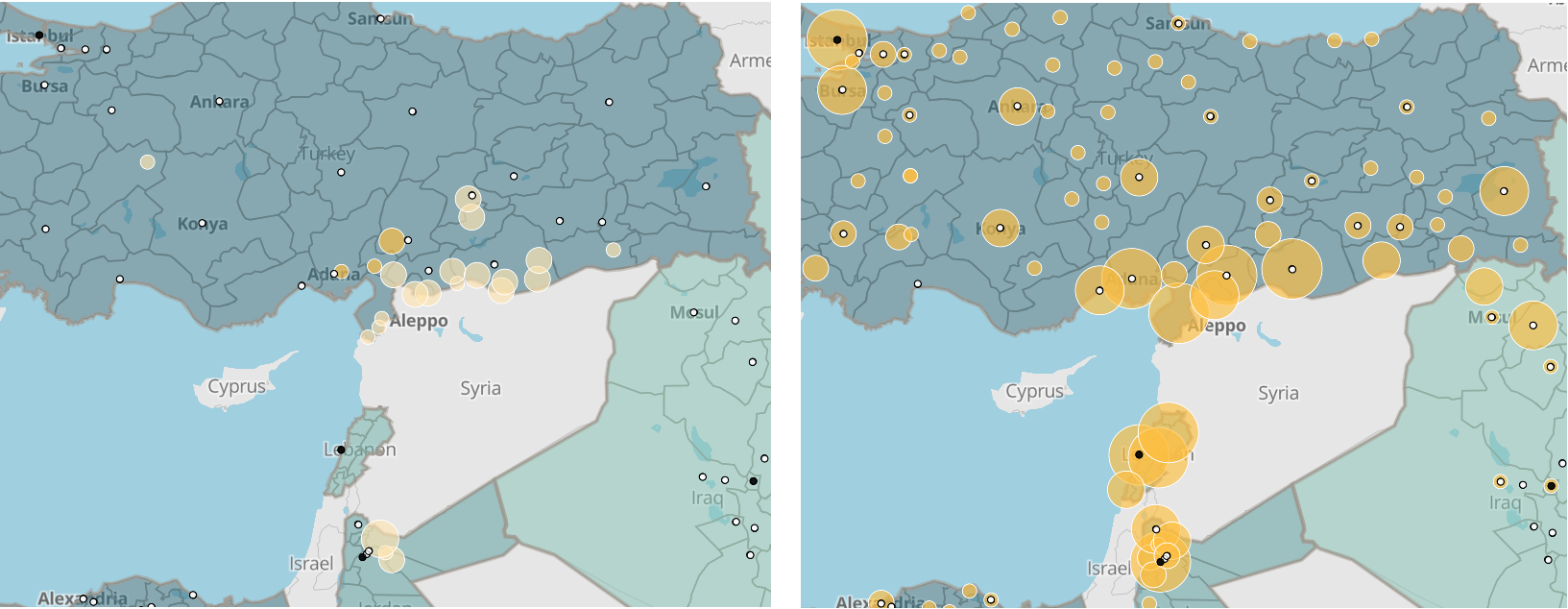 Far fewer refugees live in camps (left) than outside them (right)
New models of refugee support
Although it’s often not reflected in promotional material, official aid agencies have largely recognised the new reality of long-term displacement. A significant portion of the UK Department for International Development’s response to the Syrian crisis, for example, has gone to interventions — such as cash handouts and support for existing local schools in Turkey and Lebanon — tailored to help refugees outside camps.
But there is wider potential. The Tent Partnership works to get businesses involved in helping refugees beyond philanthropic contributions, and Maltz sees great potential in the number of refugees located near countries’ major economic centres. An interactive map released with the report shows the extent of refugee clustering in urban areas.
“Refugees are overwhelmingly in these urban areas, which means that they are close to where businesses operate,” he said. “Businesses have the opportunity to reach refugees, in places like Turkey and Jordan, as workers, as customers, as small businesses that they’re sourcing from.”
There are, though, barriers beyond recognising refugees’ proximity to employment hubs. In most developing countries, according to the CGD’s report, refugees do not have the legal right to work, exposing them to exploitation and dangerous working conditions.
Jordan and Turkey have started issuing work permits to refugees, but they are still barred from working in many other countries with large refugee populations, such as Bangladesh.
That means there is more to be done before employment can become a main source of support for refugees, even those living near economic hubs. Still, according to Maltz, recognising the opportunity is an important first step. “Absolutely proximity is only one piece of the equation,” he said. “But it’s an important piece, and too often overlooked.” — Fergus Peace
(Picture & map: Tent Partnership for Refugees/Center for Global Development)
Make sure to share your own thoughts with the author by leaving a comment below

Log in or sign up to continue the conversation