
This opinion article was written by Elana Bader, Green Infrastructure Project & Funding Officer at Scottish Natural Heritage. For more like this, see our environmental policy newsfeed.
Imagine a group of people: local government, members of a local community, and landscape architects. Each appears separate from the other. But what if they had something fundamental in common?
Only two years ago, Blairbeth in South Lanarkshire, Scotland, was a vacant, derelict former golf course. In its heyday it once performed a singular function for a singular group of people: a golf course for golfers.
Heavily managed for this function alone, it also acted as a physical barrier that prevented the local communities of Castlemilk and Fernhill on one side of the course from reaching the beautiful Cathkin Braes on the other side of the course, their only real natural space in the wider area.
Today, renamed Fernbrae Meadows by the local community, it is an urban, semi-natural park, open to all.
It is a multi-functional greenspace delivering a range of benefits. And it was the concept of nature-based solutions that brought this seemingly disparate group of people (and many others) together. It provided common ground for finding a positive solution for this 20-hectare site and the people living in its surrounding communities.
From golf course to green infrastructure
When the local government, South Lanarkshire Council (SLC), took ownership of the site after the golf course went into administration in 2015, they could see it was an asset with many opportunities for creating positive change in an area whose communities had some of the highest levels of deprivation in Scotland as well as a real lack of accessible greenspace.
Through its own research, the Council was aware of a strong link between environmental deprivation and socio-economic deprivation and certain health issues amongst its constituents - in short, a poor environment was linked to poorer health and well-being. By allocating core funding, SLC set the wheels in motion to maximise those opportunities for change and to use the site as the catalyst and centrepiece for a master planning exercise to regenerate the immediate area.
This is the first time a golf course has been transformed into a public park in Scotland, and is now a model for other Councils to do the same for redundant golf courses in their area
The community highlighted their needs via full engagement and consultation by SLC on the design and use of the site: accessible and safe path networks for all ages and abilities, outdoor learning and play areas, allotments and community food growing space, connections into the wider area’s cycling network, and a space for positive community use.
The landscape architects saw the empty site’s potential to provide a variety of functions and habitats, and how to best harness these. These ideas were delivered on by, for example, deculverting a burn (restoring an originally open-air watercourse that had been diverted below ground back into an above-ground resource) and allowing a natural wetland to form in the floodplain. This has created an integrated natural habitat which is now actively reducing flood risk and is also reinstating the natural processes that allow the watercourse to better support local ecosystems.
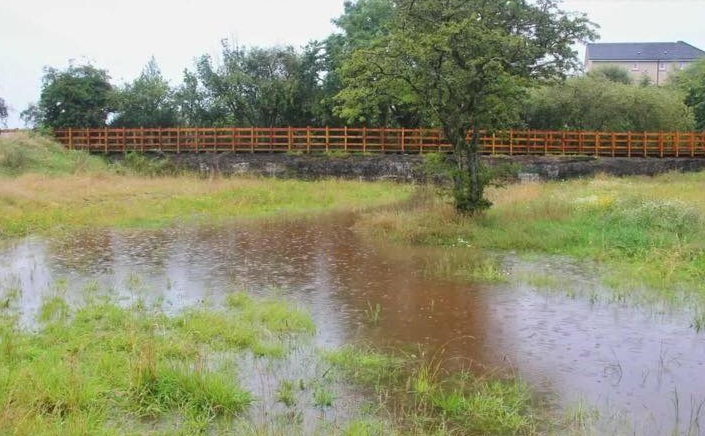
A natural wetland has formed in the former golf course, reducing flood risk and boosting local ecosystems. (Picture credit: Scottish Natural Heritage)
This was made possible by investment from the European Regional Development Fund that married with local government support and core funding and the community’s engagement. This Green Infrastructure Fund (GIF), led by Scottish Natural Heritage, provided £400,000 ($487,000) of a total £1 million (1,22$ million) investment in the park. This is the first time a golf course has been transformed into a public park in Scotland and is now a model for other Councils to do the same for redundant golf courses in their area.
Collaborating for change
With a total budget of £15 million ($18,3 million), the GIF provides gap funding for green infrastructure projects in Scotland’s most deprived urban areas. It is driven by the concept of utilising nature-based solutions to facilitate capital infrastructure projects that deliver across its five outcomes: biodiversity, climate change, involving communities, place attractiveness & competitiveness, and health & well-being.
The benefits of these outcomes are cross-cutting, and can only be achieved by a collaborative approach between stakeholders, organisations and agencies to finding real solutions. It requires connective thinking and seeing layers of opportunities. Rather than investing in separate interventions for health, or for flooding, or for biodiversity, in this instance, there is one strategic intervention that delivers on all these fronts — and more — stacking the functionality of these places.
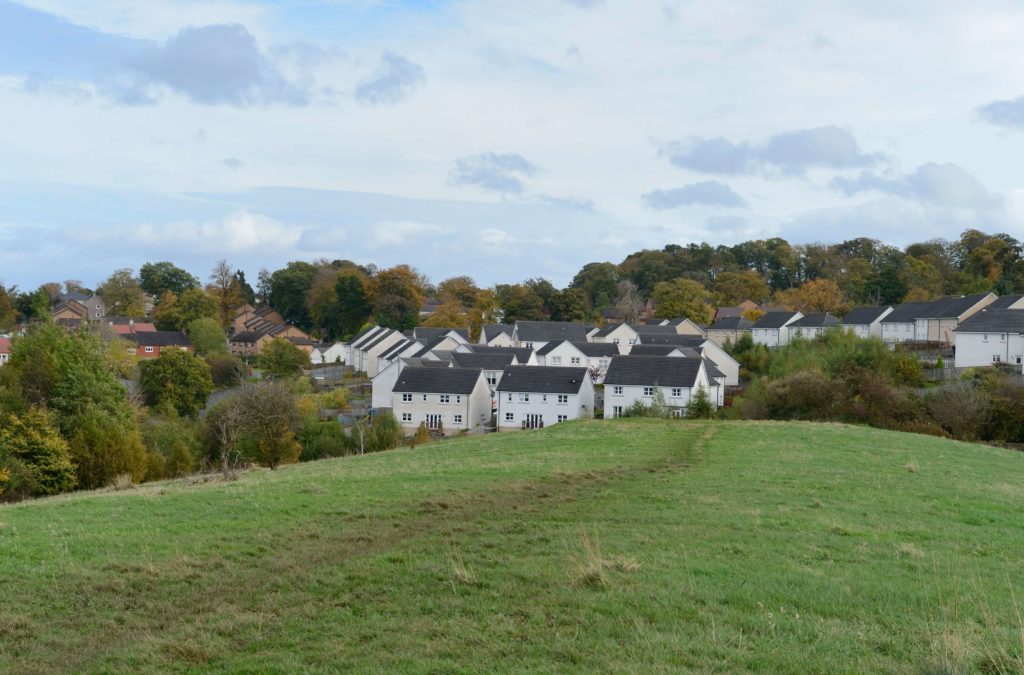
The new park is also intended to give local communities a boost, as the local environment has a big impact on human health and wellbeing. (Picture credit: Scottish Natural Heritage)
Fernbrae is now delivering on all of these five outcomes: habitats are being renaturalised and created; flood events are being mitigated whilst actively contributing to the range of habitats now present; the community was and remains actively involved, including via a vibrant “Friends of” group, in shaping and using the site to deliver for its needs, including volunteering, health walks, food growing, outdoor learning, cycling and more; the park is now a place of beauty, vitality and pride and is safe to access and spend time in; and finally it provides an inclusive space for health & well-being that benefits all sectors of the community. All of these outcomes are correlated and don’t sit on their own; one always contributes to another.
Against the grain of nature, we label our lives and distinguish what we do and who we are into categories: distinct, separate, and disconnected
This is a real step forward from our traditional, isolated thinking. It requires a bolder, more creative approach that delivers multiple and synergised outcomes and benefits for people and for nature. In the case of SLC, the financial environment at the time limited the impact it could make on health improvements. This funding and project allowed the completion of the park to a standard that could have a much greater impact on restoring and improving biodiversity, whilst at the same time providing opportunities to improve the health of their local communities and create a meaningful difference to their lives.
The Scottish Government has recognised that green infrastructure is a way to support its ambition to make Scotland a greener, wealthier and fairer, smarter, healthier and stronger, country, but there is still a way to go to make this the mainstream approach.
Fernbrae Meadows is only one example of this kind of collaborative, joined-up approach to creating functional, beneficial, beautiful and enjoyable spaces. There are many others currently underway across Scotland and elsewhere in the world. As the impacts of our changing climate rapidly become clearer and more visceral, so too does our understanding that nature-based solutions are the way forward to help us adapt and mitigate against these impacts, whilst simultaneously delivering on a range of other government outcomes.
Scrap the box
We are so very good at packaging things up neatly into boxes.
Against the grain of nature, we label our lives and distinguish what we do and who we are into categories: distinct, separate, and disconnected.
When we understand that we do not need to operate in silos, to limit ourselves, but that our sphere of influence can be greatly maximised when we think laterally and work together with others, we can deliver real change and real, lasting impacts.
We are now in a climate emergency. We are facing a very tangible and collective existential crisis, one that affects every beating heart on this magnificent planet of ours, no matter what your belief, education, or level of income. We all have this in common, and we all have a role to play.
This is also our opportunity to provide the best possible outcomes we can deliver. Only a collective response will give us the resilience and the strength to change what we can - and must - change, and to prepare for what we can’t.
Nature-based solutions, and the collaborative approach that they require, can provide the step change and inspire a new kind of energy to deliver these outcomes. Think outside. No box required. — Elana Bader
Make sure to share your own thoughts with the author by leaving a comment below

Log in or sign up to continue the conversation