
This article is written by Salima Ebrahim, Chief of Staff and Corporate Lead on Anti-Racism and Reconciliation; and Kris Andreychuk, Manager, Data Science and Research, both from the City of Edmonton.
- The problem: Sometimes graffiti is “art”, sometimes it’s hate.
- Why it matters: Graffiti and hate symbols undermine residents’ sense of wellbeing and safety
- The solution: Technology to help identify and track symbols of hate

When Kris Andreychuk caught the eye of the FBI, he knew his team was on to something.
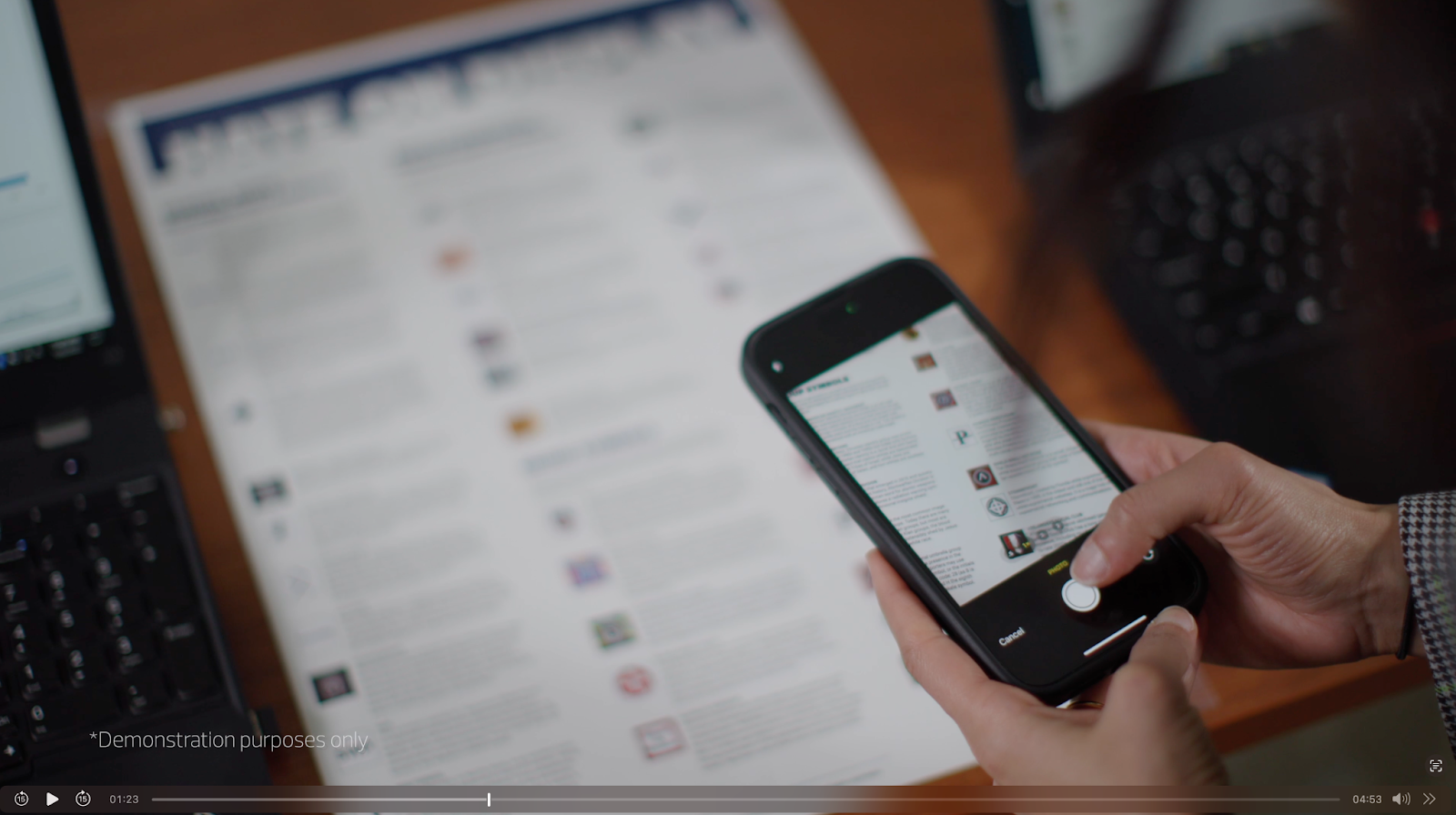
The City of Edmonton took its brand new hate symbol-tracking tool to the Anti-Defamation League's Never is Now Summit in New York, in November 2022. The summit was an opportunity to showcase three products: a phone application for data collection, a web application for image labelling and analysis and a dashboard that displays spatial and temporal patterns.
The products – developed under the project name ‘Lighthouse’ – gained attention from many participating organisations, including the G-Men from the Federal Bureau of Investigation.
“It was at the summit where I fully grasped the impact Lighthouse could have,” said Andreychuk, Manager of Data Science and Research at the City of Edmonton. “Our team knew we had a tool that could really reach beyond our city limits and help other jurisdictions fighting hate.”
💬 Let the author know what you think about using technology for innovation by leaving a comment below
Hate crimes are notoriously difficult to track, but recent studies have shown they are on the rise throughout North America. The most recent Statistics Canada data shows hate crimes on the increase across all Canadian provinces and territories. The 2021 data rose 27% over 2020, the previous high watermark in Canada. More than half (56%) were non-violent, the category that includes hate symbols.
The goal of the project has been to create something that is both approachable and highly usable, and provides current hate symbol knowledge to frontline employees.
The pandemic has been widely seen as a significant factor, with East or Southeast Asian people increasingly targeted with the rise of the Covid-19 virus. Increases have also been experienced by Black, Indigenous and South Asian people.
As high-profile incidents occurred, municipalities began to craft responses. ‘Lighthouse’ was created in response to Edmonton’s city council amending a Public Places bylaw to recognise symbols as a form of harassment, which occurred in late 2021.
Building a Lighthouse
While Lighthouse serves as one tool the city is using to address the physical manifestation of hate, the city has developed a comprehensive anti-racism strategy, as part of its process to disassemble the barriers individuals might have that lead to anti-racism behaviours. The city recognises that there are systems and policies adopted from years ago that no longer fit in today’s modern society. By 2050, the city expects to grow to a population of two million; one that is a welcome home for all.
The goal of the project has been to create something that is both approachable and highly usable, and provides current hate symbol knowledge to frontline employees. By tracking the proliferation of hate symbols within and across communities, Lighthouse brings a data-driven perspective to decision-makers, providing valuable real-time geolocated data that had not been historically tracked. By offering an overarching view of the hate landscape, policies and programmes can be tailored to meet specific needs.
“An app delivery made the most sense and was ultimately the best tool to assist frontline staff,” says David Jones, a retired Edmonton police officer who is now Branch Manager of Community Standards and Neighbourhoods for the city.
Five months after the bylaw amendment, the city brokered a partnership with the Anti-Defamation League (ADL), the US-based non-government organisation specialising in civil rights law. The ADL provided Edmonton with access to ‘Hate on Display’ – the largest known hate symbol database – which was integrated as the bedrock of the Lighthouse products.
“We must always be vigilant against hate and extremism,” said Oren Segal, VP of ADL Center on Extremism. “The app allows the city to recognise trends and symbols related to hate and respond more effectively to protect its citizens.”
Making a difference
By July 2022, internal testing had begun on the first version. “That quick six-month timeline is a testament to collaboration,” said Salima Ebrahim, the city’s corporate lead on the Anti-racism Strategy and Truth and Reconciliation. The connection was also the first time the US-based non-profit organisation had formally partnered with a municipality.
“We had a product six months after we struck that partnership with ADL,” said Ebrahim, also the Chief of Staff to Edmonton’s City Manager, Andre Corbould. “By thinking creatively and building strategic partnerships, a city like Edmonton can fight hate on a local level. That’s what our Anti-Racism Strategy is all about.”
The decision to target symbols is strategic. Symbols serve as an expression and an important marker of escalation. When assessing symbols, context is key. A hate-related symbol scratched on a park bench is not the same as one spray-painted on a place of worship.
For Irfan Chaudhry, a lecturer with the Department of Sociology at MacEwan University, Lighthouse also builds off of existing work already underway in Alberta. In 2017, Chaudhry helped launch StopHate, a website aimed at documenting underreported hate incidents, which are serious experiences of discrimination based on race, origin, religion, disability, sexual orientation or other factors, yet which fall short of criminal action.
“Lighthouse provides another pathway for StopHate to share information and help build the repository,” Chaudhry said. “Addressing hateful content and material is a shared responsibility, and the more tools we have at our disposal to address it, the better we will be in proactively removing symbols of hate." Students from Professor Chaudhry’s class are involved on a volunteer basis, assisting with the cataloguing of hate-based symbols.
How Lighthouse is used
For frontline workers at the City of Edmonton, Lighthouse provides an easy way to report incidents on their mobile devices. Trends and hotspots can be identified, and the web application adds further nuance to classification and organisation of images, with a dashboard that allows users to witness patterns and trends in real-time.
Since January 2023, 160 frontline members, from peace officers to municipal enforcement officers, have been trained, and over 60 images have been collected (in addition to the 250 historical images preloaded into Lighthouse).
For Andreychuk, the big win for the city is a data-rich picture of hate in Edmonton, which will allow opportunities to take steps to address the underlying issues. The city is currently onboarding the St. Albert RCMP and is fielding access inquiries from several other Canadian cities. Down the road, there may be opportunities to share Lighthouse internationally, even with the city’s new contacts at the FBI.
“There’s no telling where this might go,” Andreychuk said. “That’s what’s exciting about this work, and the potential for anti-racism work – the ability to make a real difference.”

We stand together in the fight against hate – connect with us or visit our site for more information.
Done reading? Make sure to share your own thoughts on protecting citizens by leaving a comment below ⬇️
(Image credit: Unsplash)

Log in or sign up to continue the conversation