
This article is written by Roseline Fernandes, Digital and IT Business Partner. In this role, Roseline has been involved in requirement gathering and fleshing out project scope, ensuring that PMs can help implement the project.
- The problem: Use of digital tools without considering the end-to-end process can cause more problems than offer solutions.
- Why it matters: Increasing use of digital tools without proper consideration can cause staff disengagement.
- The solution: Designing a business process will offer seamless use of tools and effective use of people's time.
Microsoft Office has done a tremendous job of promoting spreadsheets and ensuring data is effectively stored. As a local council, we have always used spreadsheets for storing all types of data. There have been occasions when we have considered teams to be digital and tech-savvy for using spreadsheets effectively. However, when we considered a process end to end, we realised that was a time-consuming manual effort built around the spreadsheets. This causes spreadsheets to be a bottleneck but also causes problems in reporting, as data entered into spreadsheets isn’t standardised. Staff parking at our organisation was a clear example of an overwhelming process that required staff members to manage spreadsheets, sometimes after office hours or early in the day, to ensure access to the car park.
The answer isn’t in changing tools from spreadsheets to an automated end-to-end system.
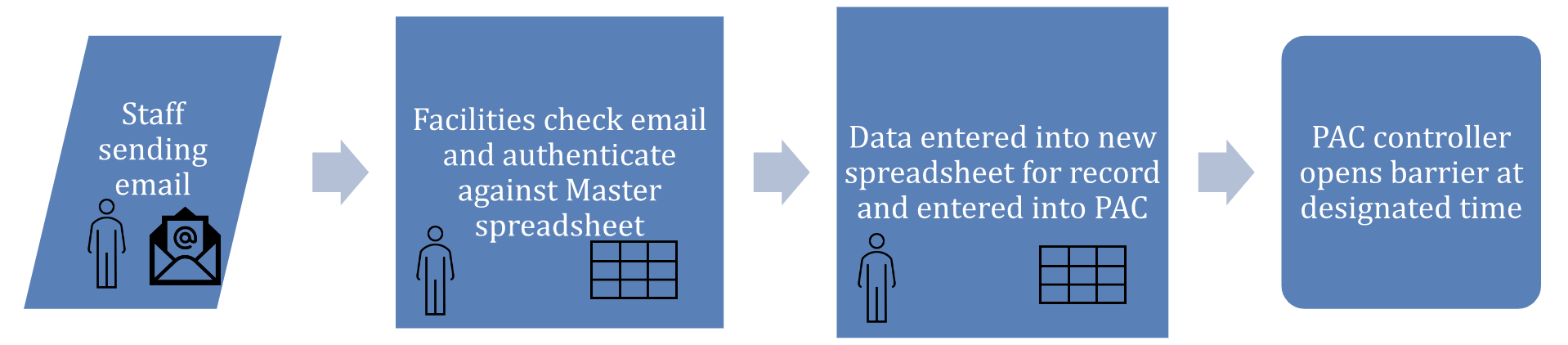
The office car park provides parking services to staff members who have pool passes. There are a fixed number of passes issued to each department to ensure that everyone has equal access to the limited parking space. The record of the passes, along with staff and car data, was stored in a spreadsheet. Any staff who would want to park in the car park would send an email to our facilities team, who would take the data and enter it into a spreadsheet. This data would be manually authenticated against the master record of passes, which again was a spreadsheet and access provided to the PAC system to ensure that the barrier opens. Use of spreadsheets, email and PAC – all digital systems we would boast of. Yet, it caused problems, had tempers flaring when emails were missed and delays in recording data, just to name a few.
💬 Let the author know what you think about digital systems in the workplace by leaving a comment below
We realised the answer isn’t in changing tools from spreadsheets to an automated end-to-end system. We could have approached a supplier and bought in a new system which meant we were just buying new systems on the fly and increasing our cost, increasing the systems on our estate and basically providing another third party access to our data. We decided to look at the customer journey end to end and identify the flaws in it.
Designing good processes
Having studied the end-to-end process, we realised that the process as described above requires a handshake and coordination between people and digital technology. At any time, the handshake is delayed or ignored, failure occurs. Some of the problems we identified were as below:
- Staff parking requests could come in at any time of the day.
- Facilities needed to constantly monitor email inboxes to ensure that parking requests were not missed.
- If the parking space is full, send an email to the staff member back in time.
- Coordination was required between facilities and the PAC controller to ensure it had the most accurate live data.
With these issues in mind, we realised we needed a system that could satisfy and be available for staff to book parking requests at any time of the day. What was also paramount was that we needed to eliminate the restriction of having a staff member monitor an inbox, and hence we needed a system that allowed for requests to be entered directly into the PAC controller. Armed with this journey and given our in-house development expertise, we used a low code platform to build a mobile app for all staff members to be able to check free spaces in the parking and available slots and book parking spaces in the office. The mobile app would directly store data on the cloud while also triggering changes in the PAC controller so that the access barriers can be effectively controlled. This simple mobile app and change in process ensured that staff members who were monitoring inboxes were freed to do more productive work, responses on parking space booking were instantaneous and data entered was standardised, so reporting was easy.
Key benefits:
- App availability at staff convenience at any time of the day
- Viewing of available slots readily available
- Staff are free to do more productive work, increasing staff morale
- Standardised reporting
- Seamless experience for those coming in to park
Technology was made to ensure that work is a comfort and shouldn’t stress, but make lives easier for people who use it. Just throwing digital tools in the mix, without considering a process end to end only causes more problems and trouble. The tools and applications may help to have some short-term fixes, but in the longer run, organisations need to constantly review and revisit whether the digital tools are serving their need or adding more clutter. We need to revisit our processes and use of digital tools occasionally to review whether it still works for the team and the organisation as a whole.
Done reading? Make sure to share your own tips on using digital tools by leaving a comment below ⬇️
(Image credit: Unsplash)

Log in or sign up to continue the conversation