
When cities grow very quickly, some populations are prioritised, which means that these cities become less equitable. But if the benefits of growth don’t extend to all the residents of a city, it undermines its overall health and liveability and leads those “left out” communities to disengage, as they assume they won’t benefit from city initiatives. The unfortunate result is stagnation and a structural inequity that limits economic growth, drives up mortality rates and increases infectious disease outbreaks.
To address this, Building Healthy Cities (BHC), a USAID-funded project which promotes healthy urban planning, is testing a multi-sector, health equity model of "healthy urban planning" that puts citizen engagement at the heart of successful city growth. It’s running pilot projects in three Smart Cities in Asia: Indore, India; Makassar, Indonesia, and; Da Nang, Vietnam, which are all rapidly-growing, secondary cities (one to three million population, with a minimum three% yearly growth) with different profiles, environments and governance structures.
“A core tenet of BHC is to connect populations who are left out with city planners, creating direct communication between them relating to all city services that impact health”
The BHC project selected these three cities following discussion with local governments, based on their population size, the potential for growth, Smart City activities, and socio-demographic diversity. Each city acts as a learning partner for developing effective urban health interventions and each faces its own, individual issues. Indore, for example, the largest city in the state of Madhya Pradesh (MP), has a large number of slum dwellers, who are estimated to make up 30% of the total city population. Makassar, the fifth largest city in Indonesia, has a sizeable number of migrants and is expected to double its current population by 2030.
“A core tenet of BHC is to connect populations who are left out with city planners, creating direct communication between them relating to all city services that impact health,” explains BHC project director Amanda Pomeroy-Stevens. “This includes the health sector but also transportation, environmental health, sanitation, education, recreation, technology, infrastructure and social protection.
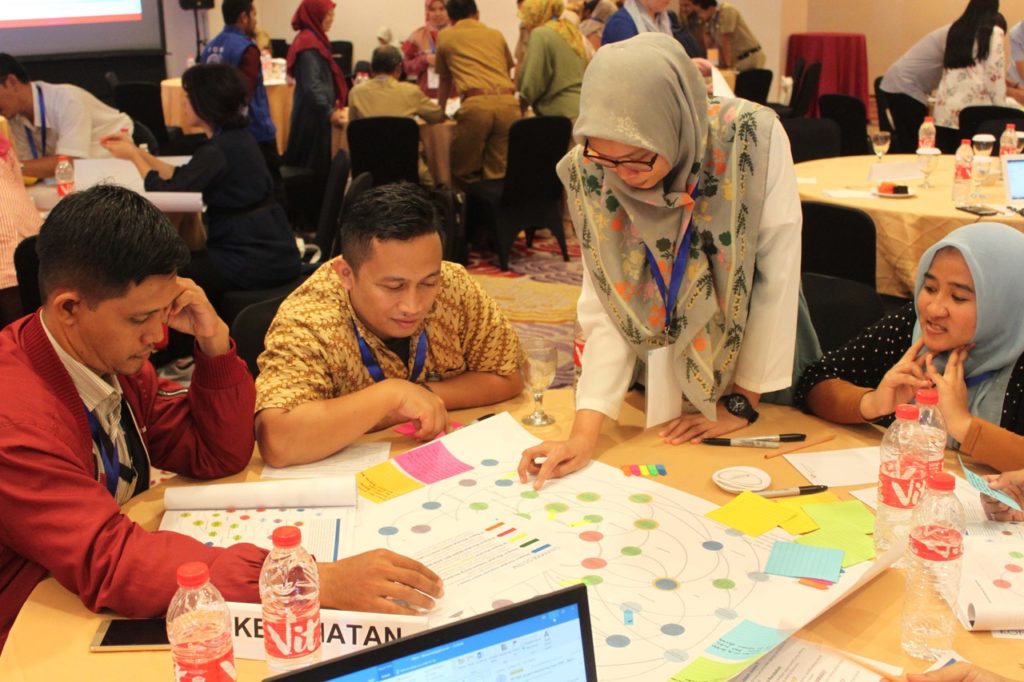 Workshop identifying leverage points on systems map - April 2019 - BHC Staff
“BHC is also supporting the inclusion of citizen’s voices — especially those most vulnerable to poor health — into the process of building policies, budgets and services. And BHC is producing useful research and evidence to drive informed decision-making. Globally, BHC is sharing the results from these “pilot cities” to increase partnership between those who work on health.”
When feedback isn’t heard, it creates frustration and often leads to citizens reducing their engagement with citizen reporting systems
Dr Renu Khosla is director of the Centre for Urban and Regional Excellence (CURE), which is working with BHC in Indore. She says citizen participation is the keystone: “It is what can help collective action for sustainable transformation. As a developing country, we're often trying to do a lot with limited resources. The fact is that unless you've got the people involved in curating their own solutions to address their own problems, and taking ownership of services delivered, the programs will not achieve the desired goals of various health missions.”
Now halfway through its five-year term, BHC has already made significant headway in increasing citizen participation in four main ways: by supporting sentinel-style citizen reporting following the journeys of citizens dealing with a particular city service issue; by developing participatory urban systems maps that show how these services overlap to create structural inequity; by defining bottlenecks in existing city citizen reporting systems; by training some of the most vulnerable citizens in how to define their issues, collect data and then analyse it and use it to advocate for better access from the city.
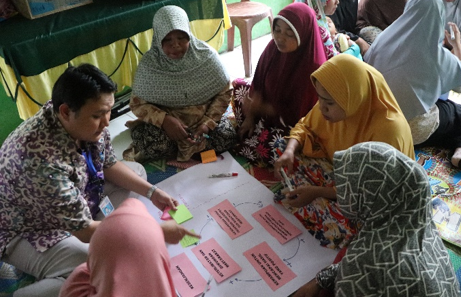 A community town hall where BHC staff reviewed the systems map with a local women's group in Makassar - 2018 - BHC Staff
According to Pomeroy-Stevens, the greatest challenge faced by the project is how to engage with entrenched systems and address complex and dynamic problems in a meaningful and sustainable way: “Inequality in urban settings manifests in many ways, including access to and engagement with citizen reporting systems. It can also be seen in the geographic differences in access to health centres, schools, healthy foods, parks, etc as temporary settlements harden into permanent neighbourhoods. Lack of awareness exacerbates problems, and cities don’t hear from all their citizens, especially those who need attention urgently. And when feedback isn’t heard, it creates frustration and often leads to citizens reducing their engagement with citizen reporting systems.”
BHC is leaving behind more equitable, sustainable citizen participation channels
So far, although it’s too early to provide quantified results, the project appears to have made an overwhelmingly positive contribution to the cities in which it’s operating. In Indore, for example, analysis of citizen reporting systems has shown wide gender and income disparities, which the city is now ready and willing to address with BHC's help. Also in Indore, regular citizen feedback about a dangerous bridge over an open drain overflowing with rubbish led to the building of a new safer, concrete bridge. Systems mapping and participatory research have led the Makassar city government to adjust their "musrenbang" process of bottom-up budgeting to try to improve equity and fairness in its decisions.
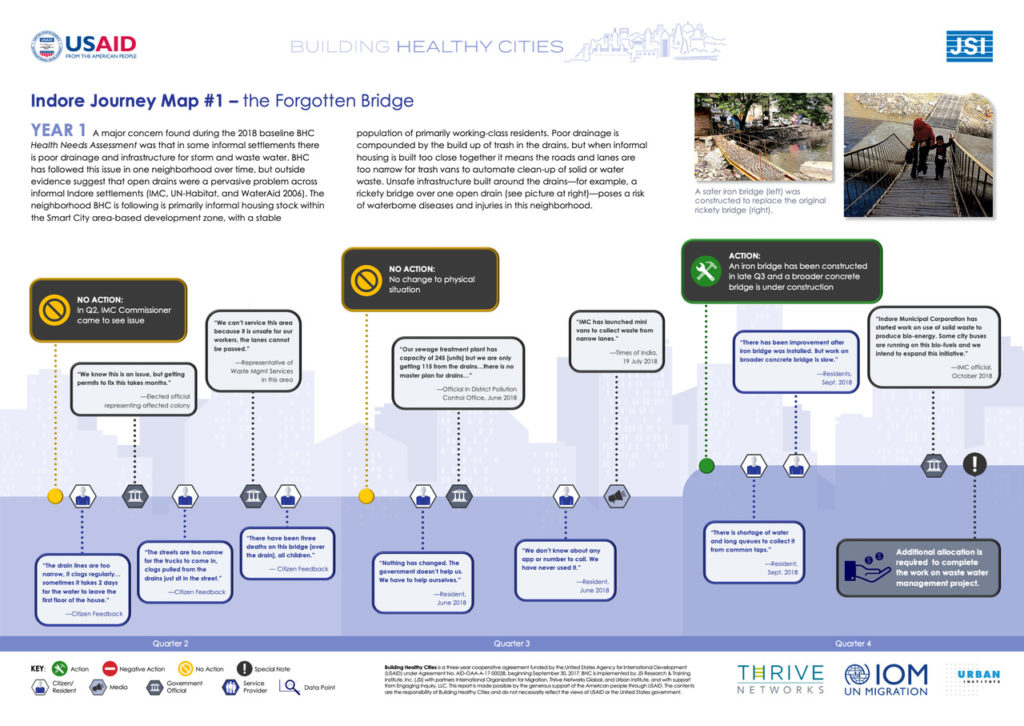 Indore Journey Map Year 1: Forgotten Bridge - 2018 - BHC (Photos by Neeraj Mishra and Monica Biradavolu)
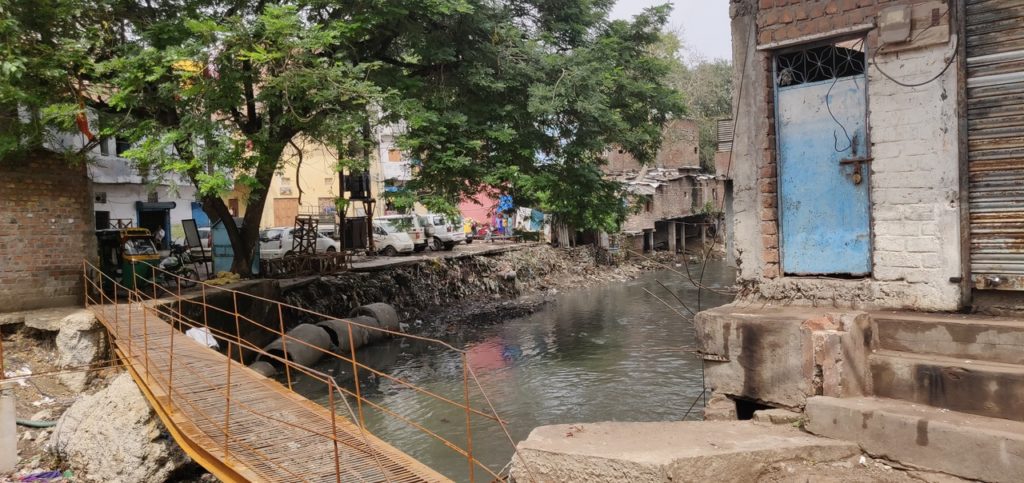 Forgotten Bridge in Indore which is highlighted in the Journey Map - September 2018 - Neeraj Mishra
Pomeroy-Stevens says BHC is now developing a Healthy Urban Planning toolkit and a university short course to help other growing Smart Cities replicate its approach: “BHC is leaving behind more equitable, sustainable citizen participation channels, and has armed each city with ways to better respond to the feedback citizens are providing via these channels.” — Hilary Freeman
(Picture credit: JSI Research and Training Institute)
Make sure to share your own thoughts with the author by leaving a comment below

Log in or sign up to continue the conversation