
In recent weeks, millions of women around the world have shared their experience of sexual harassment on social media with the hashtag #metoo. What began as “the Harvey Weinstein scandal” has now implicated public figures around the world, from French ex-ministers to US state senators, and even the UK’s Defence Secretary Michael Fallon. Figures suggest almost 50% of women in the EU experience some form of sexual harassment at work; the figures are similar in most major Western democracies.
1) Governments must get their houses in order
If government is to try and initiate a shift away from an insidious culture of acceptance, it should start by setting an example.
But instead, the US Congress has passed laws exempting itself from good practices found in other large workplaces: since 1995, accusers can only file lawsuits if they agree to months of mediation and counselling. Furthermore, nationally only 37 of 99 state legislative chambers have a written policy on sexual harassment, and those policies differ substantially in effectiveness. One place that does this well is New York, which drafted new policies after sexual harassment led to the resignation of Assemblyman Vito Lopez in 2013. The state now hires independent investigators with employment law expertise to handle claims, and these investigators report back to a legislative committee.
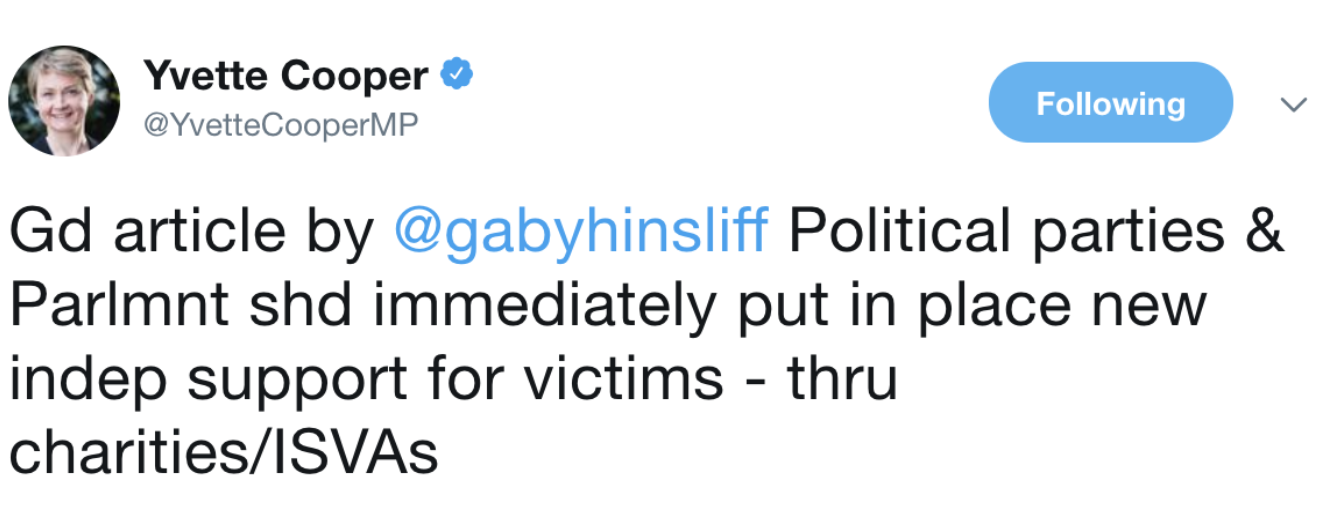
In the UK, the thousands of staff employed on the parliamentary estate - whether researchers, secretaries, or IT workers - also don’t have standard protections. Staff are hired directly by MPs - who are self-employed, and therefore have no overarching HR system to access if they are concerned about their boss's behaviour. There is currently no transparent or binding grievance procedure for sexual harassment, and nobody to carry out independent adjudication - it’s the political parties themselves, which have strong incentives to cover up any scent of scandal, that deal with complaints.
Already, in the wake of the scandal, things in Westminster are starting to change. Cross-party leaders have now agreed to implement a new staff complaints system in the new year, which will ensure those subjected to sexual harassment have greater HR support and will be able to formally file complaints through an independent process. For now, an existing helpline will begin to offer face-to-face support for staff with immediate concerns.
There are also suggestions for setting up an independent body to oversee politician's conduct, and others have pointed to the need for independent sexual harassment specialists as a permanent support team for victims. When David Cameron was prime minister, backbench MPs rejected his proposal to introduce a binding code of conduct for MPs due to fears of “central control”; this could be attempted again while the iron is hot.
2) Those with power should get sexual harassment training
One challenge to changing workplace cultures is a lack of clarity around what sexual harassment actually is - both among the mainly male managers in public and private sector organisations, and throughout society as a whole. Last year, a US government task force found that when people were simply asked if they had experienced workplace sexual harassment, just one in four said yes. But when specific acts of harassment were mentioned, including sexual coercion or crude jokes, 60% of women said they had experienced it.
To help solve this, government should encourage - or mandate - large companies to provide compulsory, comprehensive sexual harassment training for managers and supervisors. Short of legislating, government bodies should at least set the example. The US Congress so far has resisted making anti-harassment training mandatory, and only 800 out of tens of thousands of employees have taken the 20-minute online tutorial staff are urged to follow. But now, congressional leaders - including House Minority Leader Nancy Pelosi - are seriously backing training for Congress.
Some states have already taken the lead. Kentucky mandated three hours of sexual harassment training for its legislators in 2014. All Kansas House Democrats will this December receive prevention training. And the House Speaker in Chicago has introduced a measure to require training for government officials - and to publish names of people who fail to comply. In the UK, the Green Party co-leader Caroline Lucas has also called for compulsory training to teach MPs about consent.
3) The public, too, could benefit from awareness raising
As well as managers, what’s clear is that many women themselves don’t know their rights. UK Trade union leader Frances O’Grady has suggested a large-scale public awareness campaign, arguing: "Now that sexual harassment is headline news, the government should be taking out ads informing women of their rights.”
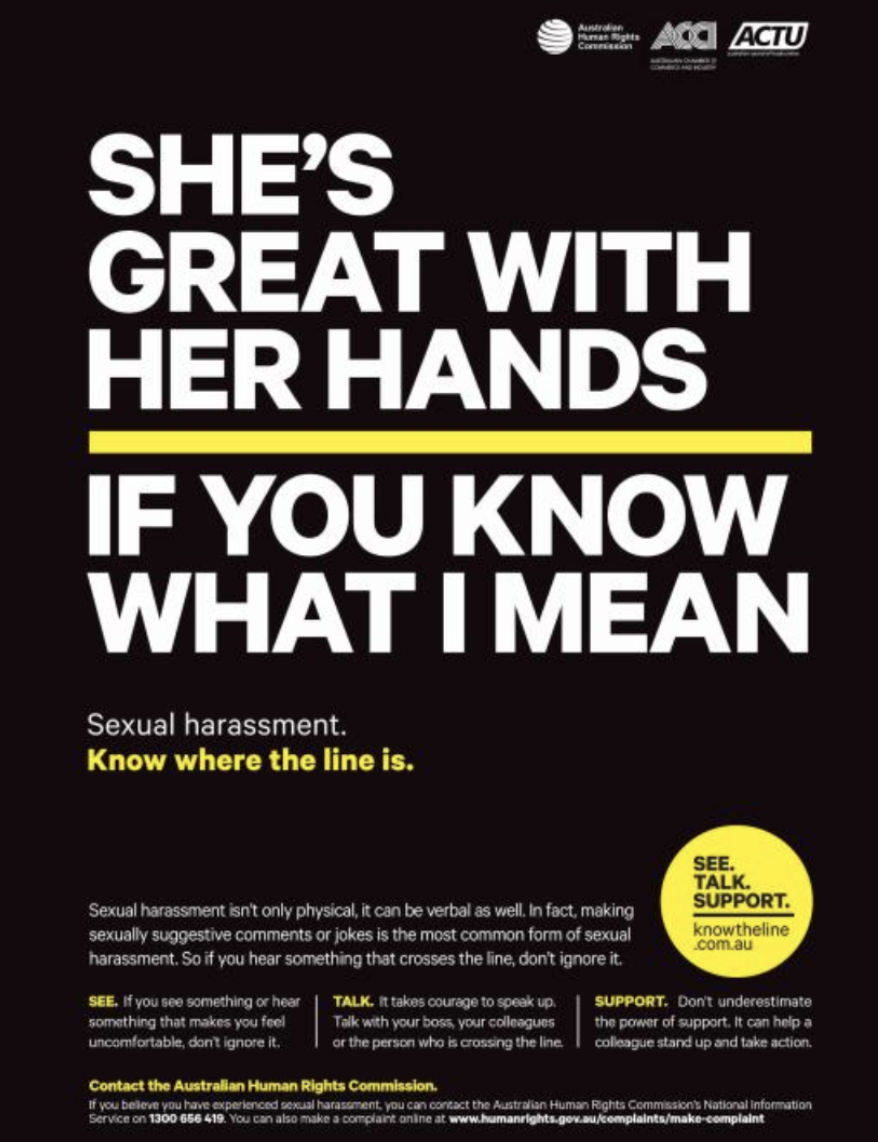
In many countries - Australia, the UK, Canada, and the US - violence is already regularly treated as a public health issue. So a public awareness campaign treating sexual harassment as an epidemic - like those on smoking - could be rolled out. London’s city government already runs a campaign urging reporting of sexual harassment on public transport. It’s 2015 film, 'Report It to Stop It’, has been viewed more than 24 million times on YouTube alone, and led to a 36% increase in arrests since its launch. Australia has run a national campaign targeting workplace sexual harassment since 2014, Know Where the Line Is, urging employees to recognise harassment, report it if they see it, and support colleagues who have been victims.
Awareness raising can also take place in schools. The Green Party in the UK campaign for consent lessons to be a compulsory part of the curriculum. Sweden has had compulsory sex-ed in all schools since 1956 (only 22 US states have mandatory sex-ed), and topics covered range from consent to challenging racial and gender-bias. Ontario’s new sex-ed curriculum teaches children as young as six about consent.
4) Get more women into power
"The best way to combat sexism in politics is to get more women into politics," Hillary Clinton argued in a recent interview. Currently, more than 75% of parliamentarians around the world are men; but there are several routes to change that. Governments can create quotas, run training or mentoring schemes for aspiring female politicians, and have reserved funding available for female candidates. Having more women in prominent positions of power is culturally critical: stereotypes about men, women and their proper roles can influence and fuel harassment. More women could also help strengthen laws: today, 68 countries still don’t prohibit workplace sexual harassment, meaning more than 200 million women worldwide are without legal protection.
Equally critical is government pushing for more diversity along the legal process. Research analysing data from sexual harassment and discrimination cases in the US found that the presence of a female judge significantly improved the likelihood of plaintiffs winning the case. This year, the UK appointed its first ever female president of the Supreme Court, Lady Hale, a positive and long-awaited step.
While changing individual behaviours and workplace cultures is a tough challenge for any government policy or program, that is no excuse for failing to act - in particular failing to act quickly while more men and women than ever are focused and listening.
(Picture credit: Flickr/Eric B. Walker)
Make sure to share your own thoughts with the author by leaving a comment below

Log in or sign up to continue the conversation