
This is just one article in a series of insights from the pilot of the Digital Excellence Programme. To read more, go to our Insights Hub.
Key takeaways:
- Learners need to build good routines
- Being part of a cohort boosts engagement
- Learning needs to be sharable with colleagues
Building an online training programme for senior civil servants (SCS) presents a few important challenges.
- They are incredibly busy and often de-prioritise learning and development.
- They value learning with and from their peers, who understand the challenges of their roles.
- Whatever they learn needs to have an impact beyond just them; it should help improve their teams and the wider department.
These challenges need to be addressed if the government is to reach its ambitious target of upskilling 6,400 SCS in digital and data essentials by 2025.
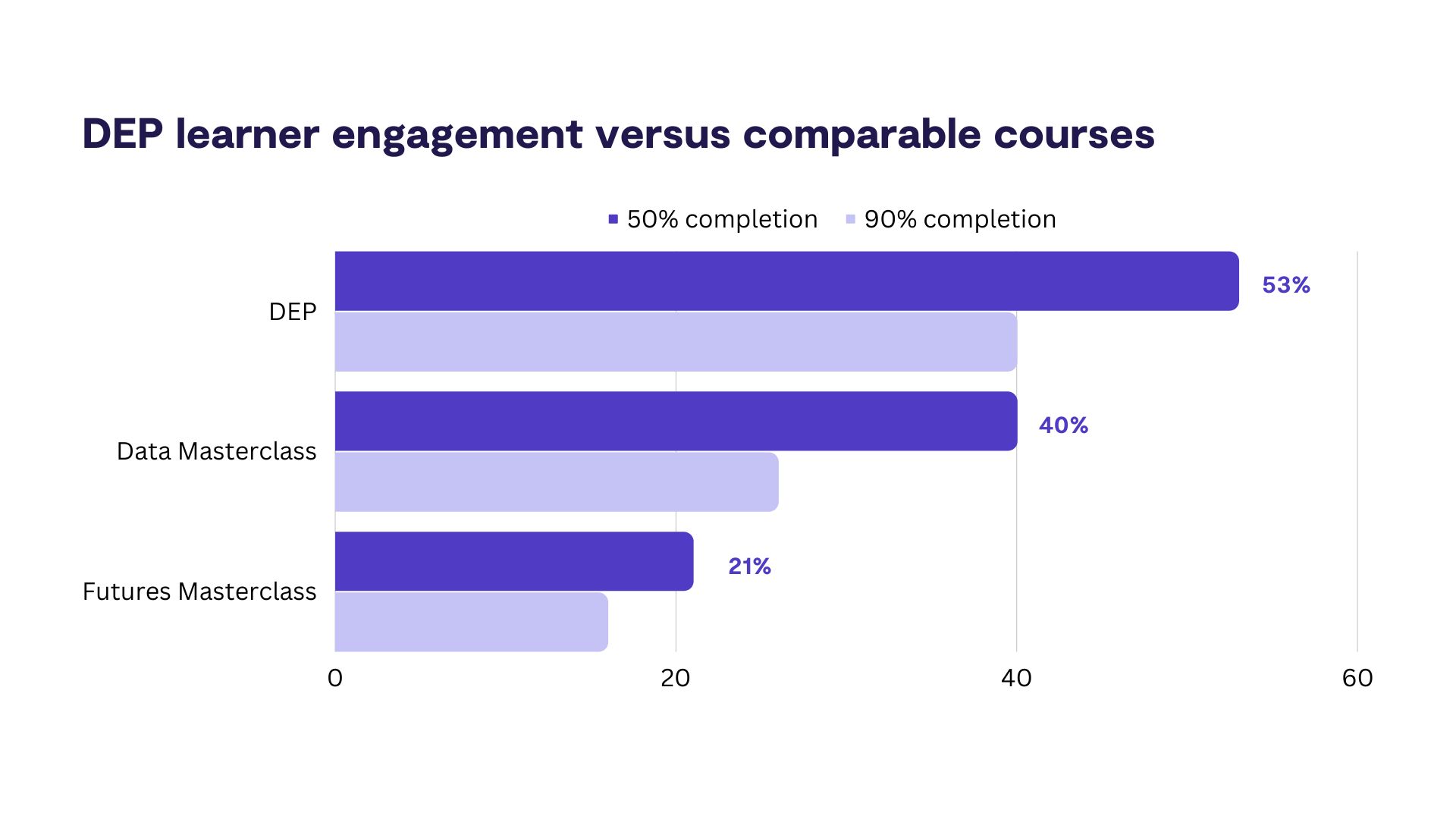
They are challenges we had to confront in designing the first phase of the Digital Excellence Programme (DEP) in the summer of 2022. A year later, hundreds of learners have gone through the first cohort with high completion rates.
These are three design tactics we used to help achieve those results.
1. Help learners build routines
Positive habits and routines are powerful enablers of learning. Research has shown that, in online learning, consistency can be a stronger predictor of performance than the number of hours a learner puts in.
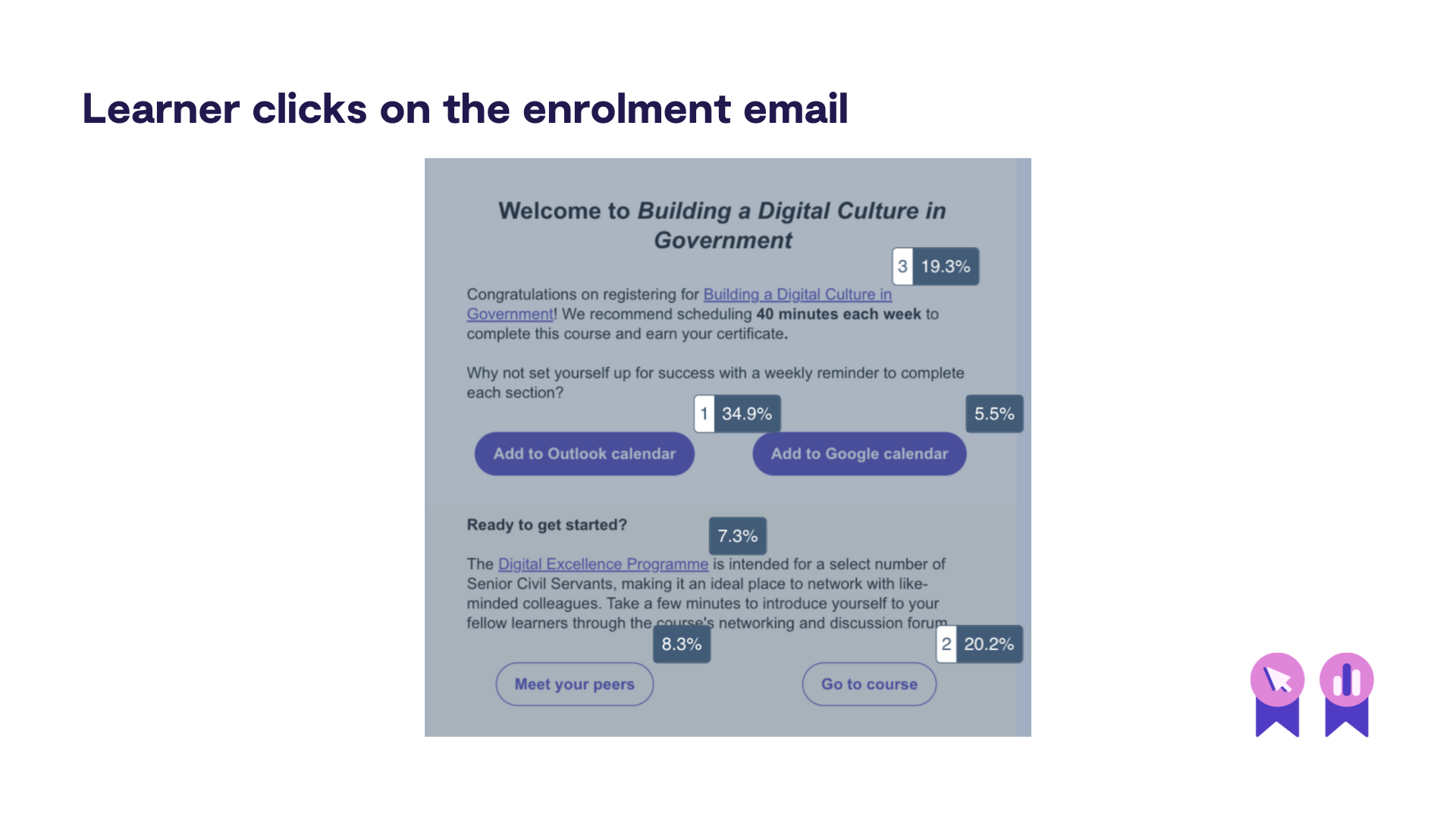
We actively support our learners to create these positive habits. For example, when they enrol on DEP courses, the first email they receive prompts them to create a recurring calendar event to help keep them on track. We also use regular reminder emails prompting learners to pick up where they left-off.
The data shows that learners appreciate these reminders. On average, among the first cohort of learners, 40% opened these emails and 15% clicked through — both figures are double industry averages.
The screenshot below shows how learners interact with the enrolment email; you can see that around 40% of clicks were people adding the reminder to their calendar, which helps set them up to build consistent learning habits.
2. Use cohorts to create a more social learning experience
Calendar scheduling may seem like a trivial technicality, but it’s the foundation of how we create a cohort-based learning experience.
At school or university, students show up to class and expect to see the same people in the room. That helps build familiarity and trust within the classroom, which facilitates learning. It also exposes students to different viewpoints to create a richer learning experience. All of that happens because they share a schedule.
Online, we try to recreate that effect by encouraging learners to follow similar schedules (e.g. learning during your lunch hour) and sending reminder emails at the same time to everyone. The effect is to have bigger clusters of activity on our website, which creates a better, more social learning experience.
You can see this in the graph below. The little dots represent individual posts by learners on a discussion board from the Digital Culture course. The comments become more sporadic over time, indicating less activity on the board. The learners who enrol as part of the cohort enjoy a more active discussion earlier on, with fresh comments for them to respond to. Those who came to the discussion later will have lots of comments, but they will be quite old and fewer people are likely to react to their comments.
In May 2023, we introduced threading to our website, which will make it easier for learners to have richer conversations and get notified when someone responds to what they’re saying.

We talk a lot about social learning and cohort models because they have a big impact on learner outcomes.
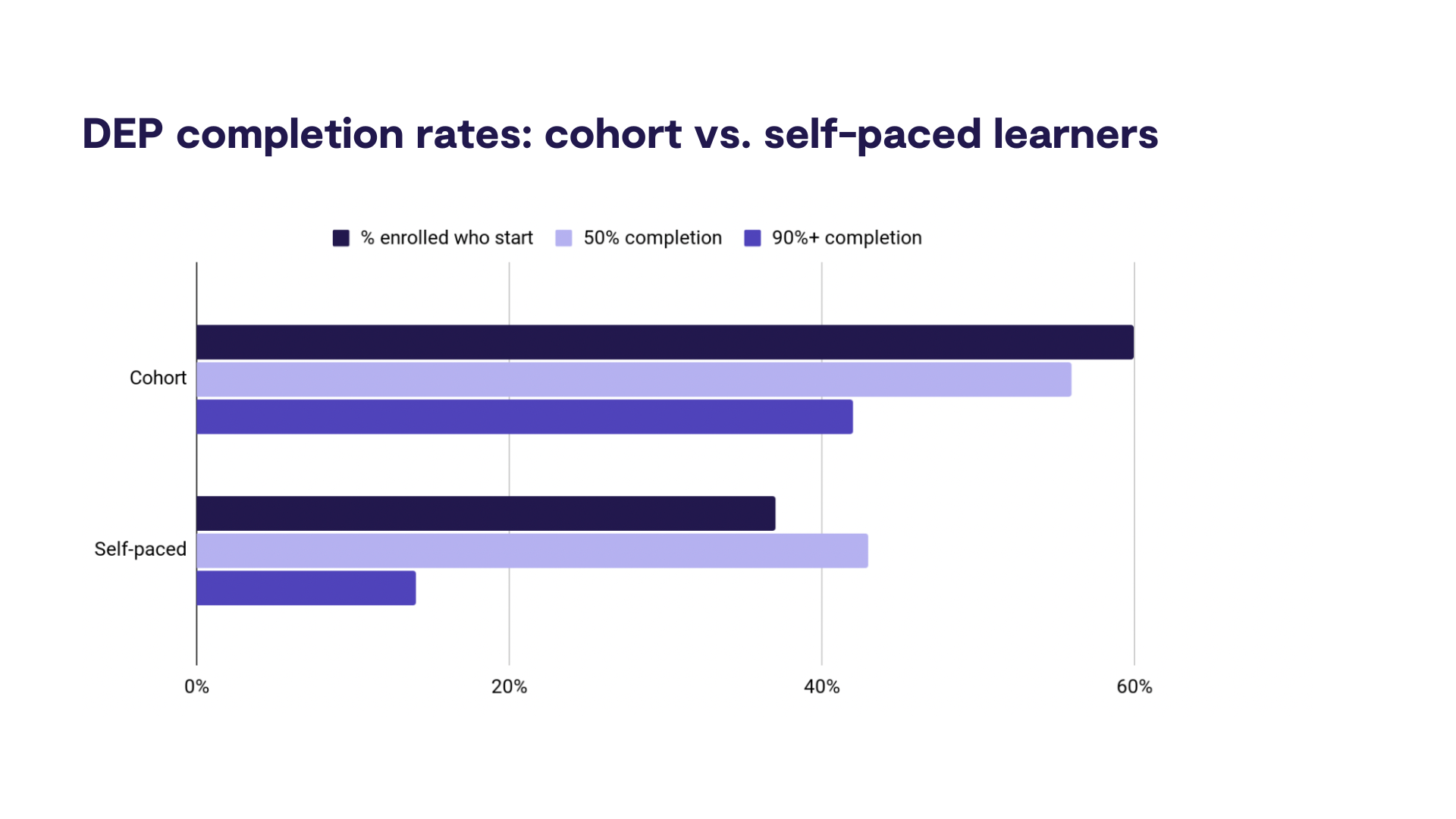
The graph below compares cohort enrollees (who account for the majority of DEP learners) with self-paced learners. Across the two DEP courses we rolled out, completion rates – especially full completion (i.e. above 90%) – were significantly higher among cohort learners than self-paced.
3. Design shareable learning
In the pilot of the DEP, we rolled out two courses which focus on building a stronger digital and data culture within teams and departments.
SCS are the right target audience to influence this change. To have real impact, however, they need to be equipped to share new ideas and methods with their teams, who will be instrumental in actually implementing change.
In the data culture course, for example, each section includes a powerpoint template which learners can download to start team discussions on key ideas. Likewise, the digital culture course concludes with a discussion guide which helps learners identify the right colleagues to bring into a discussion about agile working or managing legacy technology.
We’ve spoken to learners who downloaded these resources and used them with their teams. Chris Hider, the Deputy Head of Profession for project delivery within the Home Office (at the time), led his team on a discussion about how digital ways of working apply to the project delivery profession.
“We had a rich conversation on making sure that we don't apply bias — to assume we know how things are going to be used by the end user. And the value of going through prototyping and user research, to really understand what that process is. So we've been applying some of that when we've been thinking about some of our legal aid work.”
So that’s it, three simple but powerful design approaches embedded within the DEP which help senior leaders make time for their learning, engage with peers online, and share what they’re learning with their teams.
Make sure to share your own thoughts with the author by leaving a comment below

Log in or sign up to continue the conversation