
“Children are very quiet here. That’s the one thing that strikes me. It is just so sad. They deserve their childhood. They deserve some good experiences. They deserve to not have to live through this.”
Shelley Thakral, spokesperson for the World Food Programme (WFP), described the scene at Cox’s Bazar in Bangladesh, where over 600,000 children and adults have fled from Myanmar’s Rakhine State since late August.
The children who arrive are deeply traumatised. Many of their homes were burned to the ground, with friends and family members shot or even burned to death in front of their eyes.
“I saw a soldier pour gasoline over a heavily pregnant woman. Then he set her on fire. Another soldier ripped a baby from his mother’s arms and threw him into the fire. He was not even one year old,” recounted one young woman to Save the Children.
As is the case in so many humanitarian crises, it is young children who face the most danger.
While many thousands have reached the relative safety of the camps at Cox’s Bazar – where around 60% of refugees are under 18 – the youngest are still extremely vulnerable to malnutrition, disease and severe psychosocial problems.
The impact on Rohingya children
The journey from their villages to Bangladesh means that refugees have walked for days, if not weeks, to reach safety.
“They don’t walk in the day, because they’re being targeted, so they walk through the night. They don’t have anything to eat, and they hadn’t been eating even before they began the journey,” said Dr Unni Krishnan, Director of Save the Children’s Emergency Health Unit.
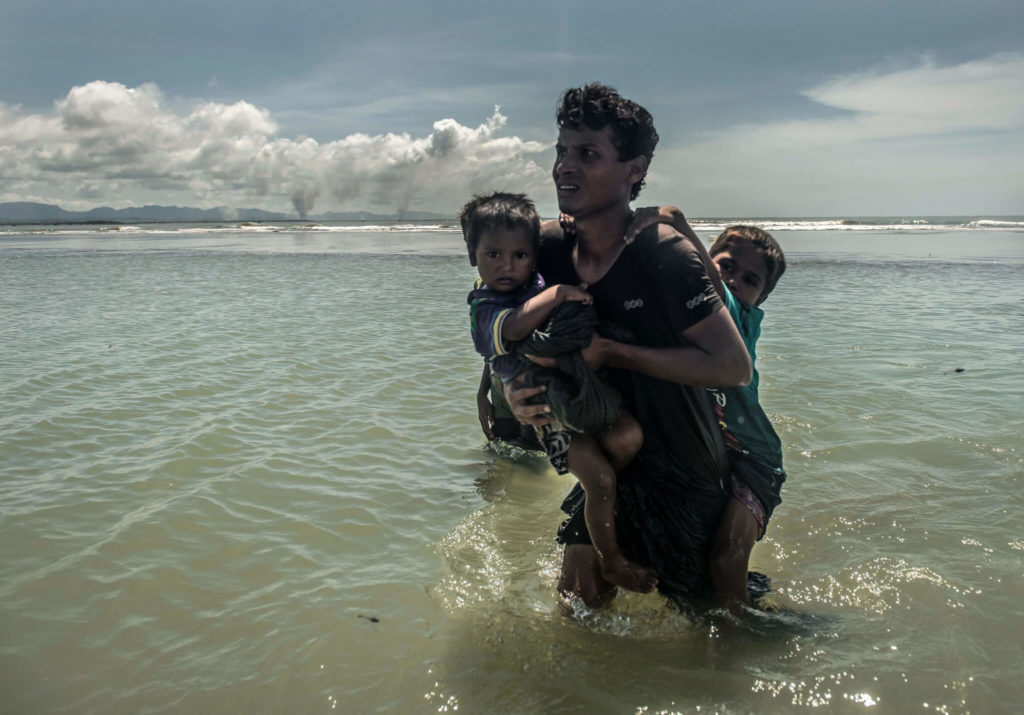 A refugee arrives on a Bangladesh beach with two young boys
As a result, around one in four children in the camps are suffering from acute malnutrition, which means they are three times more likely to die than healthy children. Meanwhile, 7.5% are severely malnourished, making their survival nine times less likely.
“I have being doing this kind of job for the last 25 years. I have never seen anything like this"
When they arrive at the camps, more than half the children have anaemia, two-thirds have diarrhoea, and respiratory tract infections are common. Malnourished young children have fragile lungs, which means they struggle to fight off infections.
At such an important time in young children’s development, especially in the first 1,000 days, malnutrition, illness and trauma can rapidly lead to stunting. The negative effects of stunting can last a lifetime, such as impaired brain development and higher risks of disease.
Stunting can be passed down from generation to generation through poor health and nutrition. With an estimated 50,000 pregnant women living in the camps, it’s essential that mothers also get the help they need. The newborn babies will live their most formative years in Cox’s Bazar.
The scale of the challenge
“I have be doing this kind of job for the last 25 years, in more than 50 countries in such settings. I have never seen anything like this,” said Dr Krishnan.
“Within this crowded camp, with limited health assistance and other services, the risk of disease outbreak is imminent. We’re all working around the clock to stop it from happening,” he said.
With what’s thought to be close to one million people in a small, often mud-filled area, maintaining essential hygiene standards and warding off disease is extremely difficult. The biggest health concern is an outbreak of cholera which, to the credit of the Bangladesh health ministry along with international aid agencies, has so far been averted.
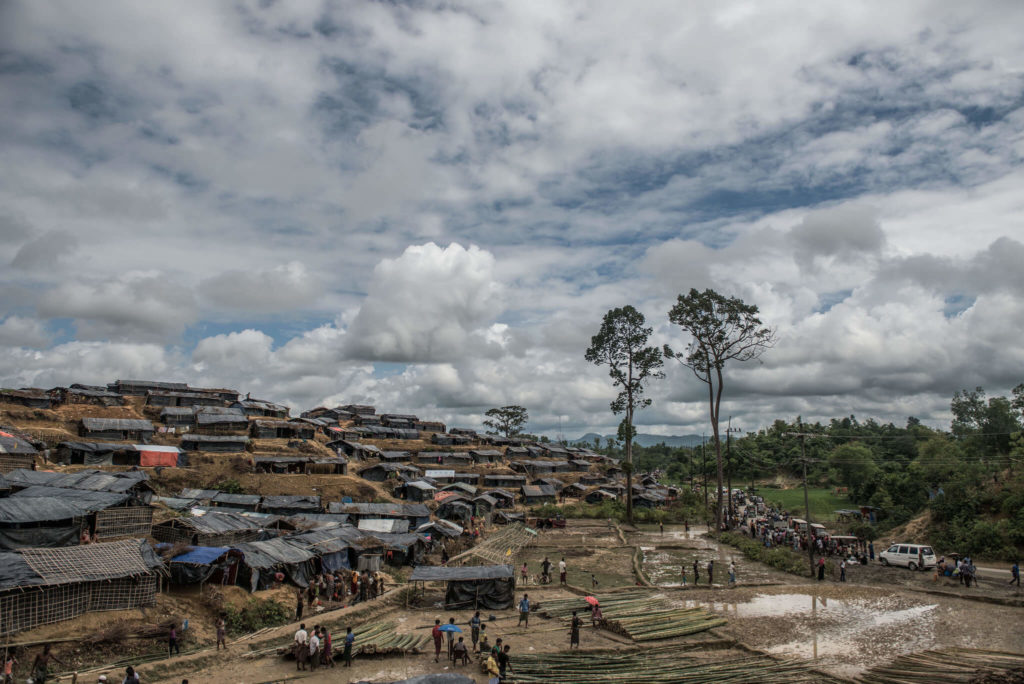 Cox's Bazar holds hundreds of thousands in a small area of land
In the second largest immunisation campaign in history, after Haiti in 2016, 900,000 doses of cholera vaccine were distributed in October 2017. There was then a second dose for children aged one to five, targeting around 180,000 young children in November. All children older than six months are also being vaccinated to protect against measles, rubella and polio.
Meanwhile, the sheer scale of the efforts to feed so many people is similarly eye-watering. Fortunately, the response from aid agencies has gone some way to meet those needs.
"One child used green crayons to draw the outline of human figures, then a red crayon to show blood coming out from their bodies"
When refugees enter Bangladesh they are given high-energy biscuits and hot meals by Action Against Hunger (ACF). So far, more than 260,000 people have received high-energy biscuits. Twice a month, families receive 25 kilograms of rice, four kilos of lentils and two litres of oil. Staggeringly, every day the camps get through 9 million litres of drinking water.
Aware of their vulnerability, special care and attention are paid to children and their mothers, especially those who are severely malnourished. Organisations including WFP work to prevent chronic malnutrition by providing blanket supplementary feeding to pregnant and breastfeeding mothers and children under five.
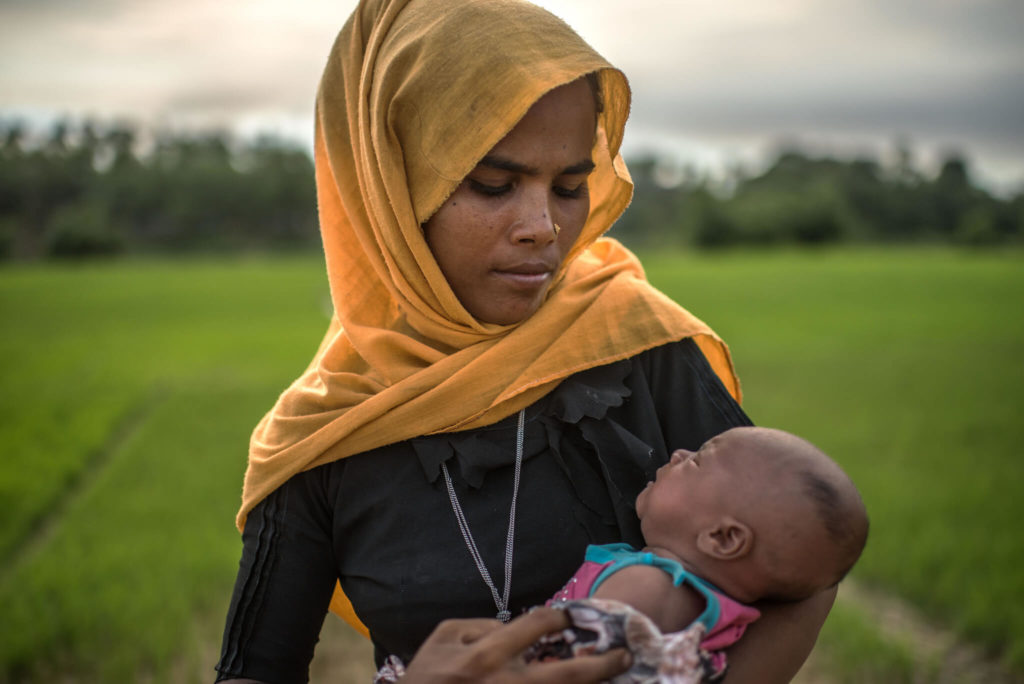 A Rohingya mother tries to comfort her baby
Around 63,000 infants and mothers have received SuperCereal Plus, a fortified wheat-soya blend like porridge, while severely malnourished children are given ready-to-use therapeutic food (RUTF) – commonly known as “Plumpy’Nuts” – to help them strengthen.
Efforts are also underway to empower women to make choices about their family's food. The WFP aims to eventually give all the refugee families a food assistance card, which works like a credit card. “Registered with the females of the household, it gives families a ten-dollar ration, and you have a choice of 19 food items. It’s really dynamic, it gives people choice, and it’s empowering,” said Thakral.
Giving refugees a childhood
The children’s hunger and ill-health may be easier to combat, though, than the severe trauma they have experienced.
So-called “toxic stress” in childhood is known to lead to impairments in the brain’s early development, leading to long-term issues in adult life such as depression and substance abuse.
“We cannot even start to fathom what is going on in the small head of this little human being," said Elhadj As Sy, the Secretary General of the International Federation of Red Cross and Red Crescent Societies (IFRC). "When we think about cognitive development, we all know that the damage which is done is done forever."
Aid agency workers on the ground in Cox’s Bazar are well-aware of the severe impacts on children of the horrors they have experienced, and several safe spaces have been set up for them. Around 200 are run by UNICEF, which provides psychosocial counselling, along with support for the children to play, sing songs, read, and play with musical instruments.
"Children were not sleeping and not even crying sometimes - because they just didn’t have the energy to cry"
“A number of children from zero to five have lost both of their parents, and their neighbours or distant relatives brought them here,” said Sakil Faizullah, Communications Manager at UNICEF Bangladesh. “When they come to our child-friendly spaces, these toddlers enjoy seeing other children around them enjoying themselves. Instead of just sitting and watching, they start participating."
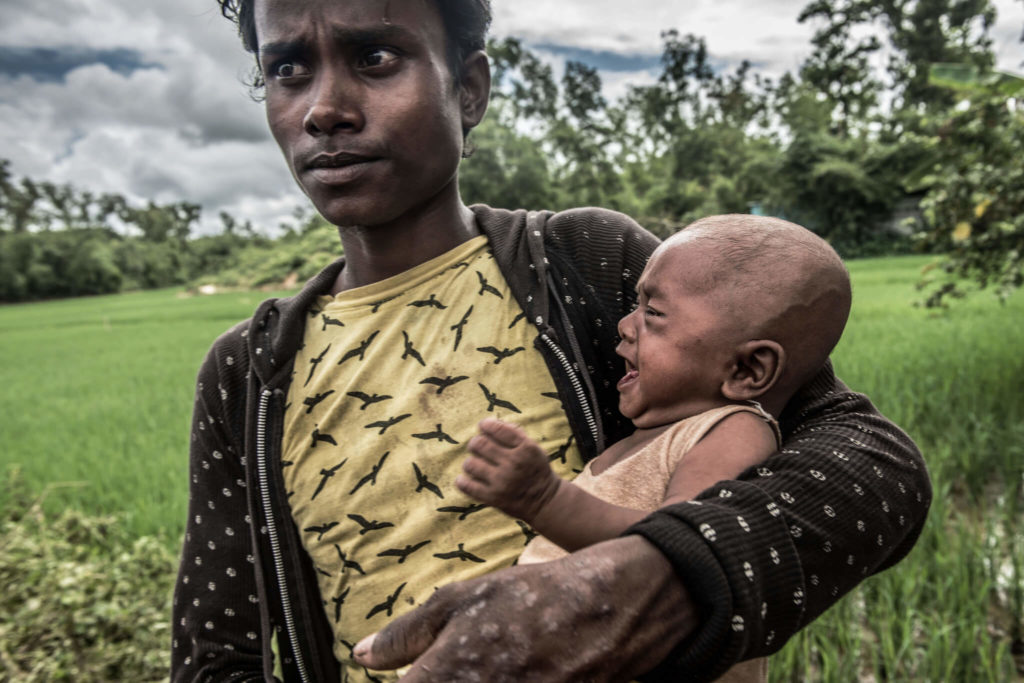 Toxic stress is a significant concern for infants' long-term development
Such personal care and engagement are vital to mitigate stress and protect childhood development. For older children, one way they help them recover is by drawing – through what is called “Healing and Education Through the Arts” (HEART), which has illustrated the extent of their ordeals.
“One child used green crayons to draw the outline of human figures, then a red crayon to show blood coming out from their bodies,” said Faizullah. “To one side was a red river. The child was trying to show that the blood of these dead people turned the river red.”
Over time, though, these children are beginning to show signs of healing. “The last time I came here, children were not sleeping and not even crying sometimes because they just didn’t have the energy to cry,” recalled Dr Krishnan. “This time when I was in the field I saw children flying kites, and I like flying kites, so I went to fly kites with them and talk to them.”
Meanwhile, providing early childhood education could be vital in attempts to counteract the trauma which young children have experienced, and to promote their cognitive development. Several innovative solutions have shown promise in response to the Syrian refugee crisis, such as the development of smartphone apps to help children's reading and psychosocial wellbeing, and teaching child development techniques to parents using videos and animation.
The way ahead
The Rohingya crisis is a crisis of children. Both in the overcrowded refugee camps and in Rakhine State, where Amnesty International has declared Rohingya are living in a “dehumanising system of apartheid”, it is children who suffer most. They are also stateless, which leaves their long-term security extremely vulnerable. Giving the Rohingya citizenship, as urged by the UN, would be an important step towards securing the children's rights.
"We need to a make sure that responding to children’s needs shouldn’t be an afterthought to humanitarian response - it should be an integral part," said Elhadj As Sy. "It should not be the sole responsibility of specific agencies, it must be a responsibility of everybody to devote enough time and funding to the particular needs of children.”
"If we, as human beings, as international organisations, or as nations, do not stand beside them, their futures will be lost"
The interventions taking place at Cox’s Bazar demonstrate what can be achieved, and have successfully helped to protect many thousands of young children. As many more refugees cross into Bangladesh, though, workers there know just how much more needs to be done.
“These children have lost their childhood,” said Faizullah. “If we, as human beings, as international organisations, or as nations, do not stand beside them, their futures will be lost.”
(Picture credits: Flickr/ Tommy Trenchard / CAFOD)
Jack Graham
jack.graham@apolitical.co
Make sure to share your own thoughts with the author by leaving a comment below

Log in or sign up to continue the conversation