
This article is written by Heather Buisman, public sector innovation consultant at the Observatory of Public Sector Innovation, OECD.
This article is part of the 'Wellbeing in an era of remote or hybrid working' boot camp. Sign up here.
Covid-19 has propelled governments to realise that they can do better. At the Observatory of Public Sector Innovation, we recently put out a call for innovative responses to Covid-19, and the replies so far show rapid innovation from governments around the globe. This has demonstrated a huge success for public sector innovators, many of whom personally pushed for innovation prior to the crisis, only to confront red tape, risk aversion, hierarchies, and silos.
Covid-19 has had a levelling effect: we can now all agree that innovation is necessary. Especially during a crisis, innovation is not a choice. It has taken this crisis for governments to emerge with a renewed mindset for collaboration, calculated risk and experimentation: because the alternative is no longer an option.
Moving beyond crisis is an opportunity for a “spring cleaning” of bureaucracy – to ask ourselves what we really need, and whether there are things that might have seemed important that have revealed themselves to really not be
The challenge will be to carry this momentum and mindset beyond the crisis. I’d argue that this can begin with a simple re-orientation back to basics: what does it really mean to be a public servant; what matters most and what is necessary? If we really dive into these questions, we’ll find that there is a lot of unnecessary process, noise and division that has come to consume our time and ways of working.
Clearing away this noise will require us to be innovative and to take a more holistic approach to government. As individuals, thinking through these questions can ground us in a renewed understanding of the purpose of our work. From there, innovation can be as simple as examining how you can work differently and collaborate with others, or it can extend as far as a macro level refresh on how the government system operates.
As we move beyond crisis, how do we ground ourselves in our role as public servants to prevent a return to the status quo?
What matters most?
At the end of the day, public servants have a duty to serve society and the government of the day, while demonstrating integrity and using resources wisely. For some public servants, the question of what matters most has changed in the last couple of months: many have been confronted with clear evidence of inequality in society or the inadequacy of existing policies, while others have re-discovered the value and necessity of their work.
If we connect our work back to the foundations of our role – to serve society to the best of our abilities – we need to reflect on how we work to make sure this happens. If we focus on what matters, the process of how we operate at an individual and organisational level will likely need to change. This may look like collaboration instead of arguing over roles and responsibilities, information sharing rather than hoarding, and an examination of how the government system as a whole can best address the interacting needs of society.
Many public servants are working tirelessly to respond to this crisis, while others may simply be doing their best to keep their heads above water
Moving beyond crisis is an opportunity for a “spring cleaning” of bureaucracy – to ask ourselves what we really need, and whether there are things that might have seemed important that have revealed themselves to really not be.
Of course, this is easier said than done, but we have a chance to simplify and streamline, to be agile and experiment, with the end goal of doing better. There’s a lot of noise that can be cut out of public service delivery, and doing so will clear room for public servants and organisations to re-focus on what is necessary.
How do we proceed?
Many public servants are working tirelessly to respond to this crisis, while others may simply be doing their best to keep their heads above water given the personal responsibilities and pressures that can be exacerbated by a crisis. Neither of these spaces feels conducive to big picture thinking.
I would propose two small ideas to help keep us grounded and to start thinking about our roles as public servants that may pave the way for government to do “better” as we move beyond crisis, or perhaps simply an exercise to renew your sense of purpose in your work.
1) Write yourselves two sticky notes and post them somewhere in your “office”:
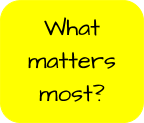
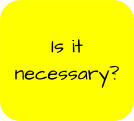
These questions, while simple, can encourage you to be mindful and reflect on your day-to-day work as a public servant, while also focusing on the larger goals and purpose of your policies/programs etc. I’ve found that being confronted daily by these questions helps me ground myself in the value and purpose of my work, while also serving as a reminder to clear away the noise and unnecessary bureaucracy that consumes my time.
For some of you, these questions may be a reminder to keep things simple: go back to basics, set up a videoconference/ phone call to collaborate, skip the unnecessary debates over whose fault it might be etc. and work together to solve a problem. For those in a space to think bigger picture, perhaps this will compel you to think further about how the larger system of government interacts, how it could be more agile, how you could collaborate and interact better at a systems level, or how the needs of your stakeholders or clients might be changing.
2) Take Note: Government can do things differently
Government and public servants are doing extraordinary things in this crisis. Just as individuals are being encouraged to journal about this experience for future generations, I’d encourage public servants to record their observations of how government is working in this state of flux. This is a reminder for yourself and others that government is capable, that it can change, that it can be quick, that it can rise to the occasion, and that it is capable of efficiently responding the needs of society.
The focus of the public service can be on what is necessary and what matters. With that mindset, the possibility for change to the structures and processes which often restrict public servants is possible. — Heather Buisman
(Picture credit: Unsplash)
Make sure to share your own thoughts with the author by leaving a comment below

Log in or sign up to continue the conversation