
The Brazilian city of Recife is not always an easy place to govern. Space is at a premium — the city’s secretary for urban innovation Tullio Ponzi points out that 70% of its surface area is made up of islands. In a city with some of the highest levels of inequality in the country, this means disadvantaged neighbourhoods, often crowded along river banks or on hillsides, can be cut off from government services.
In Recife’s crowded streets, Ponzi said, “You don’t have space for living in communities. You don’t have space for children to play."
As in other parts of the world, inequality can lead to high levels of violence, with poorer neighbourhoods hit hardest. And while Recife’s murder rate is dropping, it still frequently appears in lists of the the world’s most violent cities. That’s why Ponzi is part of a government-wide effort to bring down rates of violent offending with an unusual approach: focusing on residents between the ages of 0 and 6.
Seeing the city from 95cm
The program, Urban95, was launched by the mayor of Recife, Geraldo Julio, in 2017 with support from the Bernard Van Leer Foundation, which works with governments and civil society groups to improve outcomes for young children and their caregivers.
The idea is that making the city more welcoming to children will improve community safety in the short-term and prevent violence in the future by providing residents with greater opportunities at a younger age.
The World Health Organisation (WHO) identifies early childhood intervention as an important factor in preventing violence throughout childhood and youth, and cities are increasingly embracing the idea that investing in programs for young children can have an effect on overall levels of violence in the community.
When you strengthen ties between caregivers and children, the research suggests, the children themselves are protected from violence in their immediate relationships. They then go on to form healthier social relationships within their communities, which breaks the cycle of violent behaviour from childhood into adulthood.
The scheme takes its name from the average height of a three-year-old child — 95 centimetres. Municipal governments that implement Urban95 are encouraged to design their cities from the perspective of their smallest residents. In Recife, this involved providing pre- and post-natal services to caregivers, providing storytelling and play opportunities for young children and ensuring families were able to physically access these services.
The Bernard Van Leer Foundation is currently providing €1.5 million in funding across four grants to help Recife implement the program, the foundation’s representative in Brazil, Claudia de Freitas Vidigal, said.
“We want mothers to fit in,” Vidigal said. “In many cities, they just stay inside their house — we want them outside, we want them sharing experiences in the community with other caregivers.”
She said getting caregivers out into the community and accessing services meant making sure streets were passable for caregivers and children and even redesigning local bus routes so they don’t just cater to people going to work (largely men) but also mothers who want to get to early childhood centres.
It also meant painting the streets of Recife every colour of the rainbow to turn them into enticing places for children to walk and play, Ponzi said.
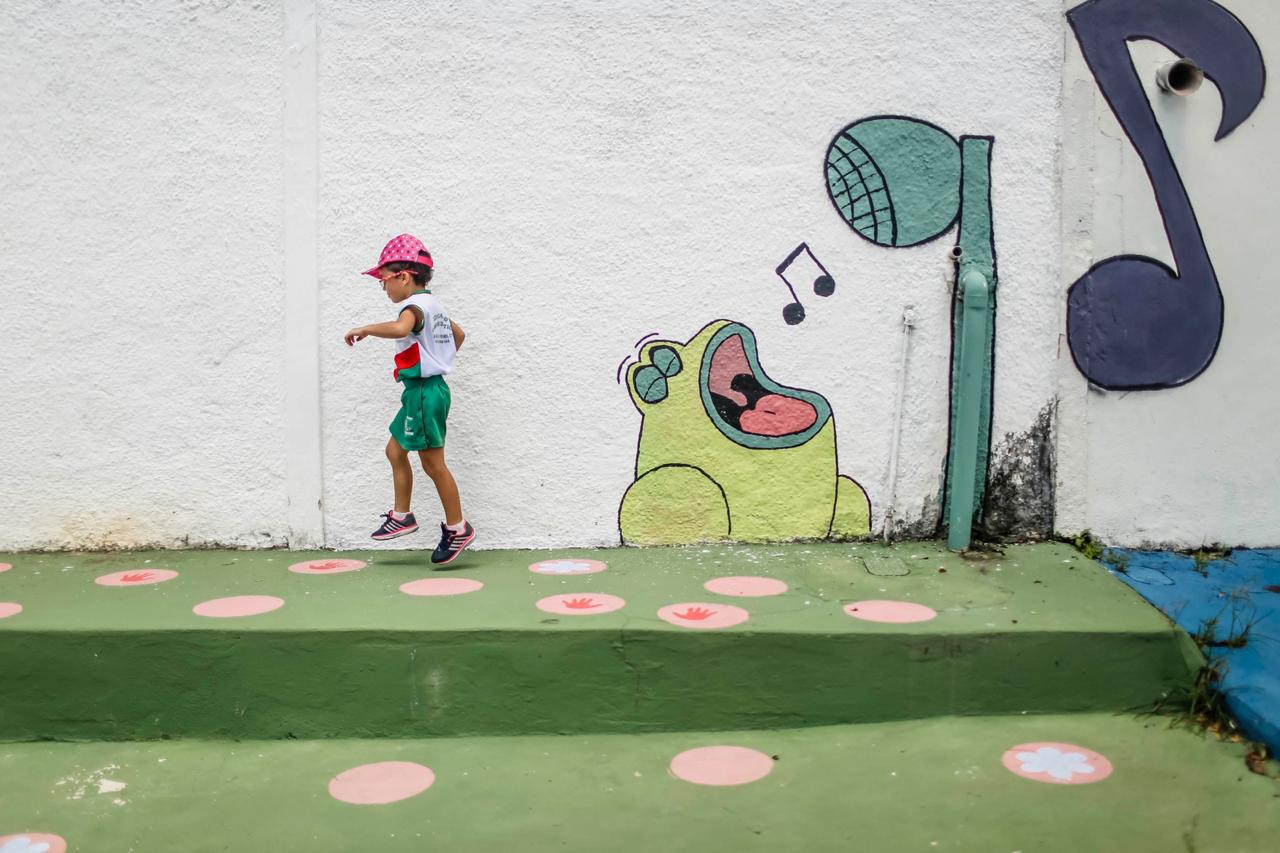
He led a design program with hundreds of families, asking their opinions on how to upgrade neighbourhoods to cater to children. Those neighbourhoods are now a riot of colour, with hopscotch courts on pavements, counting games ranged along walls and community gardens scattered across formerly derelict spaces.
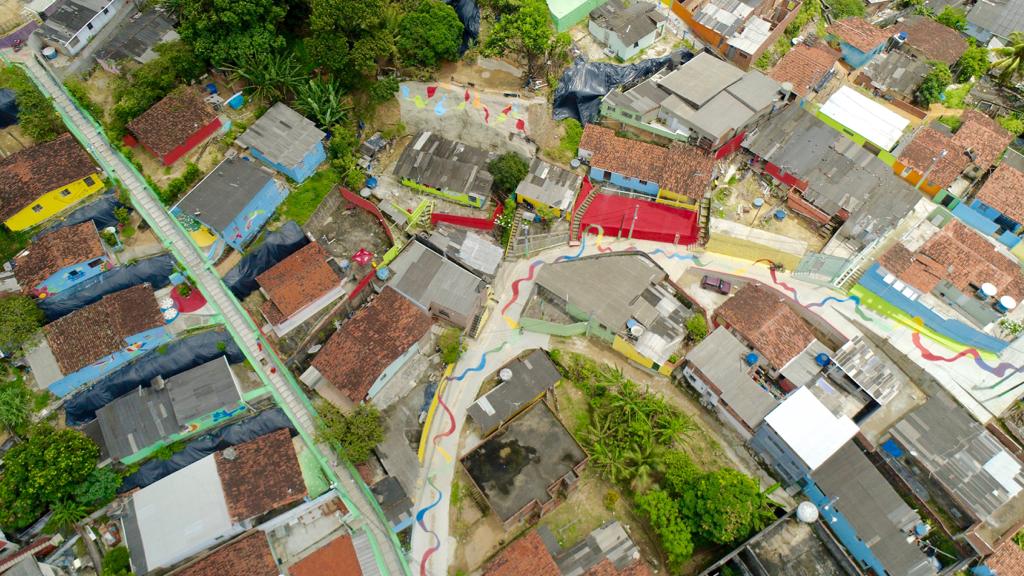
“When children play in front of their homes, they bring the whole family into the community,” Ponzi said, adding that there were sometimes surprises in the design process.
While consulting with the children of one community, Ponzi’s offer of hopscotch was roundly rejected. They told him they wanted a football field, and so they got one. Building it was a no-brainer, he said.
“Imagine a soccer field in any community around the world. You don’t see anything wrong, you don’t see trash. Why? Because citizens honour this space.”
Thinking Like a Start-up
Urban95 spans a significant part of Recife’s municipal government. Civil servants must work with each other across departments and with technical experts from Bernard Van Leer to upgrade public space, implement early childhood development programs in community centres and identify families in need of assistance.
The program included Ponzi’s innovation department as well as health, education, urban planning and social development. Developments across those departments were tracked in regular meetings involving the mayor himself, and in the future they will be monitored using a purpose-built dashboard, due to be completed by the end of this year.
Ponzi said the government had to act with a different mentality to keep all these moving parts operating smoothly. “We needed to work and think like a start-up,” he said. “Innovation wasn’t born ready, and it’s important for the government to understand that it’s necessary to live with failure.”
Vidigal said the program worked well in Recife because there was already a strong public policy basis for investing in early childhood through pre-existing community and health centres. But that does not mean it has been straightforward.
A Princeton University case study of the Urban95 program in Recife pointed out a number of roadblocks and challenges the city had faced in implementing the scheme. Some development projects stalled for extended periods during the federal election campaign of 2018, for example.
The study, which looked at the rollout of Urban95 in two communities – Iputinga and Alto Santa Terezinha – found that the program worked best in Alto Santa Terezinha because it was implemented through an existing community peace centre, known as COMPAZ, which already had deep links to the community.
Murilo Cavalcanti, Recife’s Secretary of Urban Security, said that the COMPAZ centre was originally set up to prevent violence by serving young people aged 16-27. With the help of Urban95 and other funding, they were able to add early childhood development programs to the centre’s offerings to residents.
Even before the implementation of Urban95, the centre had made a difference to levels of violence in the community, Cavalcanti said. Rates of murder, violence against women and children violence had dropped the 1.5km area surrounding the centre, he said.
Urban95 was able to piggyback on this success and use COMPAZ workers, known as “peace agents”, to identify families in need of early childhood development services and bring them to the centre. The Princeton study notes that this led to increased local levels of trust in the program in Alto Santa Terezinha than in Iputinga.
Painted walls and open sewers
There are other challenges. In many parts of Recife, people don’t have basic amenities like running water, Vidigal said, so telling people they needed to invest so significantly in early childhood development was often difficult.
“Sometimes you are working on an urban intervention, and there is this beautiful little elephant for people to play with, and a giraffe, and then on the other side of the street, you see a sewer coming down,” she said. “We need to listen to communities and build together with them otherwise we're going to be building beautiful things that don't make sense and they're not going to like it — ‘Why are you painting this, if I don't have water in my house?’
Still, Vidigal insists that early intervention with children under six is the most effective way to break cycles of poverty and violence in any city. It’s an idea with a strong evidence base — the first 1,000 days of a person’s life are now considered the most crucial to their eventual development.
In a country like Brazil, which has such high levels of inequality in its cities, Cavalcanti said early childhood intervention was the most powerful area for a government to invest in, no matter the cost. “It's an antidote to inequality, exclusion and poverty,” he said. — Megan Clement
Make sure to share your own thoughts with the author by leaving a comment below

Log in or sign up to continue the conversation