
From the tragic image of Alan Kurdi, the drowned three-year-old found washed up on a Turkish beach, to Omran Daqneesh, the stunned five-year-old filmed in an ambulance in the aftermath of an airstrike on Aleppo, never before has the plight of refugee children received so much media attention.
In spite of this, the humanitarian crisis system currently puts very little focus on early childhood development. Less than 2% of global humanitarian aid budgets are dedicated to educating refugees, with only a tiny proportion going to young children.
"This isn't just a win for you guys - this is a win for early childhood development"
The International Rescue Committee (IRC) and Sesame Workshop, Sesame Street’s nonprofit educational organisation, have a plan to change that. With a $100 million award from the MacArthur Foundation, their partnership is embarking on the biggest ever early childhood intervention program in a humanitarian setting.
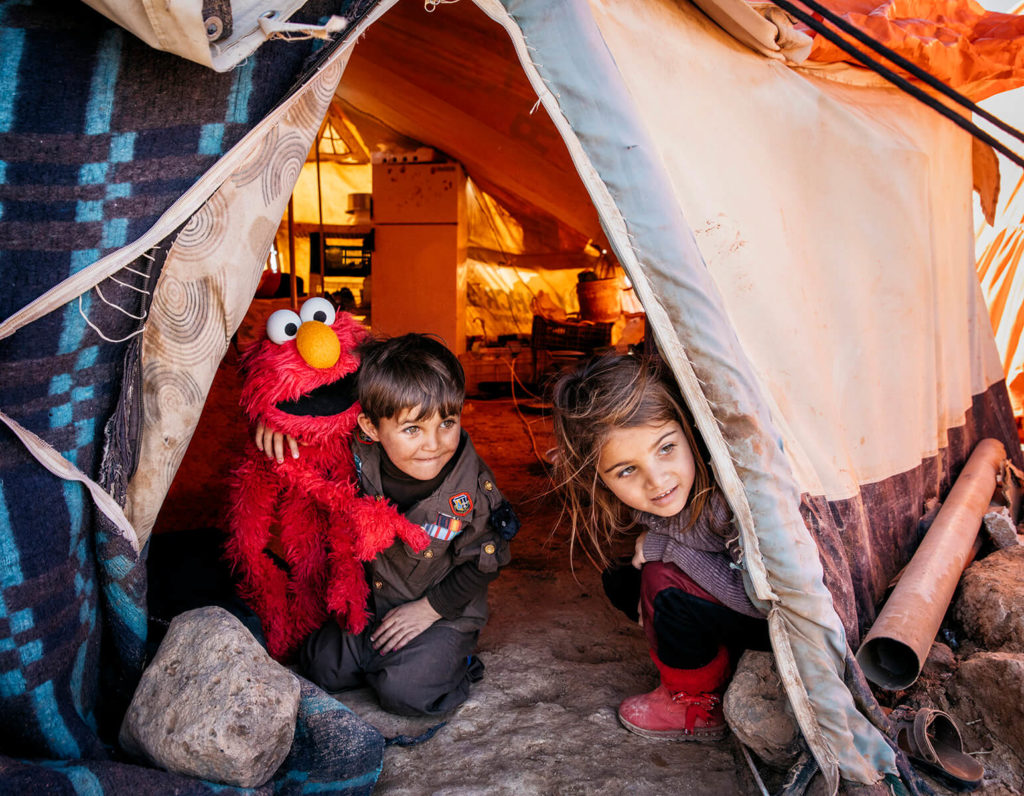 Customised educational content aims to reach around 9.4 million young children
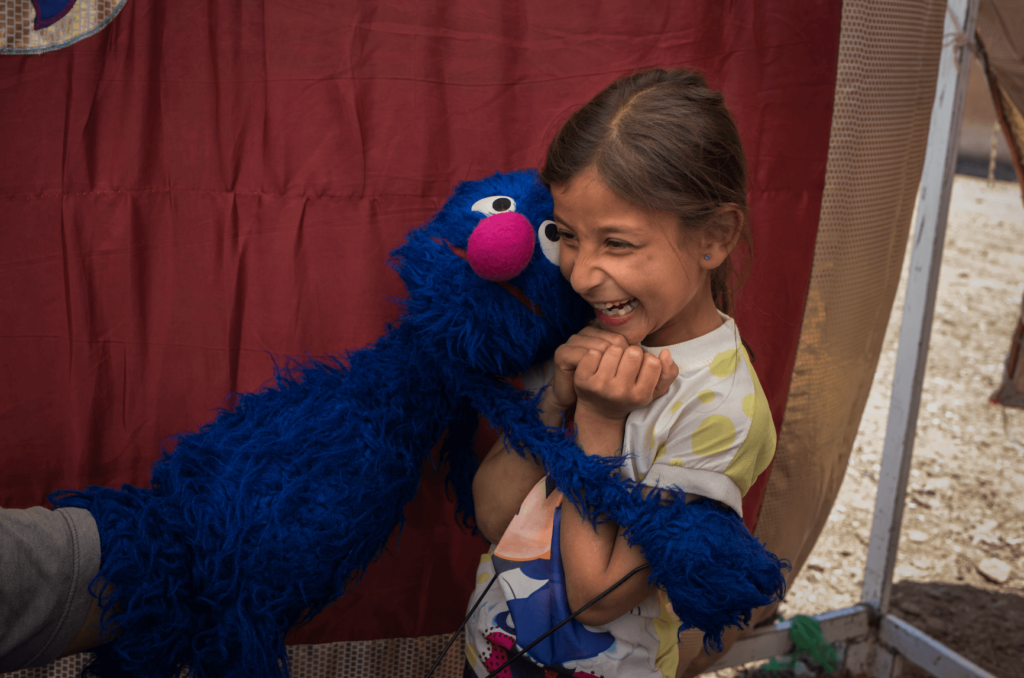
The Muppets are on their way to the region, embedded in a wide-ranging plan to give refugee children the tools to overcome trauma and succeed in school and later life. It will include carefully-designed educational content covering language, reading, maths and socio-emotional skills, along with more direct support through caregivers and child development centres.
The severe trauma children like Omran experience and the stressful conditions they face even after escaping conflict can lead to what’s known as “toxic stress". Toxic stress can hamper brain development and has lifelong repercussions for children's health, behaviour and education. This is what the project aims to address, and in doing so it could have a dramatic impact on the children's life chances.
“All the feedback we’ve received from our partners has been: ‘This isn't just a win for you guys; this is a win for early childhood development,’” said Katie Murphy, Senior Technical Advisor for Early Childhood Development, International Rescue Committee (IRC).
How will they do it?
Working in the Syrian response region – including Jordan, Lebanon, Iraq and Syria – the project will include three components: customised educational content broadcast to around 9.4 million young children through television, mobile and digital platforms; support to 800,000 caregivers home visiting 1.5 million of the most vulnerable children over five years; and the creation of child development centres in community sites.
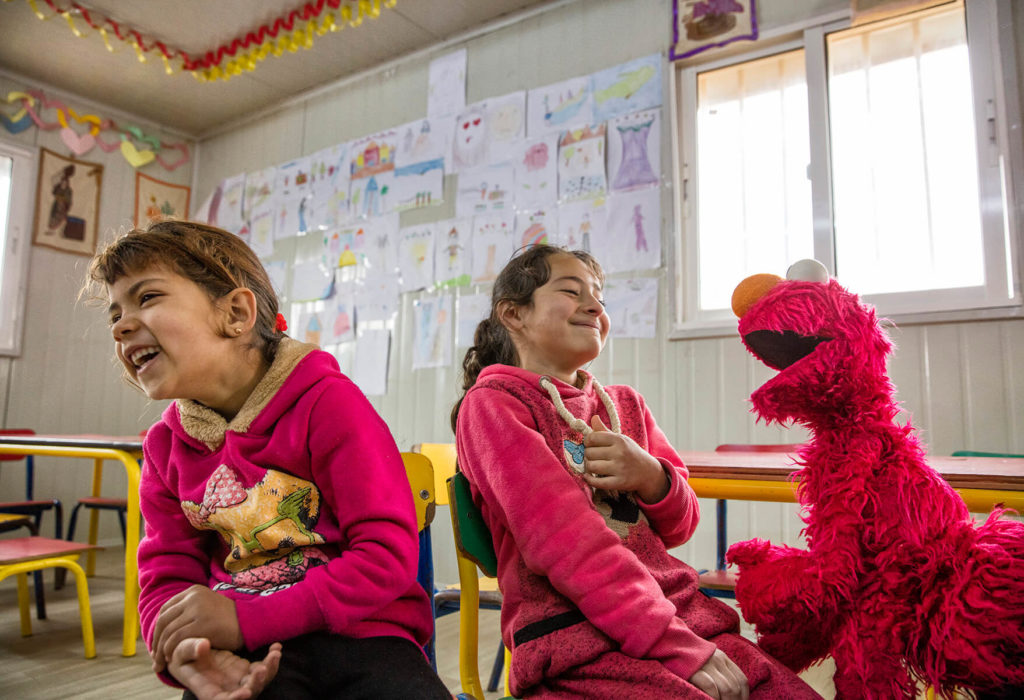 The initiative is targeting local children as well as refugee kids
“The Muppets have a lot of power to shape thoughts and ideas,” said Nada Elattar, the Director of Global Social Impact and Philanthropy at Sesame Workshop.
Both the IRC and Sesame Workshop are experienced in creating and distributing educational content for early childhood development, and have built a wealth of evidence on which to base the interventions.
"The refugee crisis has been reaching levels which have not been seen since World War II"
“When we expose some kids to our content and compare them to others who don’t get the content initially, we see significant improvements in their knowledge and behaviour,” said Elattar.
In addition to creating a cohesive curriculum between the organisations, what makes this project so unique is that the content is custom-made for the refugee children, including the use of refugee Muppets. “The initiative reflects their cultural beliefs, their geographical regions and their lived realities in ways we haven’t really done at a massive scale in the region yet,” said Murphy.
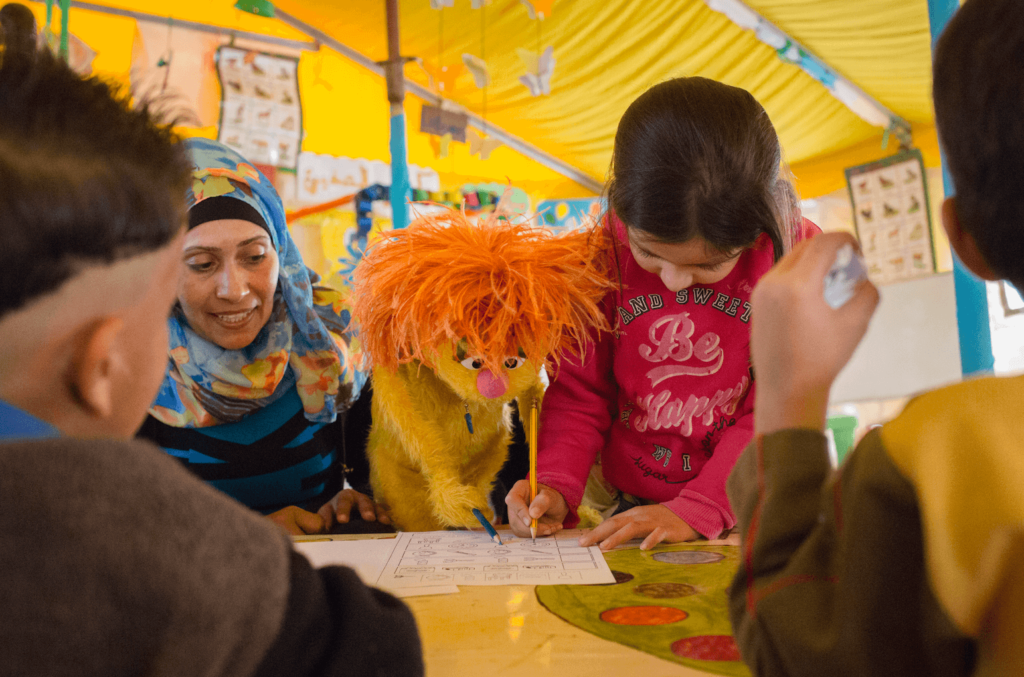 “We see caregivers as being the critical first teachers, first protectors for young children”
While reaching millions of refugee children through various media, the second and third components include closer engagement through home visits and the child development centres. “We see caregivers as being the critical first teachers, first protectors for young children,” said Murphy. “So a lot of our work focuses directly on providing support for them.”
Important challenges lie ahead
The sheer reach of the project means that buy-in and support from the public sector in these countries will be extremely important. “We know that our success in reaching scale really depends on having strong relationships with local governments and local institutions,” Murphy said.
There is also the issue of fairness to non-refugee children from the host population, which is something the partners have built into their plan. “Importantly, we’re not only targeting Syrian refugees, but we’re also targeting the kids within the local communities in the country,” said Elattar. “For any government, though I can’t speak on their behalf, I’d imagine that would be an incentive.”
The pair is also well aware that, while the nature of modern humanitarian crises has opened up opportunities around technology, the changing landscape of refugees’ urban environments also presents fresh challenges.
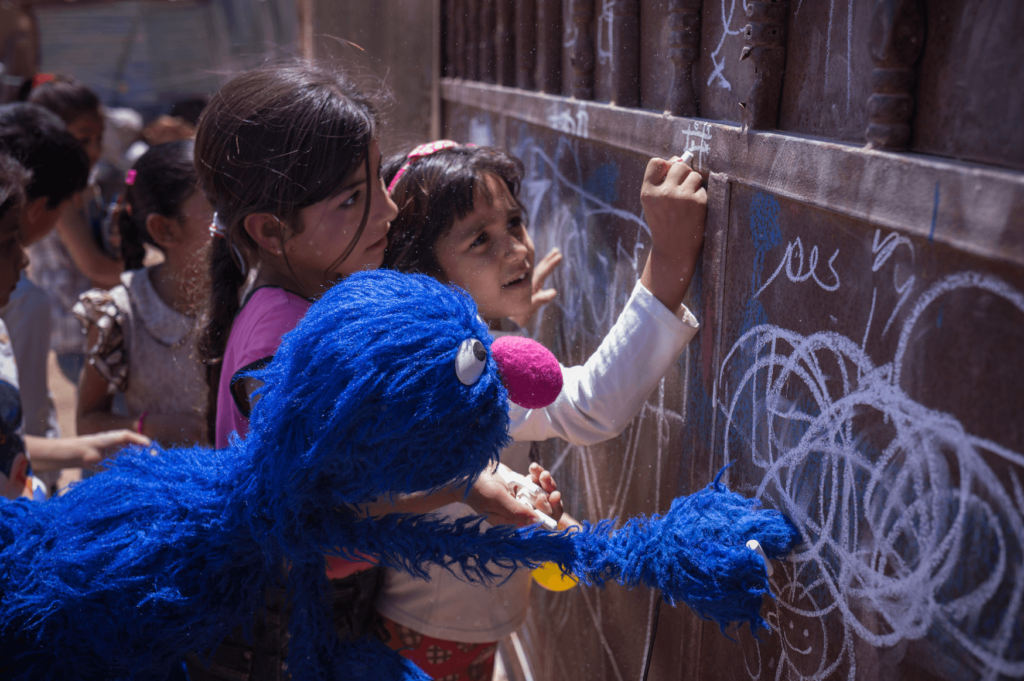 Refugees increasingly live in cities, not camps, which brings fresh challenges
The mobility of refugees is something they are working to keep track of, “in order to make sure we’re able to provide continued support wherever families are, if they happen to decide to move back to Syria, for example," said Murphy.
A model for the future?
For Murphy, this project is the convergence of two critical issues. “Even though much of the early childhood science has been around for decades, it’s really reached a pinnacle of understanding,” she said. “Meanwhile, the refugee crisis has been reaching levels which have not been seen since World War II.”
 “This can serve as a model for other parts of the world"
As well as helping the millions of young refugees in need, Murphy and Elattar hope the initiative can eventually force a change in all future humanitarian responses. With the help of their partners at New York University, led by early childhood development expert Hirokazu Yoshikawa, the success of the interventions will be tracked and assessed, creating a body of new evidence.
"No longer will young refugee children and their families be ignored"
“This is not just a one-off: we have the resources now to make this a well-designed, carefully implemented, long-term initiative,” said Murphy. “This can serve as a model, not only for the Syrian response region, but for other parts of the world. No longer will young refugee children and their families be ignored, as their needs have been in many of these crisis situations.”
“This is the way our world is: there will always be people who are in need and displaced,” said Elattar. “Wherever refugees go, they will see content that was designed specifically for them. Hopefully whatever Muppets we create will be around for the next century. That’s my dream.”
(Picture credits: Sesame Workshop/Parisa Azadi, Sesame Workshop/Ryan Heffernan, Sesame Workshop/Tara Todras-Whitehill)
Jack Graham
jack.graham@apolitical.co
Make sure to share your own thoughts with the author by leaving a comment below

Log in or sign up to continue the conversation