

This article is written by Adam Parr, former Oxford Blavatnik School lecturer and former chief executive of the Williams Formula One team.
In my last two articles, we looked at how strategy is a process, not a plan. Strategy is a process of overcoming obstacles to achieve your goals.
If you want to succeed in your goals, you should focus on the strategic dimension (how you will do it and through what overall process), rather than tactics (the smaller steps or actions you take to get there). You should also focus on the human dimension: who will block you from what you’re trying to do? Who can help you?
Something that everyone can be strategic about is their career. Or you may want to think strategically about your partner’s career, or even your child’s career.
Here are a set of design tools that you can use to think strategically about your career. They’re borrowed directly from the book Designing Your Life: How to Build a Well-lived, Joyful Life by Bill Burnett and Dave Evans, two former designers at Apple, now at Stanford University. I love these tools because of their strategic underpinnings, their ‘bias to action’ and experience that they work.
Reframing your career questions
Reframing — thinking about the question — is really important. You want to focus on asking the right questions, not finding the perfect solution. If you’re not asking the right question, then it doesn’t matter what answers you’ve been getting.
So you can reframe how you think about your career. Your life is not a thing, it’s an experience. The fun comes from designing and enjoying the experience. If you’re rethinking your career, then enjoy the process.
Reframe your question about career so that it’s about growth and change, not about finding the perfect job. Often people ask, “How do I find the perfect job?” When really they should ask, “How do I enjoy life as much as possible?”
Here’s another example of how you can reframe a career question.
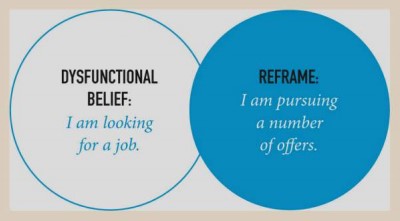
The strategic objective of moving jobs is to have as many job offers on the table as you can. It’s not to have the perfect job, it’s to be able to choose between job offers.
Participating in your network
Networking is very important in strategy because it’s all about relationships. The vast majority of career opportunities come through networks. Networking is like asking for directions. So go ahead and ask for directions.
Think about how you can develop your network. Rather than “doing” networking, reframe this to “participating in a network.”
Think of your network as something you have to pay into and invest in. You’ll never regret doing someone a favor. Anytime you feel like sending a vicious email, just remember not to.
Prototyping your life
Prototyping is having a bias to action. This is so important. If we’re going to address mega problems like climate change, we have to start now, and we have to do it in whatever way we can. It’s very easy — whether in government or business — to wait, and train, and spend, and never actually do the things that make a difference. But to make a difference we have to just get on and do stuff.
One example of prototyping your life is to have a life design interview.
To have a life design interview, identify people who are doing things you think are interesting. Ask them to meet for a coffee. Everyone’s favorite topics are 1) themselves, and 2) what they do. They won’t turn you down if you ask to meet for 30 minutes (don’t call it an interview), talk about what they do, and why they do it. If you have a mutual friend, reference that friend when you contact them. You’re not applying for a job: you mustn’t say you want to work with them. Your objective for the interview is to ask questions, listen, and learn. Don’t spend time talking about yourself.
If you’re getting along well with them, then you might find the opportunity to ask: “How would someone get to work at your organization?” Ask an open question about the process, not about a specific job. You lose nothing, and you might gain a lot.
If you’re reading this on the Apolitical platform, you probably work in government or in policy. Being strategic about your career is not just important to you. It’s important to everyone. If the best in the public sector rise through the system, and enjoy what they’re doing, then all of society benefits.
So how can you enjoy life as much as possible?
Want to try strategising your own career using this framework? Use our 10 minute tool.
👋 You can write an article like this one! Share your thoughts with a community of public servants. Learn more
(Image Credit: Unsplash)
Make sure to share your own thoughts with the author by leaving a comment below

Log in or sign up to continue the conversation