
This post is written by Susanna Kugelberg, Postdoctoral researcher, Copenhagen Business School (CBS)
- The problem: Politicians recognise the importance of civic engagement, but fail to see it as a transformative capability, for which they need to capitalise resources and skills.
- Why it matters: Civic engagement matters because it is key for achieving strategic influence and community impact.
- The solution: Civic engagement is about sharing leadership.
Often one hears that governments’ survival relates to their capacity to manage three issues: how to remain in power, how to respond to crises, and how to influence by political strategies. Nonetheless, success in any of these matters depends on one critical capacity: getting citizens’ support. Especially for local governments, capabilities for engaging citizens in key policies can act as a watershed for their political survival.
The problem is that even if policymakers are cognisant of the importance of civic engagement, they often fail to see it as a key to political survival, to which they need to devote resources and develop capabilities.
Civic engagement matters because it is key to achieving strategic influence and long-lasting community impact.
The experience of the Energy Academy in Samsø—situated on an island in Denmark—shows a truly unique way of engaging citizens in policies. Engaging citizens was key to their success for transforming the island to a carbon neutral island. Samsø’s citizens won the UN Climate Action Awards, last year in Glasgow, and proved that by engaging citizens, effective and climate smart action can be taken.
All are treated as equal, there is no hierarchy, no one sits above or in front, and no one speaks out without holding the stick.
Finding the answers
Being a researcher trying to understand engagement capabilities, the answer can sometimes sound a bit banal in terms of sophistication. It often boils down to a strong skill set for understanding the people in the community, barriers and resistance and at the same time a strong passion for translating a vision to concrete community values and goods.
But to do this, you need a strong ethos, tools and capabilities. And I found out that it is more about the methods and ethos that make Samsø truly unique and sophisticated.
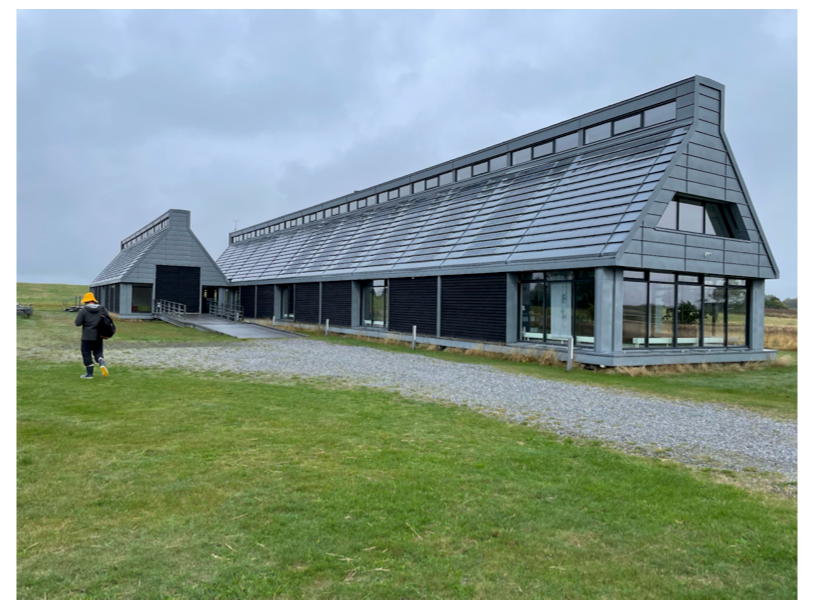
Inspired by the Viking settlements and customs, Samsø academy is inviting citizens of Samsø to their Viking-inspired hallmark house to debate issues and ideas.
The method used at the Energy Academy is to place citizens in a ring—so everyone shares leadership—and then place a stick in the middle. The one who wants to speak, takes the stick and speaks. All are treated as equal, there is no hierarchy, no one sits above or in front, and no one speaks out without holding the stick. The Viking circle illustrates the community bond, where all stand together and have an equal say.
I learnt from Samsø that civic engagement is truly about sharing leadership. It is about giving voices and not about counting voices.
True policy change comes from communities that have a voice in decision-making. As community leaders, we need to remind people that their voices count - everyone and on equal footing. Samsø try to make this visible by entitling them to have a voice, symbolised by a stick and not by power and hierarchical status.
Picture 1: Windmills at Samsø in which the citizens of Samsø have themselves invested.

Picture 2: The Viking hallmark house of the Energy Academy at Samsø
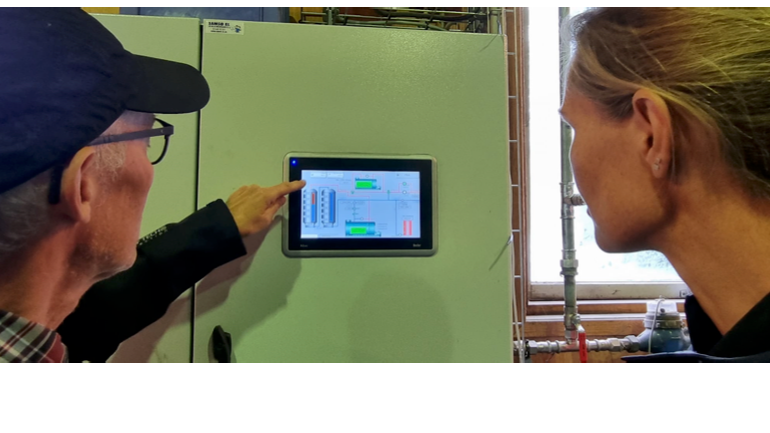
Picture 3: Me with one of the engineers (Niels Mogensen) who has developed a way to use crop residue for power and district heating.
👋 You can create a post like this one! Share your thoughts with a community of public servants. Learn more
(Image Credit: Unsplash)
Make sure to share your own thoughts with the author by leaving a comment below

Log in or sign up to continue the conversation