
Malnutrition directly affects one in three people around the world, causing losses of 11% of GDP every year in Africa and Asia. It's proven to have profound negative effects on children's development, and is responsible for nearly half of all under-five deaths.
Lawrence Haddad, Executive Director of the Global Alliance for Improved Nutrition, explained to Apolitical how public-private partnerships are making headway in beating malnutrition, and the reasons we have to be optimistic about their potential.
What work does GAIN do specifically for babies and children under five?
We spend a lot of time on the six-month-old to 24-month-old infant and young child, and we work a lot with their mothers around diversifying their diets. I was in Nigeria where only 10% of kids in that age group meet a minimum diet adequacy. So in other words, their diets are pretty terrible – and those are the minimum.
The second thing we do is work with businesses and governments to see if they can together produce things that can be added – such as sprinkles, which are small sachets of vitamins and minerals which are very cheap. A mother can open one of those sachets and sprinkle it on top of whatever food she’s giving to her child, and that provides minerals and vitamins that are important for growth.
"We did some estimates that showed GDP losses of about 10% per year – that really gets people’s attention"
The third thing we do is look at how the legislation and policy environment can promote good feeding for infants.
How do you persuade governments about the importance of nutrition?
For governments, the economic arguments are pretty powerful. After the global financial crisis of 2007-08, people began to realise that – because there was a big food price spike – lots of people didn’t eat as much food, or didn’t eat food that was of a good quality in terms of nutrients.
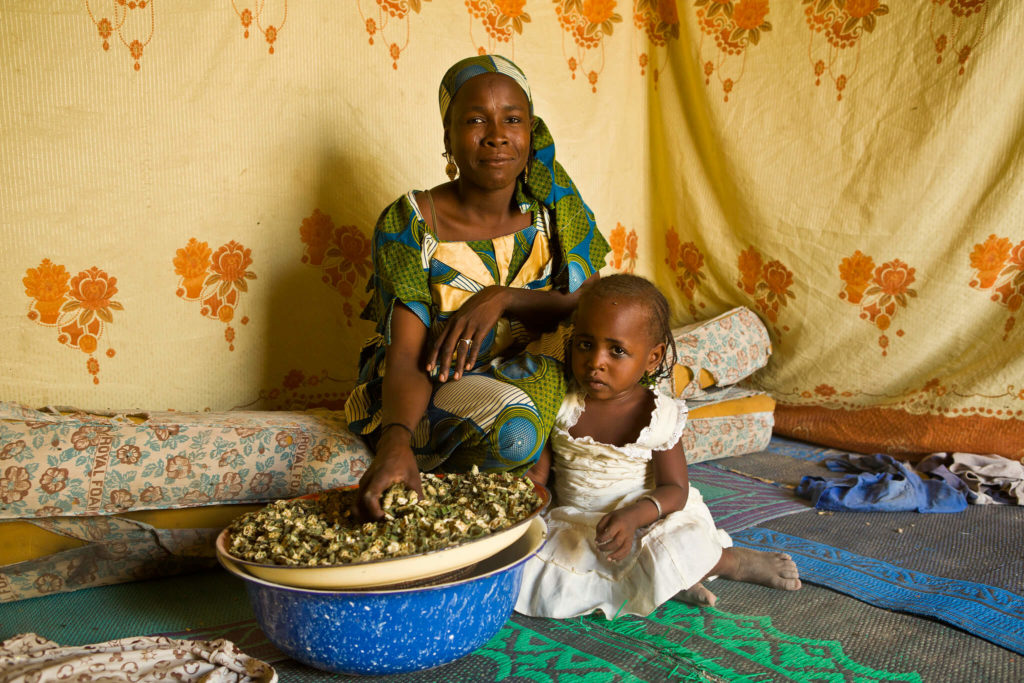 In Nigeria only 10% of children from six to 24 months meet a minimum dietary standard
A big group of us spent a lot of time saying to governments: this financial crisis is going to be an economic crisis that carries on for 20 years if you guys don’t do something now to protect the diets of very young infants and children.
"For the private sector, this is their job: to sell us stuff we don’t even think we need"
We were able to show that brain development, immune system development – all that stuff is happening in the first 1,000 days from conception through to two years of life, and any interruption in that has very long-term consequences for the child’s cognitive development: their labour productivity; their ability to do anything that requires sophisticated cognitive skills.
We were able to convince governments that this is not just a health issue, this is an economic issue - and it’s not just a family issue, it’s a national issue. We did some estimates that showed GDP losses of about 10% per year – that really gets people’s attention.
How do your public-private partnerships work?
A good example is our work in Indonesia. We were able to design a program with the government that developed emotional demonstrations – one-minute adverts, public service announcements, if you like – that combine the best of the public sector. And then we brought in some media companies to help us design ways of communicating that made the message really engaging for people.
For the private sector, this is their job: to sell us stuff we don’t even think we need. Can you marry that skill set with the public sector priorities and messaging? Can you make that interesting?
And we did. An independent evaluation from the University of Sydney showed it really did make a big improvement to the diets of those kids in Indonesia. That work is now expanding from six to 22 districts, and if that’s successful, it will go nationwide.
How do you get businesses involved?
More and more see that this is a growing trend: families are getting more and more interested in nutrition. They want to position themselves at the forefront of this movement, rather than to be seen as laggards that everyone else has to drag along.
There are just some companies who happen to be in the fruit or vegetable business, or in the bean or poultry business, and the products they are good at producing are parts of healthy diets. They’re not particularly interested in nutrition - but they are interested in maximizing profit. We don’t have to change their attitudes towards nutrition, we just to have to help them grow their business.
"You’re already thinking about taxing bad things like soda and fats. That’s good, but have you thought about creating incentives for the ones who are producing the healthy stuff?"
For those kinds of companies, we have to work with governments quite often to help governments help those businesses to grow. We’ll say to the governments: look, these are the things that are holding these companies back. You’re already thinking about taxing bad things like soda and fats. That’s good, but have you thought about creating incentives for the ones who are producing the healthy stuff? Why don’t you give them a preferential tax break?
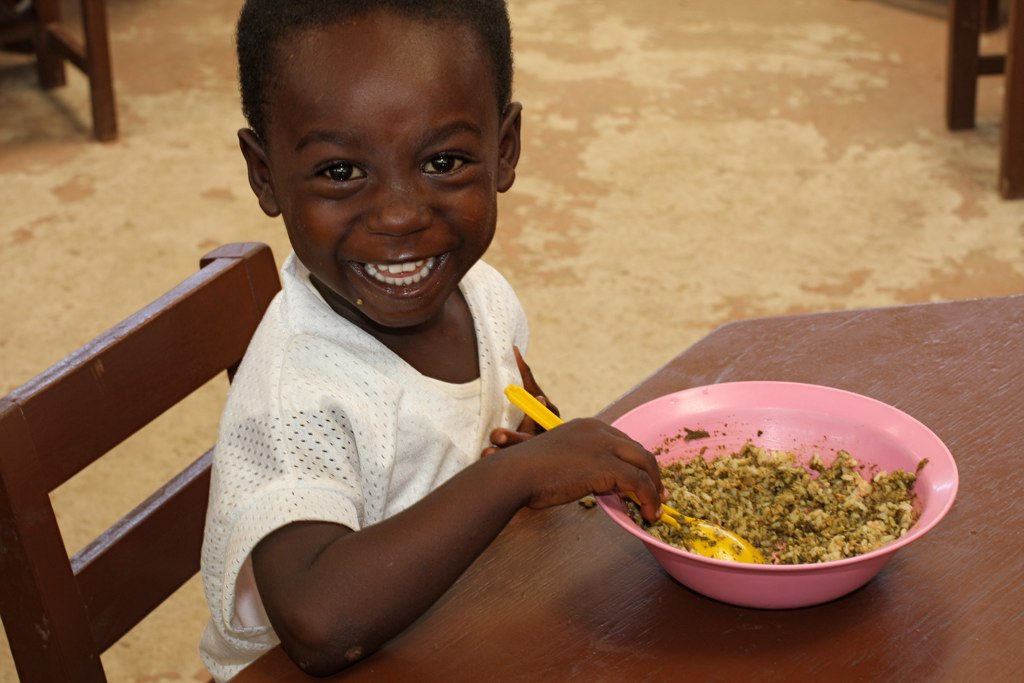 Ghana has halved its stunting rate in just a decade
The goal is then to begin to create a market, and awareness among other small-and-medium enterprises that there’s a business opportunity. We’re trying to help those businesses but also create copycats to help other businesses get into the space.
What constitutes a successful program?
We evaluate all of our programs on several criteria. Do they stand a chance of having an impact on nutrition status: Does it reduce the price of food? Can poor families buy it? Will it improve their diet?
Is it scalable? If it works, does it stand a chance of catching on in the marketplace? Can you embed it a big, nationwide government program, or in a piece of legislation, or is it just such a powerful idea that it will just catch on?
"Businesses are never going to be able to design commercial solutions for the very poorest, it’s just not possible"
We think quite hard about sustainability, which is the third angle. Because a lot of our work is through markets, if it catches on we’re fairly certain it will be sustainable, unlike any public programs that require earmarked funding year after year.
The tipping point is going to be when governments invest in these programs themselves. Businesses are never going to be able to design commercial solutions for the very poorest, it’s just not possible – they don’t have enough purchasing power to make it worthwhile.
Do any particular success stories stand out?
Ghana has halved its stunting rate in a 10-year period from 36% to 18%. Similarly, Maharashtra, a big state in India of 114.2 million people, has also halved its stunting rate over a 10-year period.
"Without commitment from the president’s office, the prime minister’s office, or the first lady’s office, it’s very difficult to get this kind of coherent change"
How have they done it? If you think about good nutrition being generated by a series of strong links in a chain, these countries and states have done it by modest improvements across the whole chain. So they’ve improved their food consumption a bit, water and sanitation programs a bit, health sector a bit, frontline worker employment ratios a bit. It’s when all these things come together that you get a big impact.
The critical bit is commitment from the top, and I mean the top. Without commitment from the president’s office, the prime minister’s office, or the first lady’s office, it’s very difficult to get this kind of coherent change across all sectors of government.
It’s hundreds of people like me who are constantly bombarding top-level people: if you want your demographic dividend to be a dividend as opposed to a disaster – invest in nutrition now.
You’ve pointed to urbanisation before as a big factor going forward – what impact do you think it will have?
Urbanisation is an opportunity and a threat. It’s a threat in that it’s generating huge amounts of obesity, diabetes and hypertension. People are looking to buy food on the street, and buy ready-made foods, and they tend to be high in sugar, salt and fat. They want convenience.
 Ready-made street foods tend to be high in sugar, salt and fat
The opportunity is that you’ve got consumers who are much closer to policymakers; they’re much more politically active. You’ve also got municipal government leaders who often can move more quickly and decisively to do something about malnutrition than national or state leaders. They’re not tied down by party politics or political in-fighting as much.
"The thing I’m worried about is obesity, overweight and diabetes, which are increasing at an incredibly rapid rate"
I don’t think people in the nutrition world are responding quickly enough. They’re trying stuff that works in rural areas in urban areas, but I think different strategies and approaches are needed. I’m looking to the new generation of activists, researchers, bloggers, journalists to raise the profile of these issues, and to raise the solutions as well.
Is the end of child stunting in sight?
I’m quite optimistic about it. About 155 million kids that are stunted now worldwide and that seems to be going down by about two million a year. If we can double the rate of progress, to start reducing it by four million a year, within a 15-year period we can get it below 100 million.
I think we can do even better. I take great comfort from countries like Ghana and states like Maharashtra in India. I think we can go from 155 million to about 60-70 million children within a 15-year period.
The thing I’m worried about is obesity, overweight and diabetes, which are increasing at an incredibly rapid rate. If we’re successful in dealing with stunting and wasting, we will help with overweight and obesity but there are other things that need to be done.
If kids grow properly in their first 1,000 days, they’re less likely to become obese when they’re five. Why is that? Because if they’re short at two years of age, any extra weight they put on goes on as obesity, but if they’re taller at two years of age, there’s more height for the weight to go on. It’s very simple.
(Picture credit: Flickr/IFPR/Caroline Smith, Flickr/UNHCR/H. Caux, Flickr/FMSC, Pexels/Clem Onojeghuo)
Jack Graham
jack.graham@apolitical.co
Make sure to share your own thoughts with the author by leaving a comment below

Log in or sign up to continue the conversation