
This article is written by Lisa Witter, co-founder and executive chairman of Apolitical.
The Black Lives Matter protests of 2020 are estimated to be the largest movement in the history of America. It has ricocheted across borders from the United Kingdom, Kenya, Taiwan and beyond.
As the world looks to build back better from the impacts of Covid-19 and in light of the #blacklivesmatter movement, governments — and public servants — play a key role in efforts for racial equality with many public servants asking what they themselves can do in their own lives.
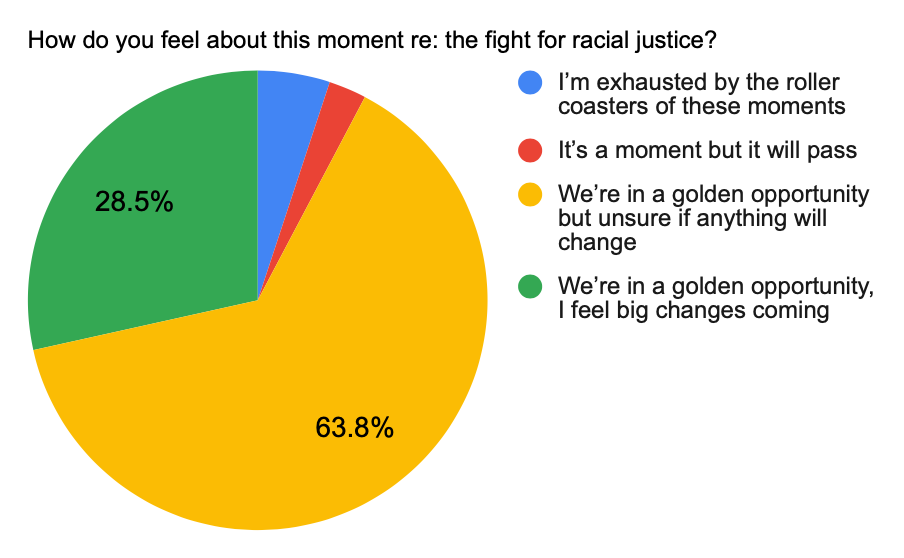
9 out of 10 see a golden opportunity
On 16 July 2020, Apolitical organised an exchange for public servants around the globe to address the challenges they face in combating racial discrimination with more than 800 public servants in interactive attendances.
The event featured insights from three global experts: Dr. Farris Muhammad, the Chief Diversity and Inclusion Officer of Peoria, Illinois; Lindiwe Mazibuko, co-founder of Apolitical Academy and the first black Parliamentary Leader of the opposition Democratic Alliance in South Africa; and Bernadette Thompson, one of the leaders of the Race to the Top G6/7 Network, a community of Black, Asian and Minority Ethnic (BAME) G6/7 civil servants across all UK government departments and agencies.
During the event we ran live polls, which delivered some remarkable results:
- Over 60% of respondents recognise opportunities for racial justice but are unsure regarding any change
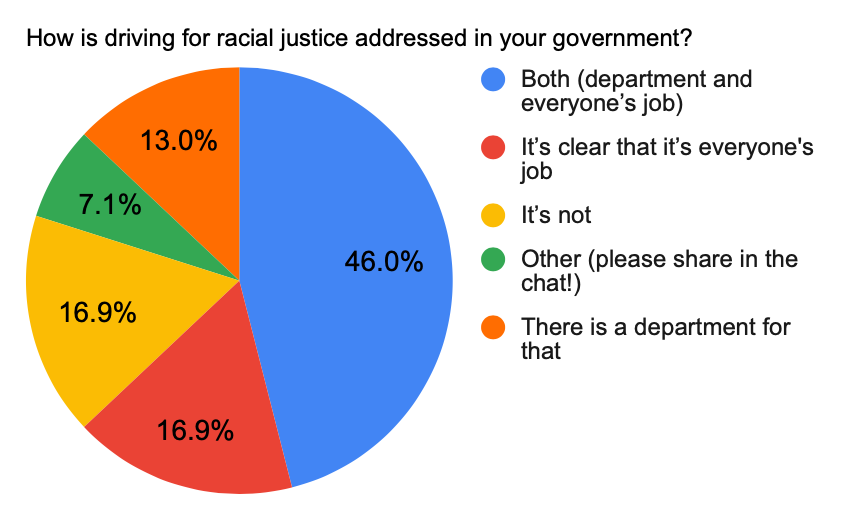
- Driving for racial justice is majorly (46%) considered the combined effort of both individuals and departments
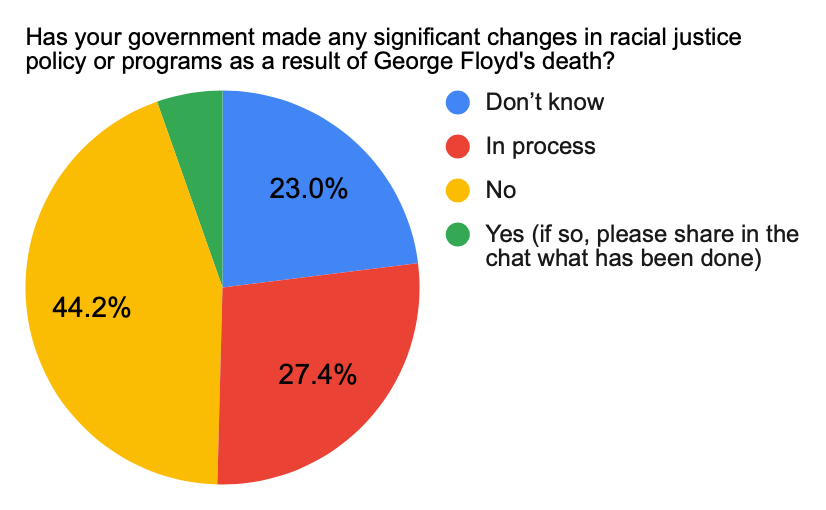
- One-third of respondents’ governments have made some changes or are in the process of making changes in racial policy/programs since the death of George Floyd
So how can we make the most of this golden opportunity, and how do we make sure real change happens?
Our speakers highlighted five concrete actions public servants can take to advance racial justice:
1. Bring Black, Indigenous, People of Color (BIPOC) to the governing table. Progress in getting race on the agenda has been slow because of the predominantly pale representation in positions of power. A 2016 Pew Research Survey shows that 38% of Black Americans view electing more Black people as an effective tactic toward achieving racial equality. Listening and co-creating with diverse participants is crucial when decisions are made alongside the people that policies affect — only those who belong to a particular community truly understand the needs and challenges of said community.
In addition, our experts spoke of the hierarchical distribution of BIPOC in organisations. A metaphor by Bernadette Thompson illustrates this: “...organisations are like a pint of Guinness - black at the bottom and white at the top. We need to shake that and make a latte.” In essence, these systems of power that routinely produce racially inequitable outcomes must be reshaped.
2. Mainstreaming ‘anti-racism’. Organisations need to engage with the ways in which interpersonal interactions reinforce racial bias. Greater awareness on how personal beliefs affect BIPOC can be brought about by mainstreaming anti-racism activities. This means embedding equality in every aspect of the organisation’s functions and moving away from a “one size fits all” approach.
LISTEN: The Anti-Racist Playlist
3. Focus on inclusive evidence-based policymaking. Race-disaggregated data is vital to quantifying how far a department or a state at large has come in providing agency to its minority population and identifying the right policies to move forward. Setting appropriate standards and regular introspection to strive for equity is needed to advance the position of BIPOC communities.
4. Provide safe spaces. Racial trauma can be difficult to express and opportunities to share are scarce. Stress caused by discrimination negatively affects mood, health, sleep and relationships. It has also been linked to birth complications in Black women in America. Confidentiality and safe spaces can provide pathways to healing for communities.
5. Introduce policies and see them through. Legislation is not the end of the road - just because policies are signed into law doesn’t mean they will be implemented effectively. ‘Lip-service’ was the keyword used by public servants here - and it remains the biggest challenge in governance. Checks and balances need to be set in place to ensure policies reach the right people.
The exchange ended on an empowering note, with one of the speakers singing “A Change is Gonna Come” by Sam Cooke and a stream of music and books suggestions from the participants, including Me and White Supremacy by Layla Saad and How to Argue With a Racist by Adam Rutherford.
At the end of the call, we ran a poll showing nearly half of the respondents had renewed or more optimism about public servants’ ability to drive change after the conversation.
There is no doubt that the topic of racial justice is on the minds of public servants around the world. Connecting with others working on the topic is valued and Apolitical plans to do more to facilitate this. —Lisa Witter
Watch or re-watch the full recording of the workshop here:
Racial Justice Workshop Video from Apolitical on Vimeo.
(Picture credit: Death to the Stock Photo)
Make sure to share your own thoughts with the author by leaving a comment below

Log in or sign up to continue the conversation